Blog

  • Egg coffee in Hanoi – an unforgettable experience

    Egg coffee in Hanoi – an unforgettable experience

    At first, these two flavors seem really unrelated. However, if you once try this special coffee, their harmonious combination can blow your mind away: not too sweet, not too bitter, the creamy taste of egg foam combined with the passionate aroma of condensed coffee. If you go to Hanoi without trying this exclusive drink, you are deemed having not been there.
    Egg coffee, which is a longstanding creative drink of people in Hanoi, has become globally famous thanks to the special ardour of the tourists for this drink. One has said that he will always remember the unique taste of the extremely hot egg coffee contained in a simple ceramic mug; and every time when someone mentioned Hanoi, he will immediately associate the place with this drink.

    egg

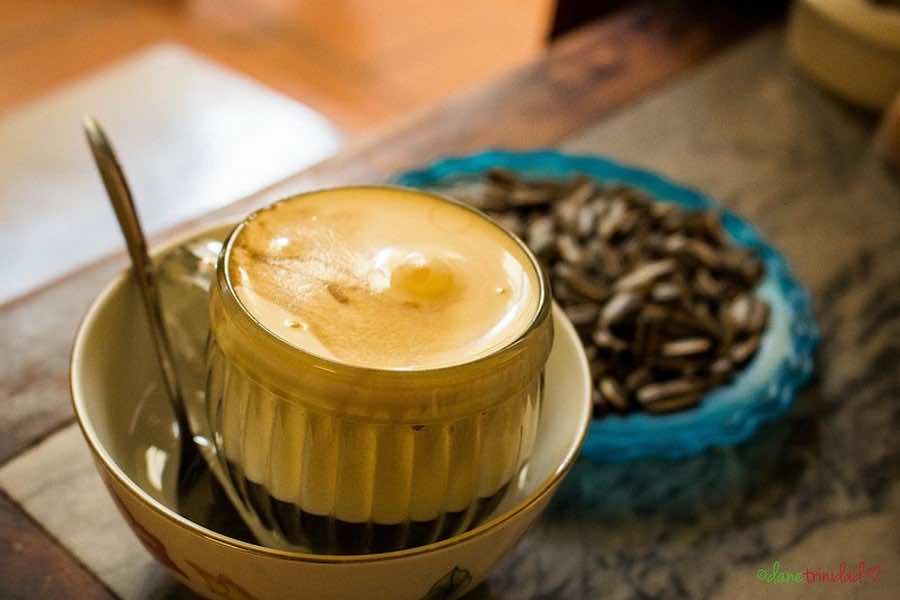
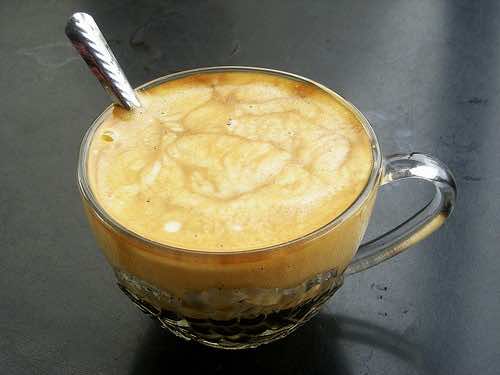
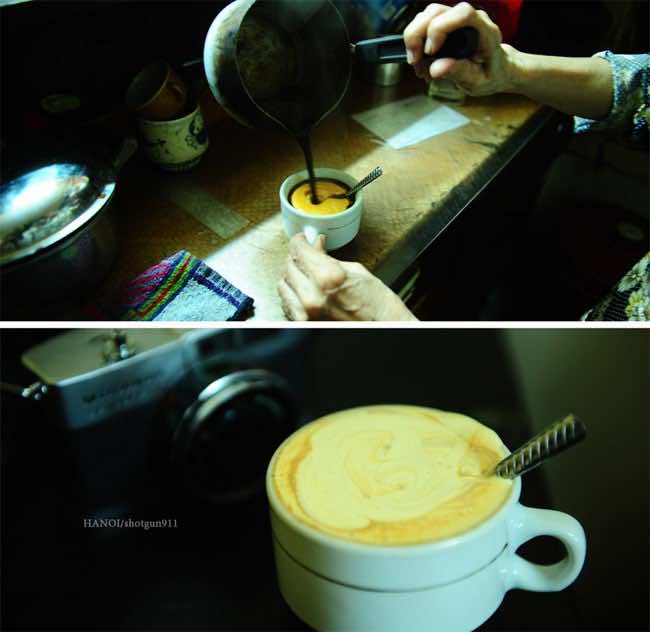
    The recipe for a cup of egg coffee is rather simple. First, fresh chicken eggs are a must in order to avoid the fishy smell. The second ingredient – coffee should be the premium coffee of Vietnam with condensed liquid and strong passionate aroma. Then extract the egg yolks (the whites are removed) and whip by hand or using an electric mixer until you can smell the aroma like cakes. Finally, pour hot coffee into the cup, egg foam will gradually float onto the top. That is how your egg coffee is prepared.
    The method is actually not very complicated, however, you need to be extremely delicate and meticulous to have a good cup of egg coffee. Maybe this is the reason why in Hanoi there is only a limited number of favorable café of this drink. In fact, this recipe is by no means special or requires any secret technique, however, the sophisticated ingredients are a real challenge. The trick lies in the balanced ratio between egg, coffee and milk so that their combined taste is harmonious, not too sweet or bitter, creamy of foam (without any fishy smell) and passionate of coffee.

    egg2

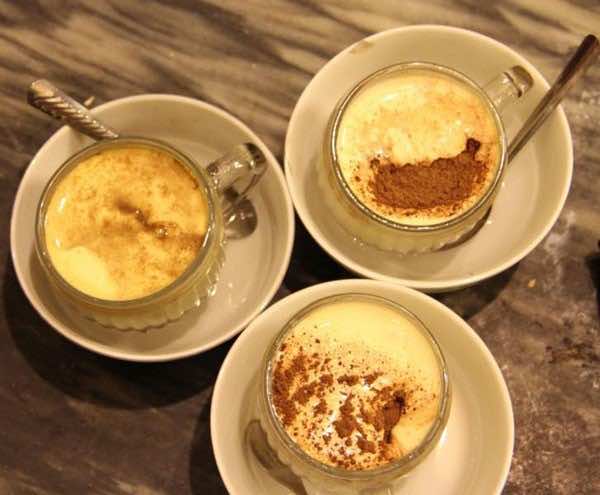
    The creamy taste of egg foam mingled with the strong aroma of coffee delivers the unique flavor of this drink. Your coffee is served hot and you are recommended to drink it as soon as possible before it becomes fishy and unpleasant. Later, the recipe is added with a little amount of cacao powder as a topping. This new recipe is not only tastier but also makes the coffee appearance more attractive.
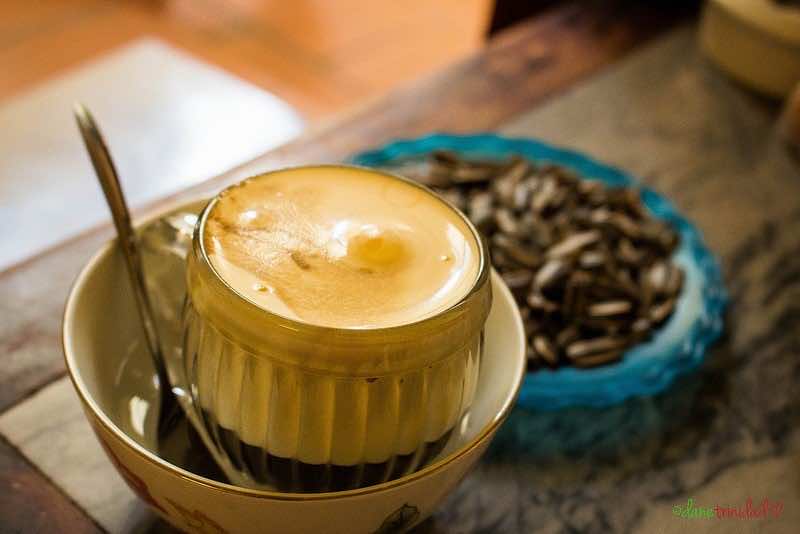
    Like many other traditional dishes of Vietnam, people enjoy egg coffee slowly and leisurely. They slowly stir the floating soft foam on the top and then sip that creamy taste spoon by spoon, slowly feel the strong flavor in their mouth. The cup used as containers is usually small types that are fit in the hands. The amount is just enough for you to enjoy but makes you crave for another one.
    Though it is simply a cup of coffee made from egg, milk and black coffee, it still remains as a strange attraction for those who have tried. Egg coffee is particularly a must for those who cannot bear the bitterness of filter coffee but still want to enjoy the legendary taste of Vietnamese coffee. The sweet and creamy flavor of egg foam will reduce the ‘unpleasant’ taste of bitter coffee but still remain its strong passionate aroma.

    egg4

    Egg coffee was introduced first around the early 20th century. The ‘father’ of this exclusive type of coffee is Mr. Nguyễn Văn Giảng. Mr. Giang once worked as a chef for a 5-star hotel Sofitel Legend Metropole during the French colonial period. Inspired by the popular drink of Western culture called Capuccino, Mr. Giang further create its variation called egg coffee with more familiar and charming ingredients.
    On the famous website for tourists – Tripadvidor, a Malaysian tourist with the nickname tikay239 has stated his feeling after trying a cup of egg coffee: That is a unique taste of coffee and an interesting experience in Hanoi. Later when I come back this place, I will definitely come to this café once again for this special drink.
    Shared on a tourism website AFAR, Ms. Jodi Ettenberg was full of praise for egg coffee in Hanoi, stating that this is a wonderful exploration in her trip. Having tried coffee in various places, however, she found that coffee in Hanoi, especially egg coffee, left her the strongest impression.

    egg5

    As egg coffee has existed for a rather long time in the culinary culture of Hanoi, it cannot become a fever like other newly-introduced dishes. This drink only slowly diffuse among the locals and the tourists, however, its unique feature has partly contributed to the rich culinary culture of Vietnam. Currently, in addition to two famous addresses on Nguyễn Hữu Huân St. and Yên Phụ St. (also called Giảng Café – the café that created this drink), you can also find this special drink at Đinh Café or café Phố Cổ. Beisdes, egg cacao of a smoothie shop called Hồng (Hàng Chỉ St.) is also a highly recommended place.


  • Top 10 most beautiful islands of Vietnam

    Top 10 most beautiful islands of Vietnam

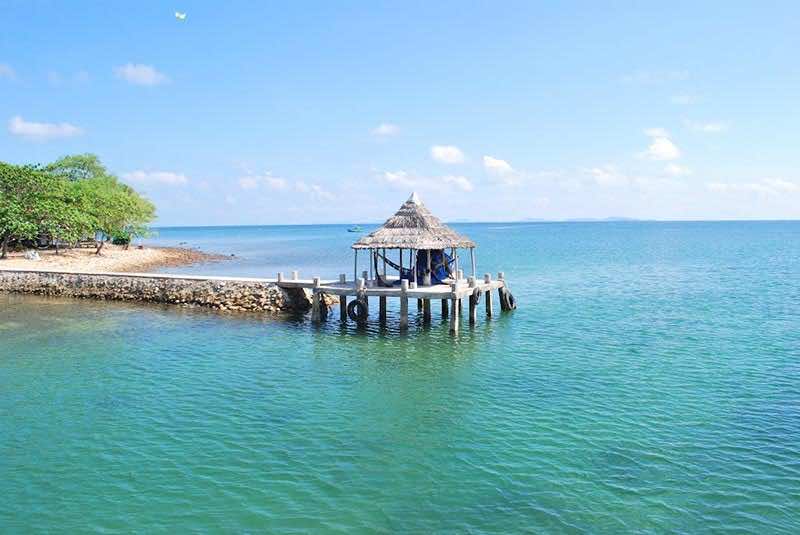
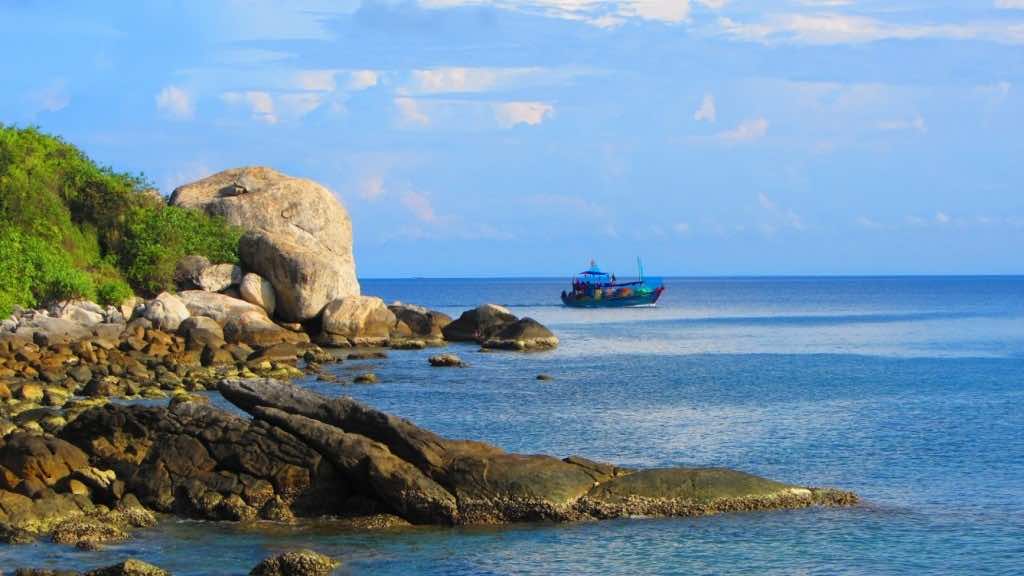
    Vietnam has been bestowed with more than 4,000 splendid islands, which has significantly contributed to the growth of national marine tourism. Below is a recommended list of 10 most beautiful islands in Vietnam voted by Traveltimes.vn.

    10. BÀ LỤA ARCHIPELAGO

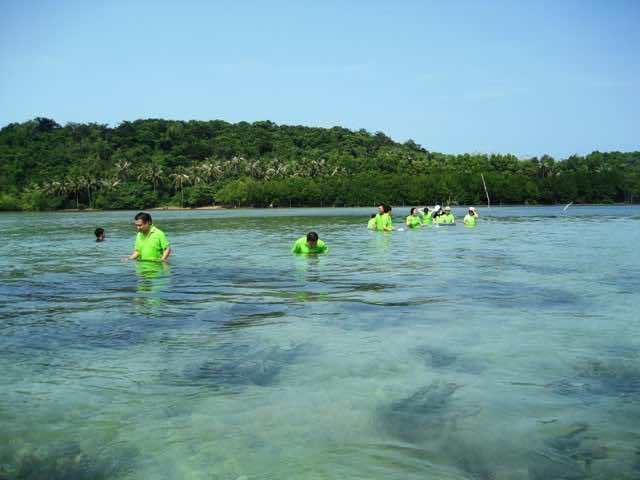
    Belonging to Kien Luong District, Kien Giang Province in the south of Vietnam, Ba Lua islands lie in the Gulf of Thailand. There are a total of 3 big islands namely hòn Heo (Heo Island), hòn Ngang (Ngang Island), hòn Nhum Bà (Nhum Ba Island) and various smaller islands around. Visiting these islands, you stand a wonderful chance to collect snails, scallops or oysters on your own and then enjoy the meal right away.

    Source: Kay
    Source: Kay

    Depending on the tide and the season, sometimes during the year the water level is only halfway up your belly. It turns out to be really interesting that you can actually walk from an island to another without any swimming assistive aid. The feeling comes as half scared half overexcited when you are all the way surrounded by the sea. In addition to that, Ba Lua Islands are rather pristine; thus, it is highly probable that you can discover a nearly untouched island where it feels like you are indeed its owner.
    9. BÌNH HƯNG ISLAND
    Whereas Bình Ba Island is rather well-known, another island in its vicinity named Bình Hưng Island is rather new and usually only circulated in the world of backpackers. From the dock on main land, it takes only about 5 minutes to get there; thus, you can always find a boat heading to the island. Binh Hung Island is highly recommended for those with adventurous mind as it is still safe from tourism exploitation and not very crowded with travelers.

    Pristine Kinh Beach (Source: Viết Lãm)
    Pristine Kinh Beach (Source: Viết Lãm)

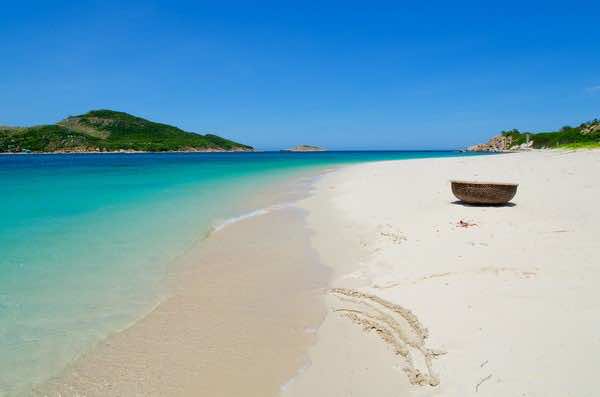
    It is advisable that you visit Bãi Nước Ngọt (Fresh Water Beach) during your trip here. That name derives from a small stream on this beach which is just next to the sea. Other attractions in this island can be Hòn Chút Lighthouse, Đá Trứng Beach and some other similar services as that of Bình Ba Island. Besides, you can also visit Bãi Kinh (Kinh Beach) – a gorgeous beach where the sea has 3 different colors with transparent water that you can actually see the sea bottom or the smooth white sand that can really blow your mind away.

    8. NAM DU ISLAND

    Yet another island from Kien Giang Province, Nam Du Island locates in Kien Hai District and is widely known as a pristine place waiting for discoverers. Unlike the famous Phú Quốc Island which is not far from that, Nam Du Island has yet to be exploited for tourism; thus, this makes the island even more mysterious. You have various choices on the island such as Bãi Cây Mến (Cay Men Beach), Bãi Ngự (Ngu Beach), Nam Du Lighthouse, or you can even hire a boat to visit the surrounding islands such as hòn Mấu (Mau Island), hòn Ngang (Ngang Island), etc.

    Source: Trương Ngô
    Source: Trương Ngô

    It is also interesting to note that the tourism services and hotels on Nam Du Island are relatively cheap. You are highly advisable to contact the locals in advance of departure so that they can be well-prepared for your trip. People on Nam Du Island are very cheerful and hospitable, they are also well aware of the environmental preservation. This can explain the reason why Nam Du can still remain its pristine beauty so far.

    7. CHÀM ISLe

    Cù lao Chàm (Cham Isle) is small islands which is about 15 kilometers from Hội An ancient town and is comprised of 8 adjacent islands. On Hòn Lao (Lao Island), you can choose to visit Bãi Làng (Lang Beach) or Bãi Hương (Huong Beach) which are more pristine than Bãi Chồng (Chong Beach) or Bãi Xếp (Xep Beach). On this island, fresh water flows from many different streams; thus, the locals can even grow rice as food. Tourists to this island are really impressed by this feature and most of them insist on wading the paddy fields without shoes. It is usually a shared feature of every island that rocks are the most common type of soil. However, on Cham Isle, efforts of the locals seem to be efficient in ‘turning soil into food’. Now if visiting Cham Isle, you will definitely be amazed at the green gardens with luxuriant trees and fruits.

    Source:disanxanh.vn
    Source:disanxanh.vn

    On Cham Isle, visitors not only eagerly snorkel to enjoy the colorful ranges of corals, but also fascinatedly observe how the locals plant rice on such dry land. People on Cham Isle are actually never afraid of insufficient food. Fish and shrimps are just abundant out there in the sea. They just take the boat heading outwards, quickly then, they will have a delicious meal ready to be tasted. Also, Cham Isle has been recognized by UNESCO as a Biosphere reserve.

    6. BÌNH BA ISLAND

    Bình Ba Island belongs to Khanh Hoa Province, about 15 kilometers from Cam Ranh Port; accordingly, it is not very difficult to get there in any season during the year. As regards the cost and travelling and eating, I must say it is really reasonable. Binh Ba is an ideal place to recharge your energy as this place is full of spectacular scenery as well as delicious food. A number of highly appreciated beaches are: Bãi Chướng (Chuong Beach), Bãi Nồm (Nom Beach) and Bãi Nhà Cũ (Old House Beach) where you can pleasantly enjoy the sunrise, coral snorkeling or fishing.

    The delicacy in Binh Ba must be fresh lobsters which is sold at the original price and properly prepared in the cooking style of fishermen. As Binh Ba Island has only been exploited for tourism in the recent years, the tourism service is quite cheap. However, a number of overexploitation activities have, to a certain extent, done harm to the pristine beauty of the island. Another special feature to note is that this island is exclusively limited to Vietnamese. Due to military reasons, tourism for foreigners is not allowed.

    5. PHÚ QUÝ ISLAND (or THU ISLE)

    Phú Quý Island, which is alternatively called Thu Isle, also has many different names such as Khoai Xứ Isle or Thuận Tịnh Island… Phu Quy Island is 120 kilometers from Phan Thiet City. Although it is only 16 kilometer square, there are a wide range of special features about this island that will definitely amaze you. It is recommended to rent a motorbike to explore the island. A number of attractions for your choice can be: Mộ Thầy Nại (Master’ Nại’s Grave) – to know more about the establishment history of the island, or Mũi Doi (Doi Cape) – to observe the waves smashing into the land, or Bãi Triều Dương (Trieu Duong Beach) – the most romantic beach on the island.
    Source: Quỷ Cốc Tử
    Source: Quỷ Cốc Tử

    Besides, you can also visit Cao Cát Mountain where Linh Sơn Pagoda lies highly close to the cliff, or the lighthouse on Cấm Mountain where you can witness one of the most beautiful sunset scenes in Vietnam. Stone crabs (‘cua huỳnh đá’) and red grouper are the indispensible specialties of the island. Additionally, the appealing coastal roads on Phu Quy Island will definitely blow for mind away.
    4. CÔ TÔ ISLAND
    In order to fully discover Co To Island in Quang Ninh Province, you should spend about 1 or 2 days on this island. Unlike other islands where you can start your adventure with motorbikes or boats, on Co To island, all that you need is simply a bike.

    (Source: ivivu.com)
    (Source: ivivu.com)

    There are a number of musts on the island, such as: Co To lighthouse, Vàn Chải dock, Hồng Vàn dock, Bắc Vàn port, Cầu Mỵ rock yard, and especially Cô Tô Con (the Little Co To) – a small non-residential island near Co To main island. You should get up really early and go to the market to buy the freshly caught seafood such as squids, scallops, clams, etc. Then later in the evening, you can bring them to the coast roasting and enjoying. If skillful and meticulous enough, you can even prepare a unique BBQ tables built from sand on Co To beach.
    3. PHÚ QUỐC ISLAND
    Having been ranked in the top 3 most beautiful destinations in winter voted by National Geographic, Phu Quoc is a renowned island for tourism. Not surprisingly, Phu Quoc also comes as first in the top 10 ideal destinations for tourists according to Asiaone Journal. On this island, you have the opportunity to enjoy those of the most splendid beaches of the world, such as: Bãi Sao (Star Beach), Bãi Dài (Long Beach) or tens of other pristine beaches around the island. Thanks to geographical features, seafood in Phu Quoc is diversifying and abundant, such as: sea urchin, scallops, snails, cobia, herring, etc. The marine experience is also dazzling: coral snorkeling, squid fishing at night, enjoying sunset at Dinh Cậu (Uncle’s Shrine), or driving through the untouched jungles which absolutely can drive attention of both professional and amateur backpackers.

    Star Beach (Bãi Sao) (Source: Justin)
    Star Beach (Bãi Sao) (Source: Justin)

    In Phu Quoc, the most convenient means of transport for your exploration is motorbikes which you can easily rent from your hotel. The transport infrastructure is yet incomplete, however, this turns out to be a great experience for drivers. Of course, you should also take notice of the traffic law as the traffic police here are really strict.

    2. LÝ SƠN ISLAND (or RÉ ISLAND)

    Ly Son has recently emerged as an ideal destination for backpackers. However, as for Quang Ngai people in particular, and people in the central region of Vietnam in general, Ly Son has long played a meaningful historical role. There are not many hotels on Ly Son Island; thus, you can choose either to homestay at the locals’ houses, or set up a tent to stay overnight on Bé Island (Small Island). For the latter option, it is still free of charge and there is no need to pay extra cost.

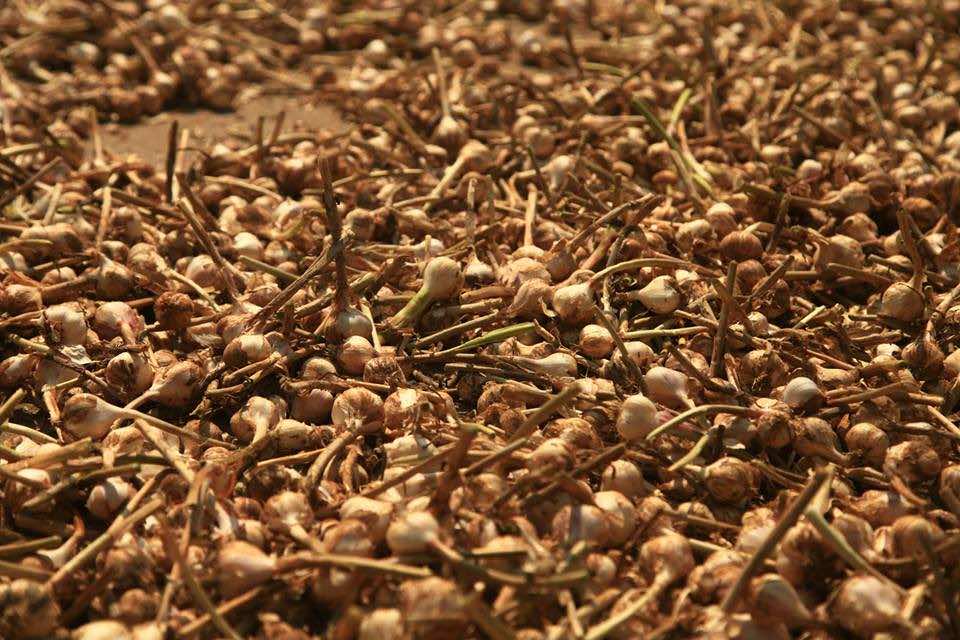
    The famous garlic of Ly Son (Source: Nguyễn Huy Trung)
    The famous garlic of Ly Son (Source: Nguyễn Huy Trung)

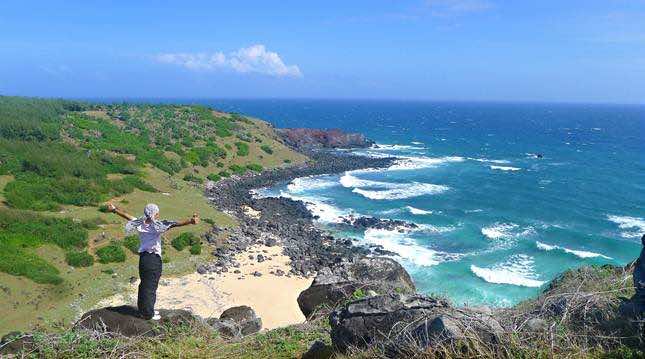
    Follows are a number of attractions for your trip to Ly Son: Tò Vò Gate, Guan Yin (a bodhisattva)’s shrine (‘Quan m Đài’), Hang Pagoda, Câu Cave (‘Hang Câu’), the national flagpole on the top of Thới Lới Mountain, and some other pagodas and temples. The specialties in Ly Son vary, but the most distinguished one is Ly Son garlic. Besides, you can also try fresh seafood such as ‘ốc tượng’ (a type of snail), king crabs, cá tà ma (a type of fish), etc. The most beautiful beaches are mainly on Bé Island (Small Island); thus, if you visit Ly Son, this is really a must.

    Tò Vò Gate (Source:500px)
    Tò Vò Gate (Source:500px)

    1. CÔN SƠN ISLAND (CÔN ĐẢO)
    Being once the destination of the ‘Brangelina’ family in their trip to Vietnam, the global fame of Côn Đảo is indisputable. For travelling lovers, Côn Đảo is really a must that they have to visit once in the lifetime. Perhaps because this place is considerably far from main land and is under excellent preservation, Côn Đảo can still remain its original beauty despite the development of various resorts near the beaches.
    Côn Đảo is not simply a tourist attraction, it is actually very rich in its own historical story. Thus, visiting Côn Đảo, you should come to Hàng Dương Cemetery at 12 a.m. (midnight) for the remembrance of the dead soldiers who have laid down for the peace of Vietnam. Don’t be worried, the warm golden lights and comfortable scent of burnt incense will quickly fade your fear away. Instead, you can gradually sense the resurgence of our national pride. A little time to investigate the heroic history of Côn Đảo is also an unforgettable experience on this island.
    In addition, for tourism purposes, you can go to Đầm Trầu Beach – the most beautiful beach on Côn Đảo, or Bảy Cạnh Isle – an ideal place to explore.

    According to Traveltimes.vn

  • The history of Vietnamese ‘Ao dai’

    The history of Vietnamese ‘Ao dai’

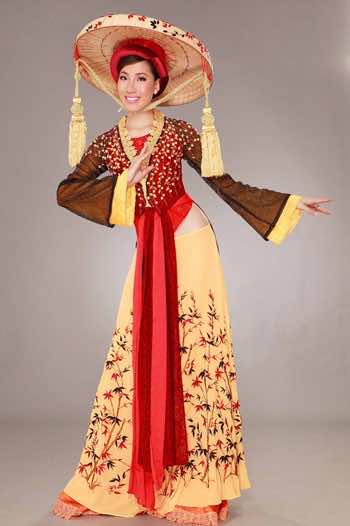
    ‘Ao dai’ is a familiar name with Vietnamese people as well as the international community. This is the traditional costumes of Vietnam and a charming symbol of Vietnamese women. In the modern world, you can catch sight of ‘ao dai’ at almost every places in Vietnam: the uniform of high school girls, the uniform of women teachers, the formal costume of office girls, receptionists, air stewardesses and also somewhere on the street.
    ‘Ao dai’ seems to be a longstanding culture of Vietnam and really rich in its development history. This article will bring you back to the date ‘ao dai’ was gradually created and then becomes the national symbol of Vietnam.

    The origin of ‘ao dai’

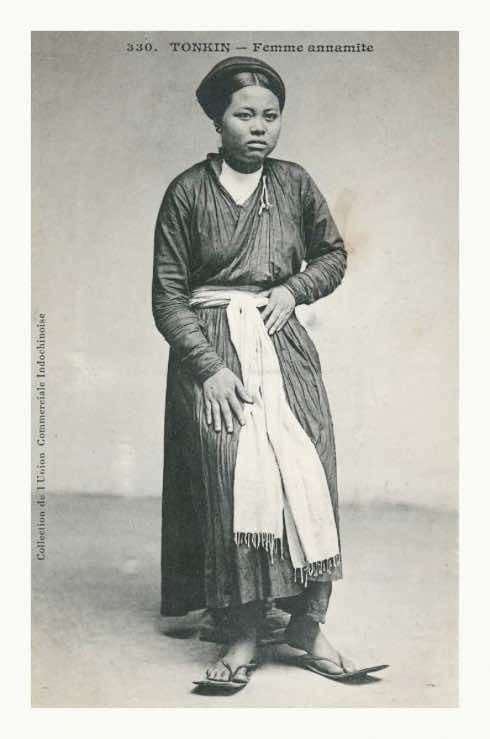
    In fact, no one thoroughly knows when the original version of ‘ao dai’ was born and how it looked like as there is no historic record of this. According to the inscriptions on Ngọc Lũ copper drum which was created thousands of years ago, the most ancient clothes of Vietnamese was a long dress with two different flaps. ‘During the Northern colonial period, the dress of Vietnamese was buttoned up to the left, later when the Chinese culture was introduced, it was buttoned up the right.


    Áo dài Giao Lãnh (Source: elle.vn)
    Áo dài Giao Lãnh (Source: elle.vn)

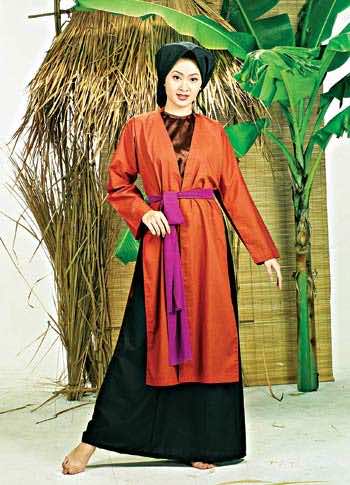
    The most ancient type of ‘ao dai’ recorded was called Giao Lãnh (about the 17th century). This is the original version of ‘áo tứ thân’. But the front long flaps are not tied together but dropped freely or left intersected. The clothes are further dressed with a type of camisole, a long black dress and a colored fabric belt used to tie up around the waist.

    Áo tứ thân (Source: ao-dai.com)
    Áo tứ thân (Source: ao-dai.com)

    However, later due to the work of farming or trading, Giao Lanh ‘ao dai’ was reduced into ‘áo tứ thân’ (which means a 4-long-flap dress). This dress includes: the right half of front flap, the left half of the front flap, the right half of behind flap, the left half of the behind flap). ‘Ao tu than’ was dressed out of the original black dress so that the whole set is convenient to carry items on their shoulders. Still this dress could also remain the charming beauty of the working women. As the costume for working class, ‘ao tu than’ was usually made from dark fabric to avoid getting dirty. On the other hand, urban women who are usually not working chose to dress in ‘áo ngũ thân’ (which means a 5-long-flap dress). This dress was majorly the same as ‘ao tu than’ except an additional flap was sewn under the two front flaps. These two dresses are also the distinction feature between women in the rich families with those from the working class. This collared dress was still very popular until the 20th century.

    The modern version of the 4-flap dress (ao tu than) (Source: ao-dai.com)
    The modern version of the 4-flap dress (ao tu than) (Source: ao-dai.com)

    The development of ‘ao dai’
    1. Nguyễn Phúc Khoát
    Nguyễn Phúc Khoát – Vũ Vương (a title equal to King) laid the foundation for the shape of ‘ao dai’. Until the 16th century, the clothes of Vietnamese people were still influenced by the costumes of Chinese. With a view to creating a distinguished feature for the nation, he proclaimed an order in which he mentioned how Vietnamese dressed. Accordingly, he described the national form of ‘ao dai’ which was rather similar to the modern one.
    2. Le Mur
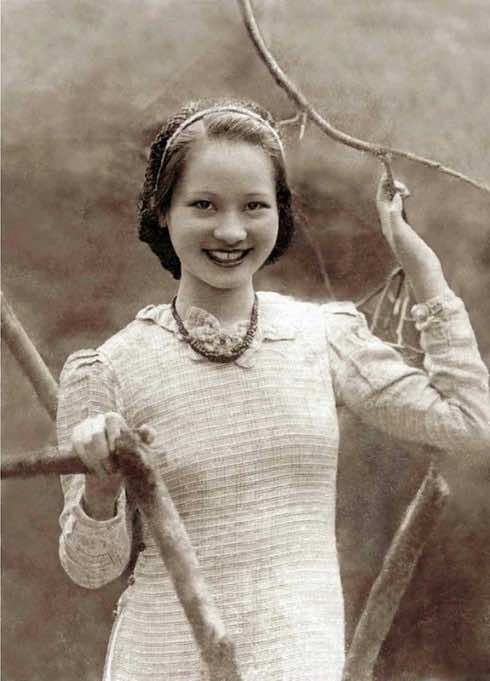
    Le Mur is the French name that artist Cát Tường used to call the ‘ao dai’ she created. However, in that time, this ‘ao dai’ was too sophisticated and innovative that many critics blamed it as ‘exotic’ and refused to wear it widely.

    Le Mur ‘ao dai’ was criticized to be ‘exotic’ with puff sleeves and bows on the collar (1938) (Source: elle.vn)
    Le Mur ‘ao dai’ was criticized to be ‘exotic’ with puff sleeves and bows on the collar (1938) (Source: elle.vn)

    3. Lê Phổ
    Le Mur ‘Ao dai’ was born in 1930. Up to 1934, artist Lê Phổ decided to create a different version of ‘ao dai’ by combining the modern characteristics of Le Mur with the traditional features of ‘ao dai’ from the ancient times. This combination received a widespread support of the general public. Since then, ‘ao dai’ had a distinguished shape of its own. Despite many ups and downs so far, Vietnamese ‘ao dai’ always has the basic form of Lê Phổ’s design.
    4. Giác lăng ‘ao dai’
    To further facilitate the tailoring and styling of ‘ao dai’, ‘áo dài giác lăng’ was born. Basically, this type of ‘ao dai’ still maintained the form of Lê Phổ, however, its sleeves were separated and later tailored to the main body. This ‘ao dai’ has a line of button on the shoulder and spread down to the waist. This design helped to reduce the wrinkles on the sleeves. Furthermore, ‘ao dai’ was tailor as slim design that was closer to the body.
    5. ‘Ao dai’ with boat neck
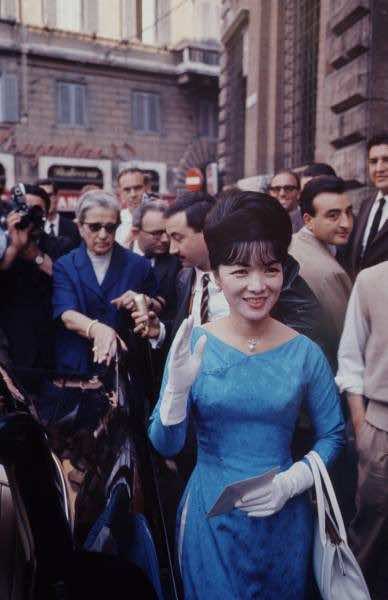
    Boat neck, or bateau neck or Sabrina neckline, was combined with ‘ao dai’ by Mrs. Trần Lệ Xuân. This design was ranked to be one of the most seductive designs of ‘ao dai’. Unlike the traditional discreet design with tall collars, ‘ao dai’ with boat neck is more charming with deep carved neckline and elegant patterns on the fabric. Mrs. Trần Lệ Xuân passes away at 2 a.m on April 24th 2011 in Rome, Italia, aging 87 years old at the time.

    Ms. Trần Lệ Xuân in her boat neck design of ‘ao dai’
    Ms. Trần Lệ Xuân in her boat neck design of ‘ao dai’

    ‘Ao dai’ in the modern lifestyle

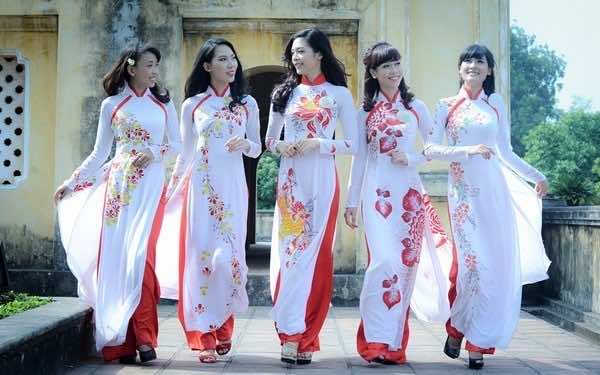
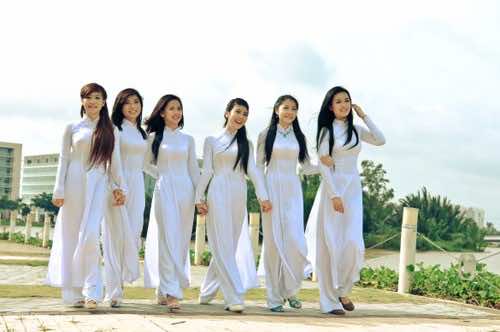
    These days, along with the fast-paced development of the society, ‘ao dai’ also has its own path to develop. ‘Ao dai’ becomes more diversifying in its designs although it still remains the past original form. There are a wide range of materials to tailor ‘ao dai’, however, silk is always the most favorable choice. In fact, ‘ao dai’ has been by no means strange to foreigners as you can always catch sight of this charming dress in the international beauty contests. Additionally, based on their special ardor for ‘ao dai’, many western women decide to have their own Vietnamese ‘ao dai’. Even more interesting, although the western marriage custom with white soiree and gown has long been popular in Vietnam, recently many brides chose to go back to the ‘ao dai’ as their wedding dress. This made them even more charming in the combined design of modern and traditional features.

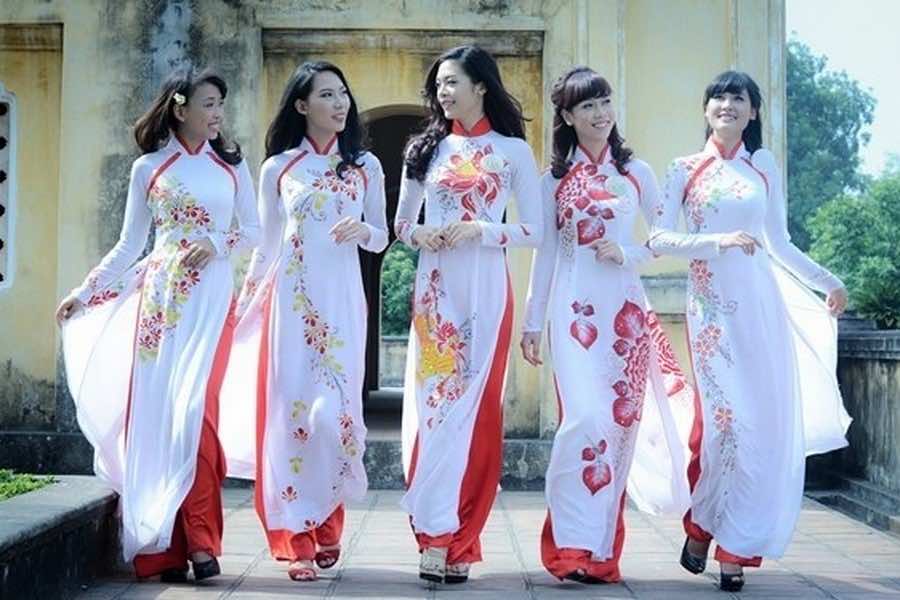
    Elegant girls in ‘ao dai’ (Source: kenh14.vn)
    Elegant girls in ‘ao dai’ (Source: kenh14.vn)
    White ‘ao dai’ characterized the innocent school girls (Source: tinmoi.vn)
    White ‘ao dai’ characterized the innocent school girls (Source: tinmoi.vn)
    Seductive ‘ao dai’ (usually red or white) used by brides in their marriage
    Seductive ‘ao dai’ (usually red or white) used by brides in their marriage
  • Water Puppetry- an artful journey of Vietnamese farmers

    Water Puppetry- an artful journey of Vietnamese farmers

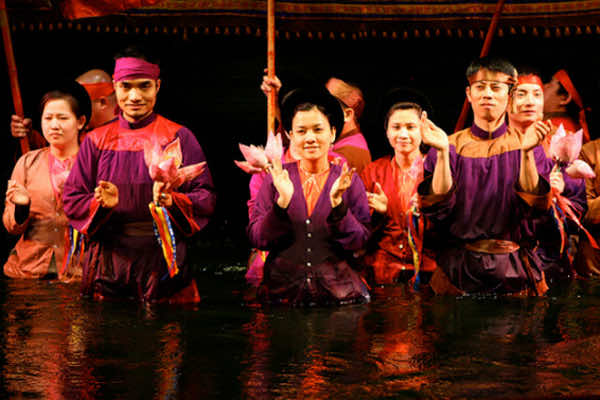
    Water puppetry is one of the most indigenous cultural traits of Vietnam. Being closely associated with the community village culture, there’s hardly any other form of art that all Vietnamese can relate to. Let’s join us for a quest to this prevalent yet mysterious tradition.


    It all began in the rice field

    The wet rice civilization of Northern Vietnam was believed to be the cradle of nurturing this traditional art form. Being born as a communal performance during harvest time for farmers, water puppet shows gradually progressed as an entertaining activity for the royals. That’s an intriguing adventure from the rice field to the citadel stages.

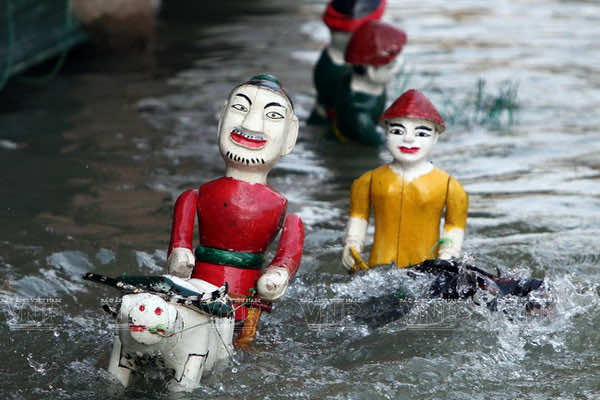
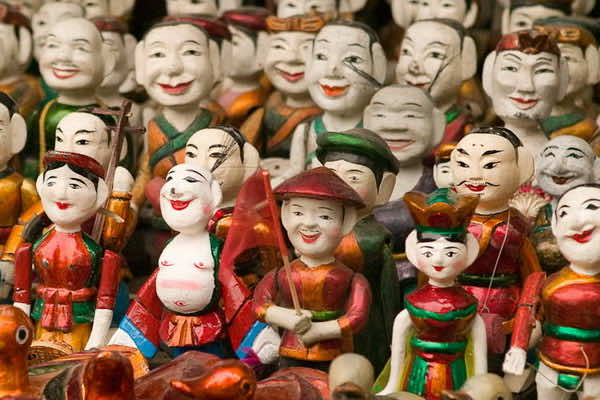
    Water puppetry characters
    Water puppetry characters


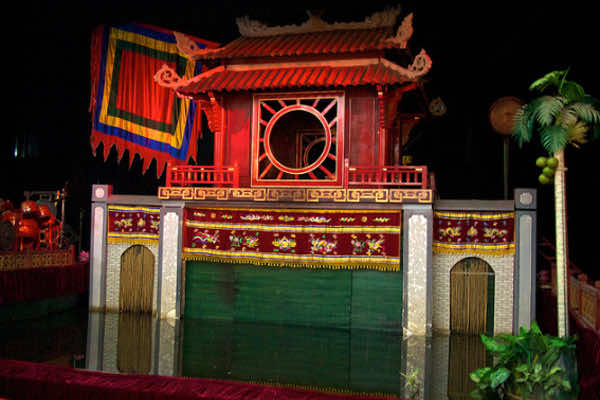
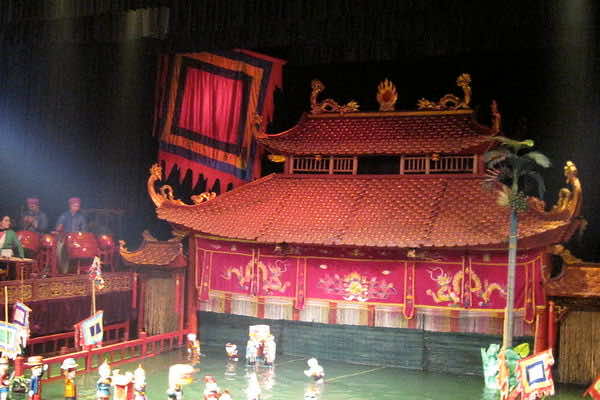
    The water pavilion 

    This special stage requires a chest-deep pool of water. This water pavilion called “thủy đình” (“thủy” means nước, “đình” is a communal house) is where the journey of the puppets carried out. A puppet is carved out of fig wood, then polished and decorated with meticulous details. Most of the puppets look cheerful and symbolic with vivid colors to emphasize their own characters. For example, “Chu Teu” is the most so-called character in the water puppet world. He is very talkative and cheerful  just like any typical northern farmer. Therefore, he sometimes acts as a narrator, sometimes as a commentator to warm up the audience.

    Water puppetry typical stage
    Water puppetry typical stage


    Behind “Y Môn”

    “Y Môn” means a screen which separates 2 different worlds. One is our daily life, the other one only exists inside the water pavilion to worship the spirit of water puppets. The puppeteers bear an important mission to breathe a new life into every action of the puppets not only by using bamboo rods and string mechanism hidden beneath the water surface, but also by their excellent storytelling skills.

    Puppeteer behind the scenes
    Puppeteer behind the scenes

    The stories they told

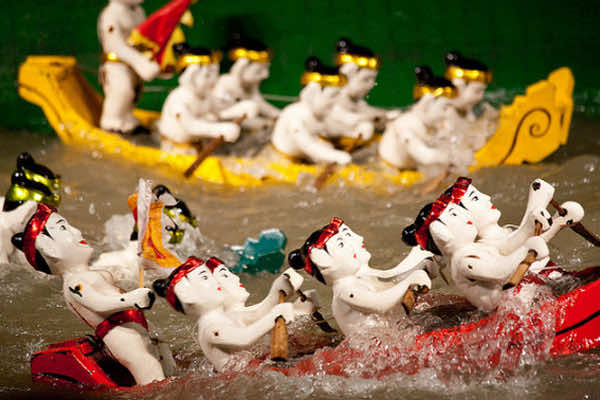
    These Vietnamese folktales capture the essence of agricultural society: ritual to pray for rain, harvesting, fishing, silk weaving, dragon dance, buffalo fight, wrestling, boat racing… A typical performance always comes with old-fashioned music played on authentic instruments like drums, wooden bells, bamboo flutes… In short, this is a time travelling voyage to the old days of the rich Tonkin culture. Through time the farmers-artisans community grew vastly and formed many guilds in all over Vietnam.

    Water puppetry Boat Racing
    Water puppetry Boat Racing

    Where to enjoy this precious intangible asset of Vietnam

    There is a variety of choices who crave for this artistic aspect. The most professional shows operate mostly in tourist centers like Hanoi, Saigon, Hoi An, Hue.

    Here comes the important parts- suggestions from our experts:


    Hanoi 

    Thang Long Water Puppet Theater

    Situated at the heart of Hanoi and facing the iconic Hoan Kiem lake, this world-famous theater makes it convenient for all wanderers to get a taste the art.

    Add: 57B Dinh Tien Hoang, Hang Bac, Hoan Kiem

    Vietnam National Puppet Theater

    Tucked at a quiet area of Hanoi, the largest water puppet theater in Vietnam offer shows on both outdoor and indoor water stages.

    Showtime: everyday at 17.00- 18.30

    Add: 361 Truong Chinh, Nga Tu So, Thanh Xuan


    Vietnam Museum of Ethnology

    After learning about 54 ethnic minorities in Vietnam, still in the mood for educating yourself a bit more?

    Showtime: everyday at 10.00, 11.30, 14.30, and 16.00 (except Monday)

    Add: Nguyen Van Huyen, Cau Giay


    Bong sen water puppet theater

    This is an elegant blend of  French and Vietnam architecture for indulging yourself in this peculiar show.

    Showtime: everyday at 14:45; 16:00; 17:15 and 18:30

    Add: 16 Le Thai To (79 Hang Trong), Hoan Kiem


    Water Puppet and Traditional Art Theater, Hue (upcoming in the end of 2019)

    This imperial city creates a favorable surrounding for art to thrive. Being settled by Nhu Y river, the future theater will definitely be adding some poetic rhythm to the conventional performances.


    Hoi An Theater

    Like other things in this charming little town, Hoi An Theater is a cozy setup which happens to amplify every details of the show. After a leisure day, what could possibly be a better ending than getting a taste of cultural heritage in the most cheerful way?

    Showtime: Tuesday, Friday and Saturday at 18.30

    Add: 548 Hai Ba Trung, Tan An


    Saigon

    A nostalgic break should be strongly recommended after a day in the hustling vibe of this city, or at anytime during the day.

    Museum of Vietnamese History

    Showtime: Everyday at 9.00- 10.00- 11.00- 14.00- 15.00- 16.00

    Address: 2 Nguyen Binh Khiem Street, Ben Nghe Ward, District 1, in Ho Chi Minh City


    Golden Dragon Water Puppet Theater

    Don’t miss a chance to treat yourself a cultural feast to the eyes and the ears in the busiest area of this youthful city

    Showtime: Every night at 17h00 – 18h30 – 19h45

    Add: 55B Nguyen Thi Minh Khai Street, Ben Thanh Ward, District 1

    Shorter performance: 15 minutes


    For avid traveler who has all the time in the world 

    Got a day spare to discover more about this authentic art form?  Take a trip back to where it all started. Like we’ve said earlier, the water puppet guilds are not that hard to find.


    Dao Thuc Village, Dong Anh, Hanoi

    Just a 20-km ride from Hanoi

    Dong Ngu village, Thuan Thanh district, Bac Ninh

    25 km away from Hanoi

    Hong Phong Water Puppetry, Hai Duong

    80km away from Hanoi

    Yen Duc Village, Dong Trieu, Quang Ninh

    80km away from Hanoi

    Private shows on a mini stage at Puppeteer Phan Thanh Liem’s house

    Kham Thien street, Hanoi


    What they offer here is the transform of daytime farmers becoming water puppeteers when the night falls. At the end of the day, you will not only leave with the folktales on stage but also the stories of how these unique guilds have preserved this unique art inherited from their ancestors. Each of them possess their own unique styles and secret techniques which draw a colorful picture of the water puppetry in Vietnam.  Needless to say, it takes more efforts to arrange a show in these villages. Therefore, it’s better to contact our experts for further assistance.


    Attention, cultural foodies 

    Holding the passion of spreading this art form to the world, some restaurant owners in Saigon set up indoor mini stages to offer free shows during the dining time. Although these shows are often short and irregular, this unique combination of Vietnamese cuisine and arts is highly appreciated.

    Water puppetry restaurant
    Water puppetry restaurant


    Ngon Restaurant

    Add: 195 Nguyen Van Huong, Thao Dien village, District 2, Saigon

    Showtime:  Every Saturday from 19.30–20.00


    Đậu (Tofu) Homemade

    Add:  6 Hong Ha, Ward 2, Tan Binh District

    Nguyen Van Trang, District 1

    45A Hoa Lan , Ward 2, Phu Nhuan District


    Notices:

     Performances on request are also available if visitors would like private space.

    – Most of the shows come without English subtitles, however the puppet gestures are obvious enough to keep the audience enthralled

    – The ticket price varies from 2-8USD.

    – The cheerfulness puppets’ characters bring can guarantee to get children excited. Don’t hesitate to take kids with you.
    – To get the event calendar of all these performances, please feel free to leave us a message.

  • Cambodia – Money & Local Currency

    Cambodia – Money & Local Currency

    Money & Local Currency

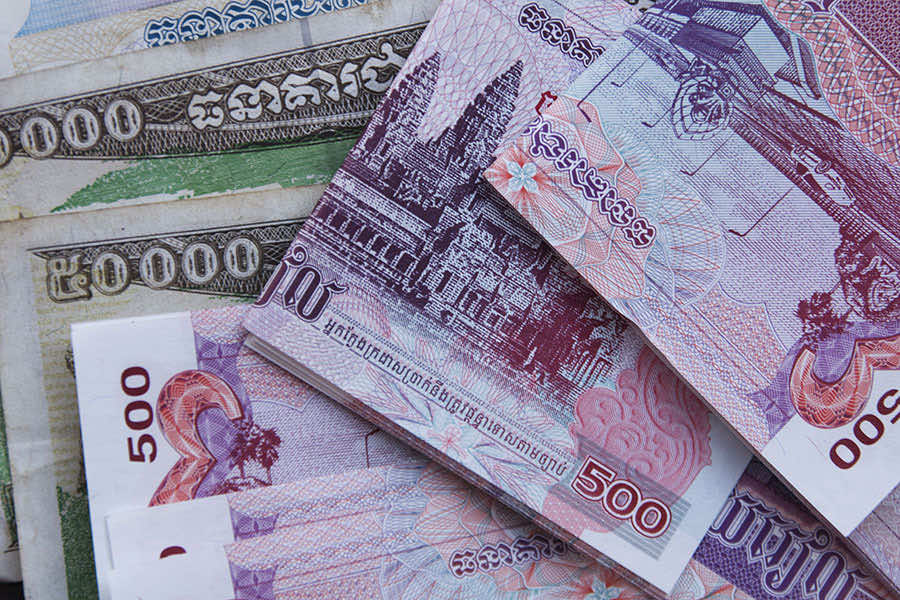
    Cambodia’s official currency is the riel (abbreviated by a lower-case “r” after the sum). Nowadays, you can see, in the local market, riel notes ( there are no coins ) in denominations of 50r, 100r, 200r, 500r, 1000r, 2000r, 5000r, 10,000r, 20,000r, 50,000r and 100,000r, but you rarely see the highest denomination bills.

    cambodian currency

    In far western Cambodia, Thai baht are in wide use. But among the patriotic Khmers, they love to use riel for dealing.

    Cambodia’s second currency is the US dollar, which is accepted everywhere, so there is no need to exchange into riel at the border. US dollar is widely accepted that you don’t need to change into local currency while traveling in Cambodia.

    Notes:

    * $1 notes are particularly useful; banks can supply them if you run out.
    * Avoid ripped banknotes, which Cambodians often refuse.
    * Near the Thailand border, many transactions take place in Thai baht.
    * If you pay in dollars or baht, change is often given in riel, which is handy since small-denomination riel notes can be useful when paying for things such as motor rides and coconuts.

    ATMs & Credit Cards

    ATMs compatible with international credit cards (Visa, MasterCard, JCB, American Express), can be found easily in all tourist cities, popular provincial towns, and border crossings. They are operated by banks such as Acleda (Visa cards only ), ANZ Royal and Union Commercial.
    In Cambodia, top hotels, airline offices, upmarket boutiques and restaurants generally accept international credit cards. But they may apply extra fees from the customers, usually 3% or more on the total bill.

  • Cambodia – Passport & Visa Requirements

    Cambodia – Passport & Visa Requirements

    1/ Passport note:

    To enter Cambodia, a passport valid for at least 6 months after the visa expiration date is required. For security reasons, it is advisable to carry copies of documents rather than originals when in Cambodia.

    2/ Visas for Cambodia Requirements

    To visit Cambodia, a visa is required for most nationalities except nationals of the visa exemption section below. A passport with at least six month validity and a recent passport-sized photo is required.

    Tourist & Business Visas:

    Visitors from countries not under Visa Exemption Agreements must apply for a Tourists (T) or business (E) visa valid for one month at the points of entry.
    Visa K can be issued to a Cambodian national entering the Kingdom on a foreign passport. (The applicant has to provide well-documented evidence, such as proof that one’s parents were Cambodian).
    Tourist visa can be obtained online at https://www.evisa.gov.kh/

    Visa Exemption:

    The nationals of the Laos, Malaysia, Philippines, Singapore, Vietnam, Thailand, Indonesia, Brunei Darussalam, Myanmar do not need a tourist visa and may stay in Cambodia for 21 and 30 days respectively.

    Visa Fees:

    • Single entry visa fee for tourist (T) (30 days): US$ 30
    • Single entry visa fee for tourist e-visa for single entry (T) (30 days): US$ 36
    • Single entry visa fee for business (E) (30 days): US$ 35

    The entry points to obtain Visa:

    Airports:

    Phnom Penh International Airport
    Siem Reap International Airport

    Cambodia-Vietnam border:

    Bavet International Check Point (Svay Rieng Province)
    Kha Orm Sam Nor International Check Point (Kandal Province)
    Koh Rohka International Check Point (Prey Veng Province)
    Banteay Chakrey International Check Point (Preyveng Province)
    Tropeang Sre International Check Point (Kratie Province)
    Prek Chak International Check Point (Kampot Province)
    Phnom Den International Check Point (Takeo Province)
    Oyadav International Check Point (Rattankiri Province)
    Tropieng Phlong International Check Point (Kampong Cham Province)

    Cambodia-Thailand border:

    Cham Yeam International Check Point (Koh Kong Province)
    Poi Pet International Check Point (Banteay Meanchey Province)
    Osmach International Check Point (Odor Meanchey Province)
    Sihanoukville International Check Point (Sihanoukville Province)
    Choam Sanguam International Check Point (Banteay Meanchey Province)
    Prum International Check Point (Pailin Province)
    Doung International Check Point (Battambang Province)
    Preah Vihear International Check Point (Preah Vihear Province)

    Cambodia-Lao border:

    Dong Krolar International Check Point (Steung Treng Province)
    Tropieng Kreal International Check Point (Stung Treng Province)
    It is required for the visa applicants to submit passport, application forms, a recent passport-style color photograph, and such other documents as determined by the status of stay.

  • Weather in Cambodia

    Weather in Cambodia

    Located in the tropical zone near the equator making Cambodia has a monsoon climate. Like other Southeast Asia countries. Cambodia is either warm or hot all year around with two distinct seasons: wet and dry seasons.
    Wet season is from June to October with rains happen in the afternoon or at night. The afternoon rains usually last no more than a couple of hours.

    Dry season can be divided into two sub-seasons, cool and hot. The cool dry season is from November to February. The monsoon rains trail off through October and November, and have usually stopped completely by mid November offering the best comfortable time of the year. The hot dry season is from March to May when it is less breezy and the sun can be quite intense and the air becomes hazier with the rising humidity.

    Best time to visit Cambodia

    You might consider a trip to Cambodia at any time of the year. The ideal month are December and January, when humidity is relatively low, there is little rainfall and a cooling breeze whips across the land, but this is also peak season when the majority of visitors descend on the country.

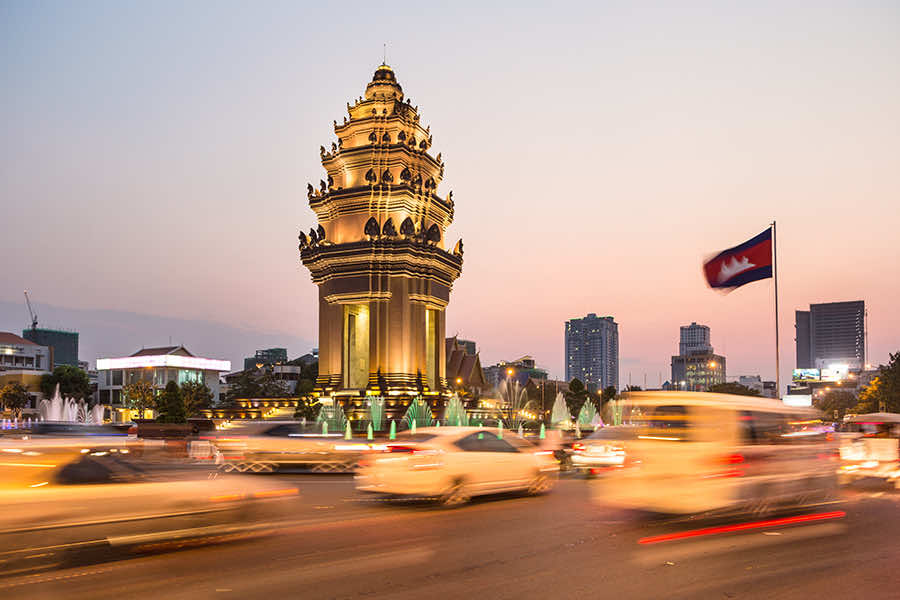
    Other things you may want to know is when the major festivals take place so that you could catch up with the fun. In April, the Khmer New Year lasts three days and is celebrated throughout the country. In October or early November, the Water Festival celebrates the beginning of the dry season together with exciting boat races and Buddhist ceremonies. On 9th, November, the Independence Day is celebrated, which marks the independence from France and is also known as Khmer National Day.

    Siem Reap

    shutterstock 192943070

    The climate in Siem Reap is regularly asked by tourists to Cambodia since it is the gateway to Angkor Wat Temple Complex. It is hot and muggy all year around, just like other parts in Cambodia. There are also two seasons here, which are differentiated by the amount of the rainfalls. Dry season is from November to April with the most comfortable temperatures and less rains. While the wet season runs from May to October with showers in the afternoon and heavy downfalls in the midnight. If you are not into the heat, then you’d better to visit during the early phase of the dry season. But if you don’t mind the heat, the rainy season is a better choice.

    Phnom Penh

    Phnom Penh 2

    Phnom Penh is near the equator so it is hot year-round with average temperature from 28°C to 33°C. It has three basic seasons in Phnom Penh. The rainy season runs from June to October with rains regularly. The summer season runs from February to May when the temperature gets very high with strong sunshine. So, the best time to visit Phnom Penh is from December to January with a cooler temperature and less humidity.

    Tonle Sap Lake

    tonle sap lake 1

    It is the largest freshwater lake in Southeast Asia. During the rainy season from June to October, the water in the Mekong River will fill the lake. But it will flow out from the lake to Mekong River during the dry season from November to May. Although tourists can visit it all year round, the best time should be July to December, especially the Kampong Pluk and Kampong Khleang floating villages on Tonle Sap Lake.

    Koh Rong Islands

    Located near the coast of Sihanoukville, Koh Rong and Koh Rong Samloem are famous for their serene beauty. Often described as an ‘island paradise’ by visiting tourists, they are a perfect holiday destination for families, couples, and groups of travellers.

    The best time to visit Koh Rong Island and its sister island Koh Rong Samloem is between the middle of November and the start of May. During these months you’ll have beautiful hot days with very little cloud and low humidity. One thing to note is that, although it is wonderfully hot throughout the peak season, there are several advantages of visiting Koh Rong during the rainy season. For example, those that visit during the rainy season get to enjoy half-priced accommodation and beautiful rainy scenes, and because it never gets too cold in Cambodia, swimming in the ocean is still a very pleasurable experience (the water rarely drops beneath 25°C).