Blog

  • The Complete Guide to travel to Cambodia

    The Complete Guide to travel to Cambodia

    When people think of traveling to Cambodia, the first thing that comes to mind is Angkor Wat. While Angkor Wat is truly magnificent, there’s so much more that Cambodia has to offer. With spectacular temples, beautiful islands and beaches, and a rich cultural heritage, it’s a shame to miss out Cambodia. In this travel guide you’ll realize why it’s a gem tucked in the middle of Southeast Asia.
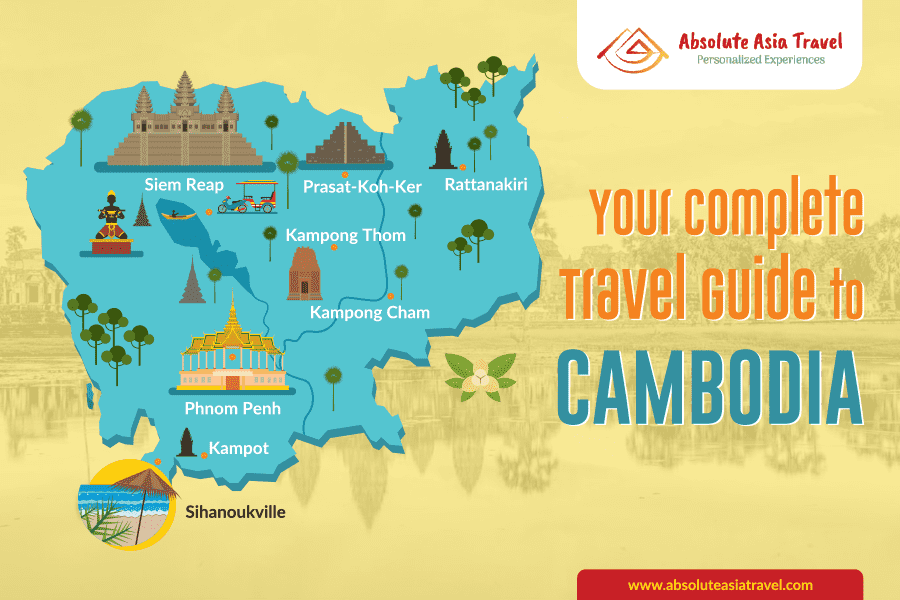
    Travel Guideline Cambodia 1
    <!– wp:ub/table-of-contents-block {"blockID":"8e6559c2-83fc-4fcb-8476-3e46abc5e52a","title":"Table Of Contents","links":"[{"content":"Quick Information","level":3,"anchor":"0-quick-information"},{"content":"When is the Best Time to Visit Cambodia?","level":3,"anchor":"1-when-is-the-best-time-to-visit-cambodia"},{"content":"What to Pack When Travelling to Cambodia","level":3,"anchor":"2-what-to-pack-when-travelling-to-cambodia"},{"content":"Key Towns and Cities","level":3,"anchor":"3-key-towns-and-cities"},{"content":"Top Cambodia Attractions“,”level”:3,”anchor”:”4–top-cambodia-attractions-“},{“content”:”Top 10 Things to Do in Cambodia”,”level”:3,”anchor”:”5-top-10-things-to-do-in-cambodia”},{“content”:”Finding the Best Hotel Accommodation in Cambodia”,”level”:3,”anchor”:”6-finding-the-best-hotel-accommodation-in-cambodia”},{“content”:”Getting Into and Around Cambodia”,”level”:3,”anchor”:”7-getting-into-and-around-cambodia”},{“content”:”What to Eat in Cambodia“,”level”:3,”anchor”:”8–what-to-eat-in-cambodia-“}]”} /–>

    Quick Information

    Visa: All travelers heading to Cambodia are required to have a 30-day tourist visa, which can be obtained on arrival for $30 in Phnom Penh, Sihanouk Ville, and Siem Reap. The website of the Cambodian government also offers e-visas, so visitors can apply beforehand to speed up entry into the country. With the e-Visa, travelers can enter Cambodia and stay for up to 30 days without any visa issuance at consulates abroad or in local airports.

    E-visas take three days to process and cost an additional $6. Check out this link on how to apply for Cambodian eVisa. Citizens from ASEAN nations can apply on arrival for a free visa which lasts for 30 days.

    Language: Khmer is Cambodia’s official language. It is spoken by more than 90% of the population. There are slight regional differences in the dialect, but majority of the locals speak central Khmer, which is by far the most common in the country.

    In recent years, Cambodia has witnessed a significant rise in tourism which has resulted to an increase in the use of English. The locals in small villages may not understand you, but you’ll surely be able to get by using English in the larger towns and cities.

    Currency. The main currency in Cambodia is the riel, followed by the US dollar, which is widely accepted. Businesses usually quote prices in riel or US dollars, but in towns and cities bordering Thailand, the Thai baht is sometimes used.

    ATM machines are available, including in all major tourist hubs. You will be given the option of withdrawing in either riel or US dollars and single withdrawals of up to $500 are possible as long as your account can handle the transaction. Most of the hotels and restaurants in big cities accept credit card payments.

    Electricity Socket: The standard voltage is 230V and the frequency is 50 Hz. Power outlets are two-prong round sockets and they accommodate plugs ****with two flat pins. In order to spare yourself the hassle of buying new adaptors everywhere you go, we suggest investing on a Universal Travel Adaptor before you travel.

    Your electric appliances can be used in Cambodia if the standard voltage in your country is 220 – 240 V, which is the case in Australia, Europe, the United Kingdom and most of Asia and Africa. On the other hand, if the standard voltage in your country is 100 – 127 V, as is in the United States, Canada and most countries in South American, you’ll need to use a voltage converter or a combined power plug adapter/voltage converter.

    When is the Best Time to Visit Cambodia?
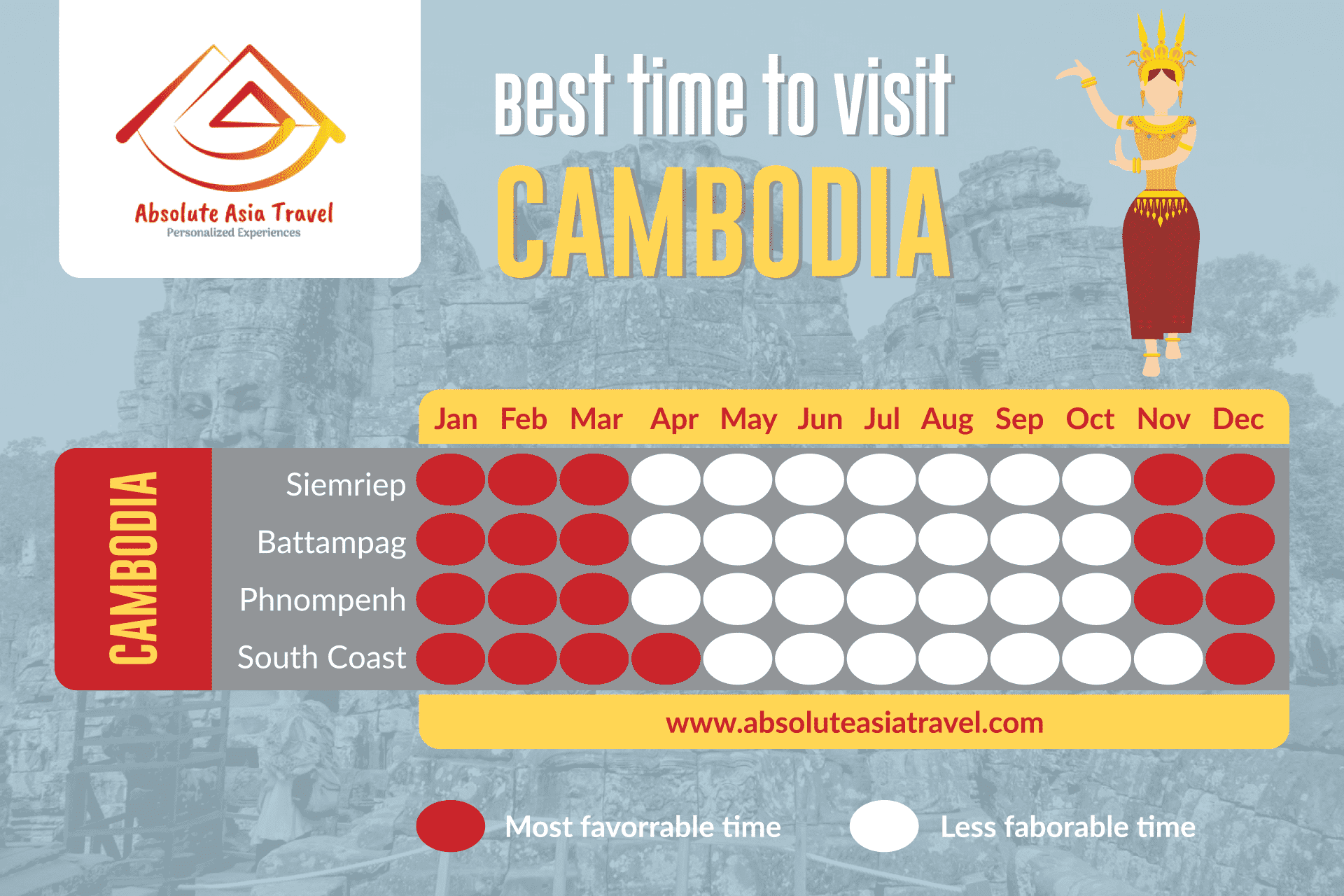
    Best time visit Cambodia

    If you are planning to visit Cambodia, it is nice to know that there is no wrong time to travel. The weather is warm all year, but there is a monsoon season that creates two climate conditions, rainy and dry. The best time of the year to visit Cambodia will depend on what you want to do during your stay and if you want to avoid the rainy season.

    Between November and April, Cambodia sees very little rain so it is perfect if you wish to enjoy a relaxing trip to the southern coast. Outside this period, humidity rises and the rains come. However, you must not be discouraged from traveling because the temples are tranquil, the rivers are free-flowing, and the countryside is lush and green. This is the ideal time to visit the outer-lying temples because they are no longer crowded.

    When summer ends, The Tonle Sap comes to life. This is one of Cambodia’s true natural wonders and the biggest freshwater lake in Southeast Asia.

    November is popular with tourists because the average temperature is around 25°C. It’s the perfect time to visit if you intend to wander around the temples, monuments, and markets. December and January are also busy months because they are dry and ideal for visiting the southern islands. Temperatures start to rise in March and April and they can be very humid for sightseeing. However, the festivities for the Khmer New Year take place in April. It is one of the most important festivals in Cambodia that coincides with the end of the harvest season.

    What to Pack When Travelling to Cambodia

    Regardless of when you plan to travel to Cambodia, it’s going to be warm and humid. Pack several lightweight, light-colored clothing to reflect the sun. The country’s tropical climate means it’s pretty hot and humidity is high all year round. However, it can get cool at night, particularly during the winter months, so it’s advisable to bring along a sweater. While ponchos are available in most places, you’ll be better off a rain jacket, especially if you’ll be traveling during the wet season.

    Other things to bring include a sturdy travel water bottle, an RFID travel wallet, an unlocked mobile phone, a pair of comfortable travel sandals, and a sand proof beach blanket if you’ll be visiting any of the islands. You will also need a sun hat and a powerful sunscreen especially when strolling around Angkor Wat. Key cities like Phnom Penh and Siem Reap will have most of the amenities that you’ll need, so there’s no cause for concern if you forget to pack something. You will be able to find all the essential items there.

    Key Towns and Cities

    Phnom Penh. Formerly known as Krong Chaktomuk Serimongkul or the “The City of the Brahma’s Faces”, this is the bustling capital and the most densely populated city in Cambodia. Once dubbed as the “Pearl of Asia,” it was regarded as one of the most glamorous French-built cities in Indochina. It exudes provincial charm and serenity with French colonial chateaus and tree-lined boulevards set in the midst of enchanting Angkorian architecture. Phnom Penh offers a plethora of fascinating touristy sites. Aside from the Royal Palace, the National Museum, the Silver Pagoda, the Choeng Ek Killing Fields, the Toul Sleng Genocide Museum, and Wat Phnom, there’s a menagerie of market places selling antiques, carvings, paintings, silver, silk, and even precious gems. Phnom Penh also serves as the portal to an exotic land – the world’s biggest religious complex, the majestic temples of Angkor in the west, the ethnic minorities of the northeastern provinces, and the pristine beaches of the southern coast.
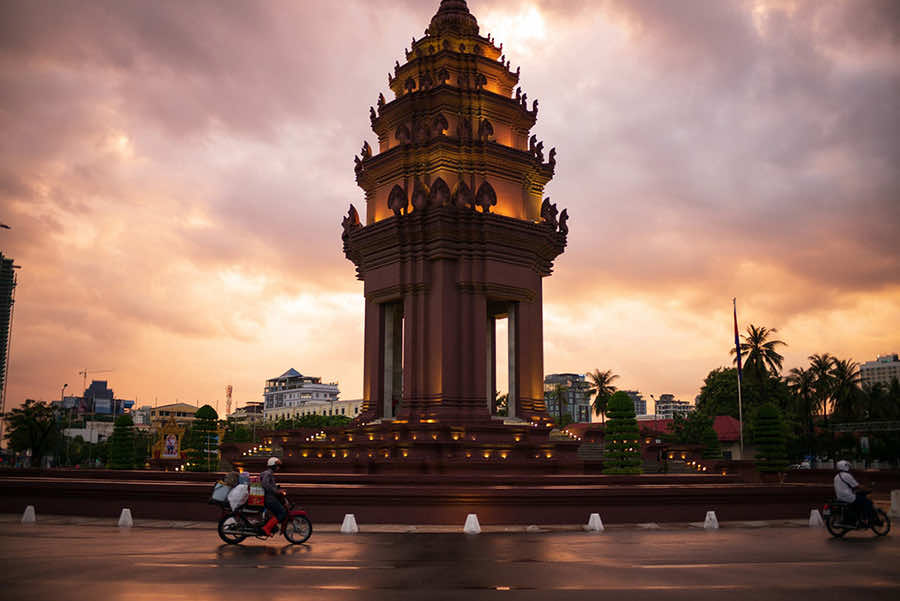
    Phnom Penh

    Siem Reap. This is a popular resort city and a portal to the Angkor region. It features colonial and Chinese-style architecture around the Old Market and in the Old French Quarter. There are museums, silk farms, souvenir and handicraft shops, traditional Apsara dance performances, fishing villages, rice paddies in the countryside, a bird sanctuary, and a cosmopolitan dining and drinking scene.

    As a world-renowned tourist destination, Siem Reap has plenty of hotels, resorts, cafes, restaurants, and businesses that are closely linked to tourism. This is largely due to the city’s close proximity to the Angkor temples, the most sought after tourist attraction in the region. It is said that more than a million travelers pass through Siem Reap each year, making it Cambodia’s second fastest growing city, next to the capital Phnom Penh. This is no surprise as Seam Reap has reinvented itself from merely a temple-dominated area to one that boasts hip hotels, great shopping, tours that suit adventurers, a rich cultural scene, and world-class dining across a range of cuisines.
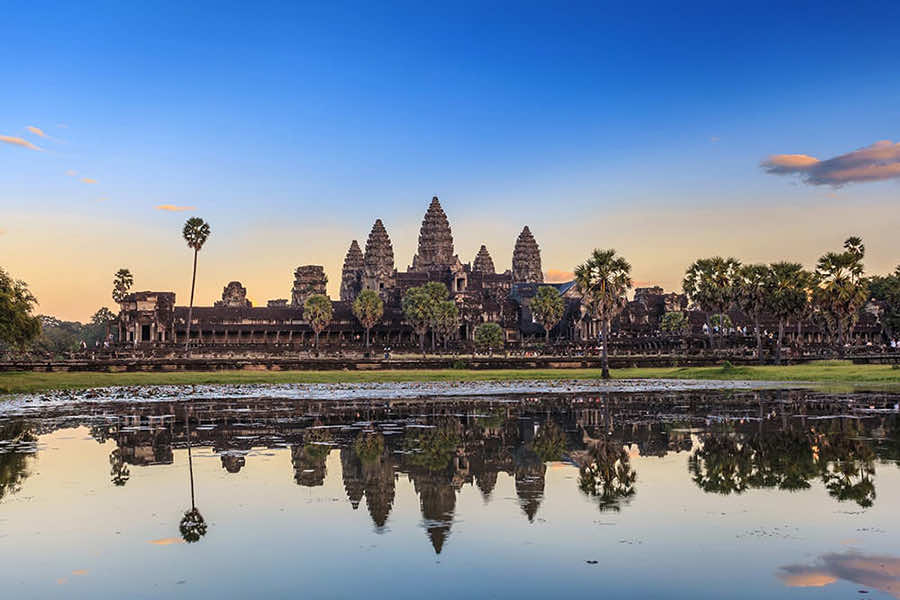
    Cambodia Siem Reap Angkor Wat 4

    Battambang. Also known as or Krong ,Battambang, this is a city located along the banks of the Sangkae River in northwest Cambodia. It’s a popular tourist destination because of its ancient temples, colonial buildings, and the infamous bamboo railway. Tourists love it here because of its eclectic mix of modern city, small-town hospitality and well-preserved colonial architecture, which blends seamlessly together to give Battambang its unique charm.

    Banlung. Located in the northeastern section of Cambodia, this is the capital city of Ratanakiri Province. Its central Phsar Banlung market has baskets, carvings, and jewelry made by local tribes. On the nearby Phnom Svay hill is the Eisan Ratanaram Pagoda which overlooks the city and is famous for its huge reclining Buddha. To the east is Banlung’s most popular landmark, the Yeak Lom Volcanic Lake which is home to several species of parrots and other exotic birds. It is therefore perfect for bird watching and enjoying the picturesque views of the surrounding area.
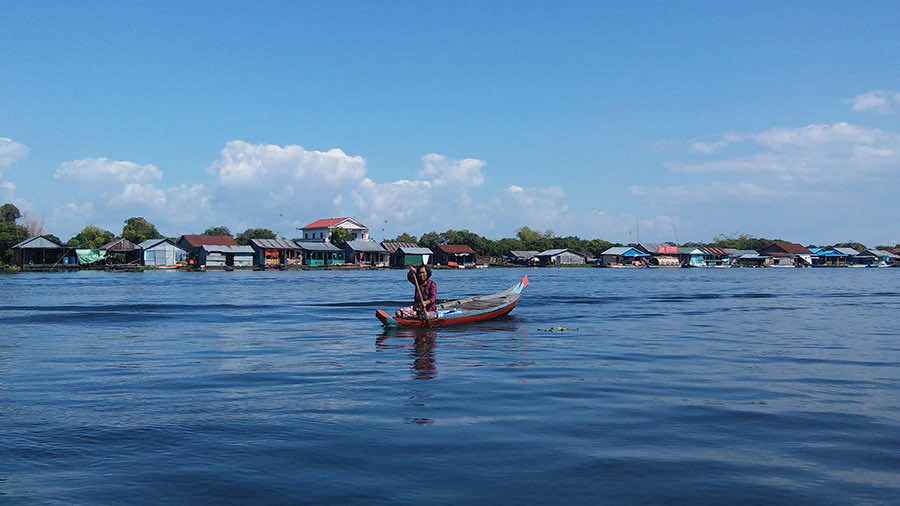
    img 20150109 224236 2

    Kratie. This supremely mellow city sits on the banks of the mighty Mekong River. Red flowered trees thrive along the riverbank and there are massive islands with powdery white sand beaches within the Mekong itself. The section of the river north of Kratie is home to an endangered group of Irrawaddy dolphins – the city’s top tourist attraction. You’ll also find a rich heritage of French-era architecture, as the buildings were spared during the wartime bombing that flattened other provincial centers in the country.

    Kampot. This laid back city is located on the languid Preaek Tuek Chhu River in southern Cambodia. It’s not difficult to understand why tourists become entranced with this riverside city. Its streets are lined with dilapidated shophouse architecture which conveys a dreamy ambiance; as if the entire city was frozen back in time with little or almost nothing changed for decades. Many structures date back to the colonial era, including the Governor’s Mansion which has been converted into a museum. Kampot has lots to offer, whether you’re into art, outdoor adventure, or you love sampling the food as you tour Cambodia’s best destinations, this amazing city has something for you.
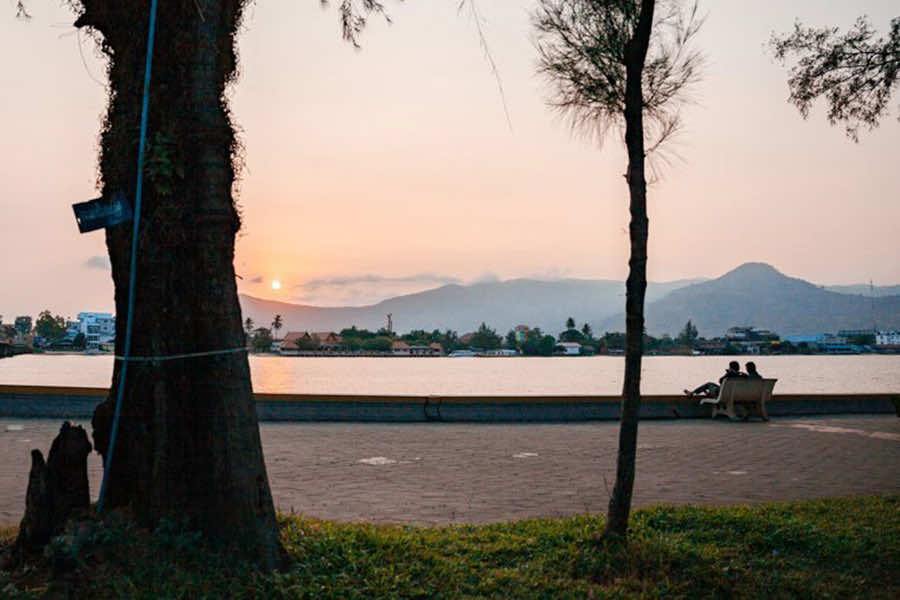
    Kampot river

    Sihanoukville. Also known as Kampong Som, this is a coastal city and the capital of a southwestern province with the same name. It is flanked by a string of beaches along its entire coastline bordering the Ream National Park in the east. The many white-sand beaches and nearby castaway islands make Sihanoukville the top seaside resort in Cambodia, with steadily rising numbers of domestic and foreign visitors since the late-20th century. The most notable beaches include Victory, Serendipity, Independence, Sokha and Otres. The good thing about these is that they are comparable to their counterparts in neighboring Thailand. Nowadays, Sihanoukville is dominated by Chinese tourists so travelers from other countries opt to use it only as a stopover for connecting to the equally beautiful beaches in Koh Rong Island.

    Koh Rong Island. This is the biggest and fastest-developing island in Cambodia. Situated close to the coast of Sihanoukville, this idyllic island is famous for its stunning natural sights and exciting man-made facilities. Travelers often describe it as an ‘island paradise’ because of its sugary white sandy beaches, warm crystal-clear waters, and a pleasantly warm tropical climate.
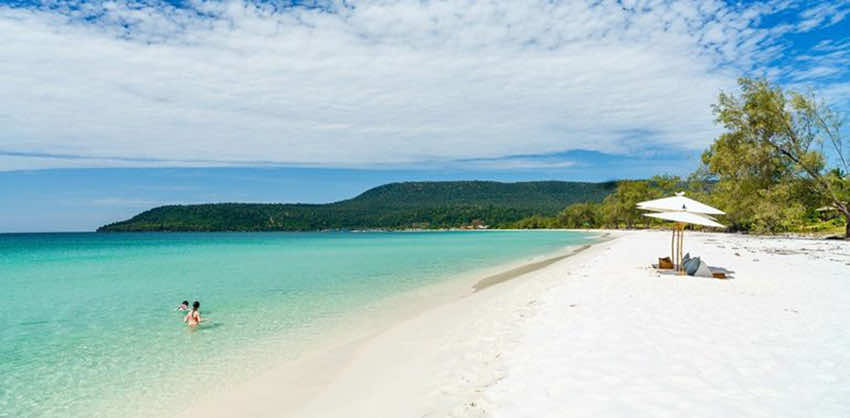
    Sihanoukville

    Many people visit Koh Rong for the awesome beach experience alone, but there are many spectacular locations on the island including the Royal Sand Koh Rong and the Sok San Beach Resort. The pristine beaches create a vibrant party ambiance, with lots of chic hotels, bars, and night clubs. This is definitely a vital stop on any Cambodia itinerary.

    Top Cambodia Attractions
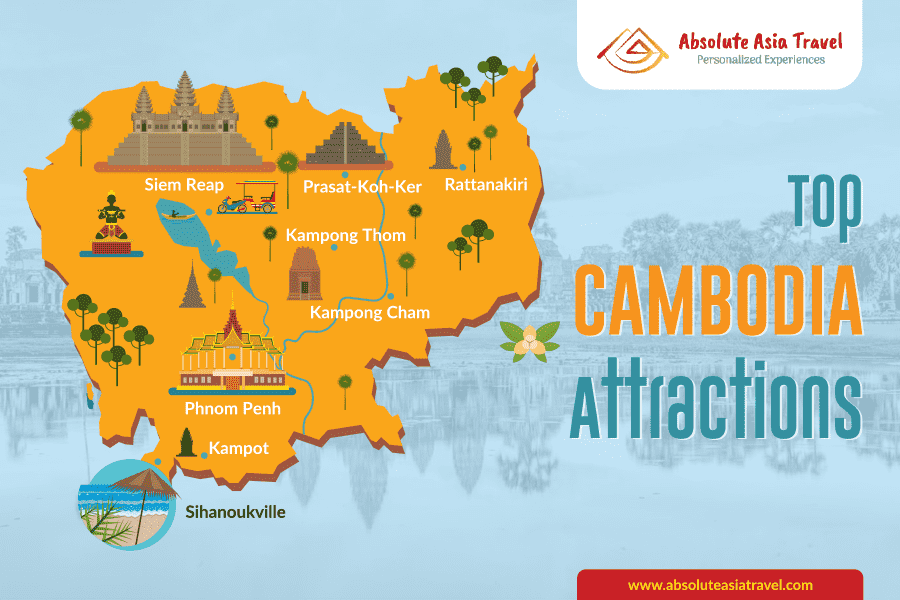
    Travel Guideline Cambodia 2

    Angkor Wat. This Hindu temple complex is the biggest religious monument in the world, covering 162.6 hectares. It was built in the early 12th century by Khmer King Suryavarman II in Yaśodharapura, the second capital of the Khmer Empire. It is the best-preserved temple at the entire complex, with the bas reliefs, intricate carvings, baths, corridors, towers, libraries, and moats withstanding the test of time. In 1992, the Angkor Archaeological Park was bestowed the title of World Heritage site as it serves home to the ancient capitals of the Khmer Empire and houses some of the ancient world’s most remarkable architectural and artistic accomplishments. Angkor Wat has become a symbol of Cambodia and the country’s top attraction for visitors.

    Bayon (Angkor Thom). This was the last capital city of the Khmer Empire and was founded in the late 12th century by King Jayavarman VII. A common mistake made by visitors to Cambodia is that Angkor Thom is just ‘another temple’. It’s actually an entire city covering 10 square kilometers. At the center is Jayavarman’s state temple known as the Bayon which can be distinguished by the dozens of serene and smiling stone faces on towers that jut out from the upper terrace. To the northern section of the ancient city are the other major sites that surround the Victory Square.

    Ta Prohm (Temples of Angkor). Originally called Rajavihara, this temple in Siem Reap Province was constructed in the Bayon style during the late 12th and early 13th centuries. Khmer King Jayavarman VII ordered the construction of the entire complex as a Mahayana Buddhist monastery and university. It rose to fame when it was used as one of the locations for Angelina Jolie’s film Tomb Raider. One of the most popular spots in Ta Prohm is the so-called ‘Tomb Raider tree’, where Angelina picked a jasmine flower. One of the main reasons why it was chosen as a filming location is that unlike other Angkorian temples, Ta Prohm managed to retain much of its original features – the photogenic combination of trees sprouting out of the ruins and the vibrant jungle surroundings. In 1992, UNESCO inscribed Ta Prohm on the World Heritage List.
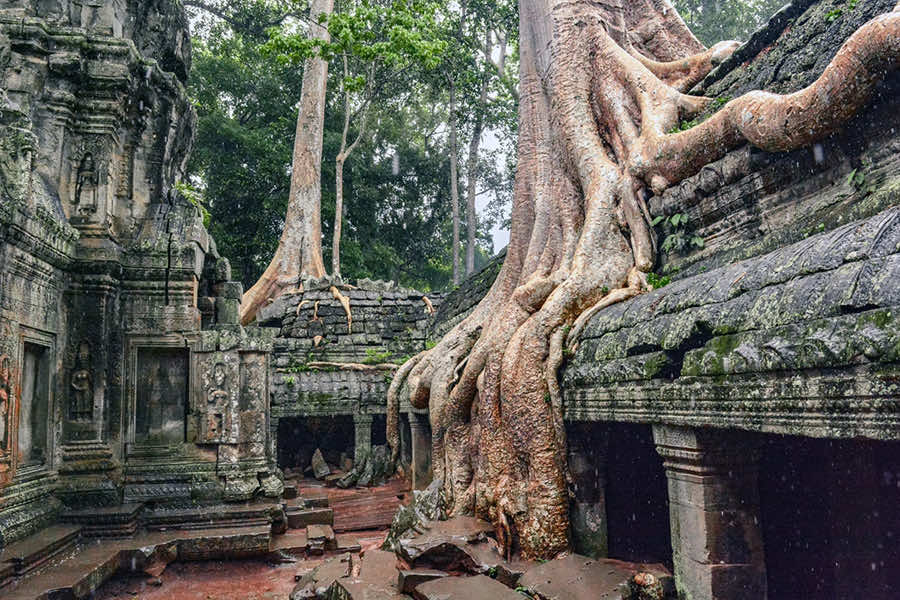
    Angkor Temple

    Banteay Srei. This 10th century Hindu temple goes by many nicknames including ‘the Lady Temple’, ‘the Pink Temple’, and ‘the Tiny Temple’. The name Banteay Srei is actually a modern one which means ‘citadel of beauty’ or ‘citadel of the women’. Regarded by many as the jewel in the crown of Angkorian art, Banteay Srei was constructed mostly from red sandstone, a medium featured in the intricate decorative wall carvings which are still visible today. The structures at the site are miniature in scale, which is quite unusual when measured by the standards of Angkorian construction. These factors made Bantay Srei extremely popular with travelers from across the globe.

    Beng Mealea. A stunning sight to behold, this is one of the most peculiar temples at Angkor, as nature has literally run riot. Located 68km northeast of Siem Reap and constructed to the same layout as Angkor Wat, Beng Mealea is the ultimate ‘Indiana Jones’ experience. It is enclosed by an enormous moat covering an area of 1.2km by 900m.

    Visitors entering from the south wend their way over heaps of sandstone blocks, through dark chambers and lots of hanging vines. The temple’s central tower has totally collapsed, but tucked among the foliage and rubble are impressive carvings and a well-preserved library. Beng Mealea is certainly a special place and it’s worth the time and effort to tour it thoroughly. Allow a half-day to visit, including the travel time from Siem Reap.

    Prasat Preah Vihear. This is an ancient Hindu Temple that sits atop Poy Tadi, a 525-meter cliff in the Dangrek Mountains. Built during the reign of the Khmer Empire, the temple is dedicated to the great god Shiva. It consists of sanctuaries connected by a network of pavements and stairwells over an 800 meter long axis. The complex dates back to the first half of the 11th century, but its history can be traced to the 9th century. The site is quite remote so it has been well preserved. It stands out because of the quality of its architecture and the remarkable quality of its carved stone ornamentation. In July 8, 2008 the World Heritage Committee listed Prasat Preah Vihear as a UNESCO World Heritage Site.
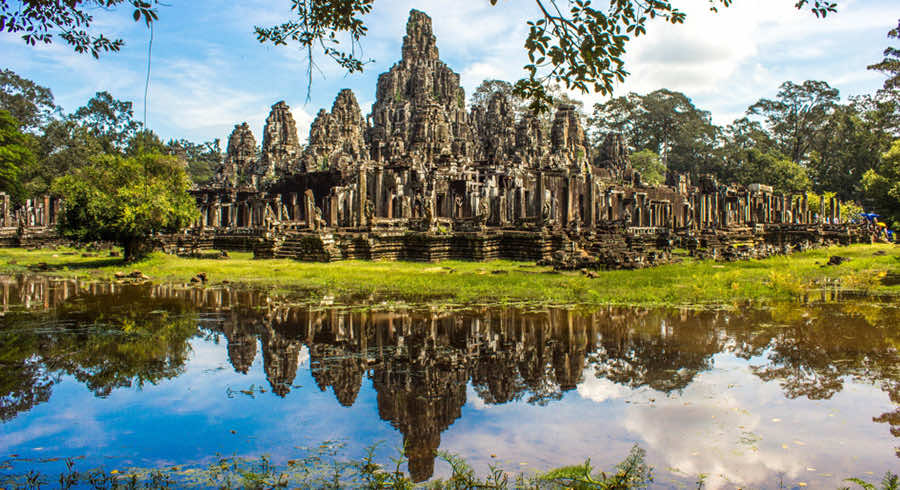
    Angkor Thom

    Top 10 Things to Do in Cambodia

    1. Angkor Wat – Stroll along the world’s largest temple
    2. Ta Prohm – Traverse the temple of ‘Tomb Raider’
    3. Apsara Dance – Witness the Khmer performance
    4. Biking – Wander across Siem Reap on a bike
    5. Cruising – Spot the Irrawaddy river dolphins and enjoy the sunset
    6. Cuisine – Indulge on fresh seafood and Amok
    7. Beaching – Chill out and relax at the laid-back beaches
    8. National Parks – Engage with the wild
    9. Kampot River Excursion – Go for a swim or hop on a kayak
    10. Shopping – Grab unique souvenirs from the local markets

    Finding the Best Hotel Accommodation in Cambodia

    There are a variety of options for accommodation in Cambodia, including everything from basic guesthouses to top notch international and boutique hotels. In major cities like Phnom Penh, Battambang, and Siem Reap you’ll be able to find the best of luxury international chains.

    Average Hotel Ranking

    Cambodia has lured more global hotel chains in the past few years and mid-range to luxury accommodation is thriving. In the major cities, luxury accommodation is frequently the best option for travelers who wish to experience the local culture along with the comfort and convenience that luxury hotels provide.

    Mid-range hotels usually go for $60-90 a night and are stylishly furnished. Most of them include breakfast and airport transfers for free. Luxury accommodation normally costs $120 or more a night. Options range from boutique hotels to international 5-star hotels and all-inclusive resorts. Because competition in the accommodation market is so high, travelers are likely to find prices that are lower than in many other Asian countries.

    Hotel Styles and Service Features

    Most of the mid-range and luxury hotels are embellished in enchanting Khmer style to enrich travelers’ experience. Particularly in Siem Reap, where the economy is anchored around tourism, the hotels are chic with lots of pomp and grandeur. In Phnom Penh, most of the hotels are business-based and therefore more subtle, while the beautiful boutique hotels are mostly located near the Royal Palace.

    In general, the hotels are known for delivering exceptional services. Check-in time is quite flexible, from noon to late in the evening, while check-out is often on or before 2 pm. The rooms are spacious with 3- and 4-star hotels offering floor areas of 25 to 35 square meters. 5-star hotels usually offer bigger and more open rooms.

    Bear in mind that when choosing accommodation, you must consider the location, amenities, length of stay, and possible deals. To help you out, kindly check this post about hotels in Cambodia.
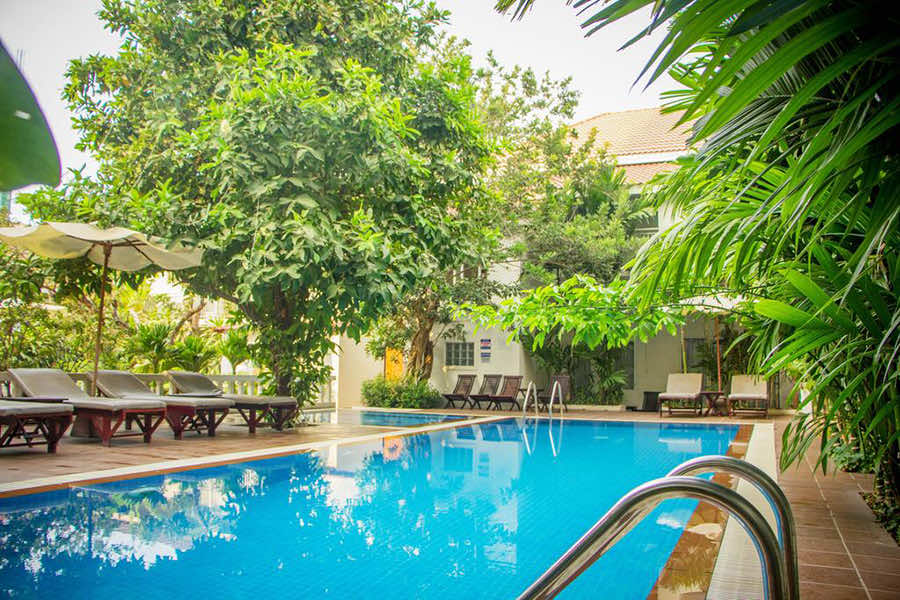
    skyline boutique

    Getting Into and Around Cambodia

    Getting to and around Cambodia is all part of an awesome adventure. Note that there is no direct flight from Europe, Australasia, North America, and South Africa, so you’ll need a connecting flight from elsewhere in Southeast or East Asia. You’ll arrive either at Phnom Penh (PHN) or Siem Reap (REP) International Airports.

    You can also enter Cambodia from neighboring nations through its land borders with Thailand, Laos and Vietnam. For instance, you can cross into Cambodia via the Vinh Xuong/Kaam Samnor border crossing located northwest of Chau Doc in An Giang Province, Vietnam. There are several companies in Chau Doc selling boat trips and cruise packages from Chau Doc to Phnom Penh via the Vinh Xuong border. Alternatively, you may get into Cambodia via speedboat from Song Tien Port.

    The best ways to explore Cambodia are by plane and private car. Booking a flight between cities is a cost-effective and popular option among travelers, while hiring private cars offer the most convenient and comfortable means of transportation. Other options like buses, taxis, motorbikes, and bicycles are available, but they are often inconvenient and time-consuming.

    Domestic Flights

    One flight is all you need to be able to visit the major tourist destinations, including Battambang, Phnom Penh and Siem Reap. The flight typically takes 1 hour. Basaka Air offers at least one flight daily between Phnom Penh and Siem Reap, and Siem Reap and Sihanoukville. The three operational airports in the country are well connected and the flights are very cheap. Airlines come and go, with newer ones cashing in on the booming tourism market.
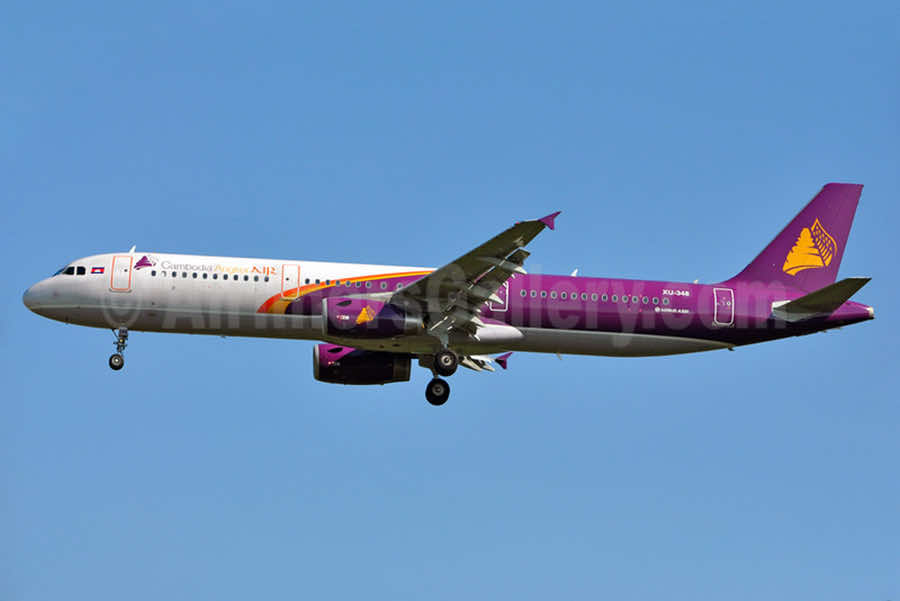
    Angkor Air

    Private Cars

    Renting is the most convenient and flexible way for travelers to visit Phnom Penh and Siem Reap. Both are warm almost all year round, with the annual average temperature of around 84ºF (29ºC) in Phnom Penh and about 86ºF (30ºC) in Siem Reap. The weather therefore makes it a near-necessity for visitors to travel in an air-conditioned car.

    Your guide speaks English and knows which attractions you need to see. You can spend as much time as you want at any given destination, and you’ll have the opportunity to explore the different attractions at your own pace. All these make traveling by private car the best option when in Phnom Penh, Siem Reap, and other major cities. All you need to do is sit back, relax, and let your driver/guide take care of everything for you!

    private car

    TIP: If you wish to experience Cambodia’s public transport system, take a bus from Giant Ibis, a popular company serving the Saigon-Phnom Penh-Siem Reap and Bangkok to Siem Reap routes. They offer complimentary pickup service for passengers staying at partner hotels and guesthouses. The company is considered the best bus operator in Cambodia and according to the Ministry of Public Works and Transportation, it has the safest record of any passenger transport company in the country.

    Cambodia by Train

    The colonial-era railway system of Cambodia was severely damaged during the Khmer Rouge period but is currently being gradually restored and reopened. In 2016, the line between the capital Phnom Penh and Sihanoukville reopened, with stops at Kampot and Takeo. Trains now run once a day from Phnom Penh to Sihanoukville every Friday, Saturday and Sunday, and twice in the opposite direction every Saturday and Sunday. The full route takes approximately seven hours and costs $7.

    The second section of the railway system, between Phnom Penh and Poipet, is undergoing renovation. The reopening of the entire line that passes through Battambang, Phnom Penh, and beyond, plus the dream of a railway connecting Bangkok, Ho Chi Minh City, and Phnom Penh, is most likely years from completion. In the meantime, if you wish to ride the trains in this part of Cambodia, you may take a trip on the bamboo railway in Battambang.
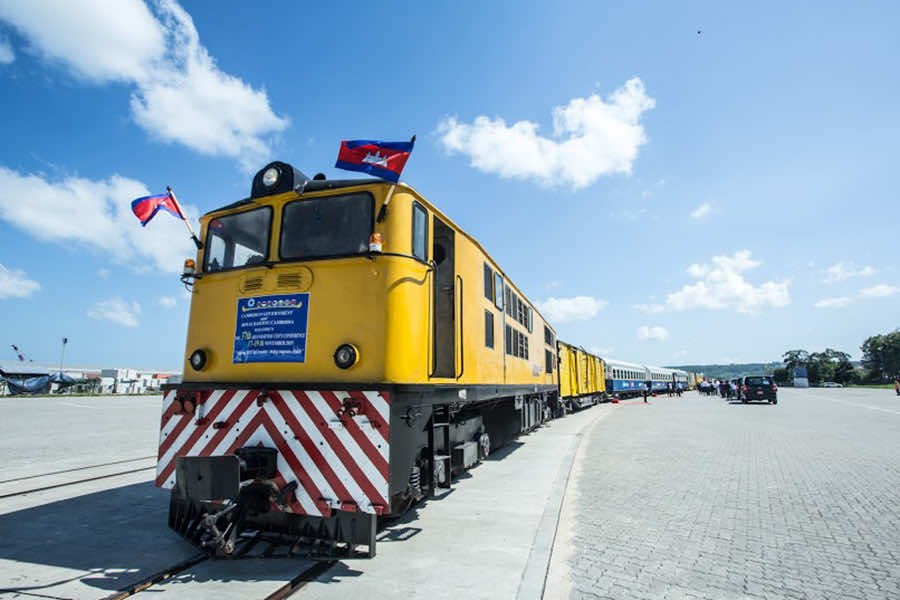
    railway

    Cambodia by Boat

    For years, the underdeveloped roads in Cambodia meant that traveling by boat was the primary means of getting between Phnom Penh and Siem Reap. Fortunately, it has now become faster and easier to travel by road. Even so, boats carrying 30 passengers still sail daily between Phnom Penh and Siem Reap. The trip end at Phnom Krom, a hill located near the dock at Chong Khneas 12 km south of Siem Reap. Travel is best during the wet season, which runs from June-November. Boats also operate daily along the Mekong between Phnom Penh and Chau Doc in Vietnam. From Sihanoukville, ferries and speedboats depart to Koh Rong several times a day.
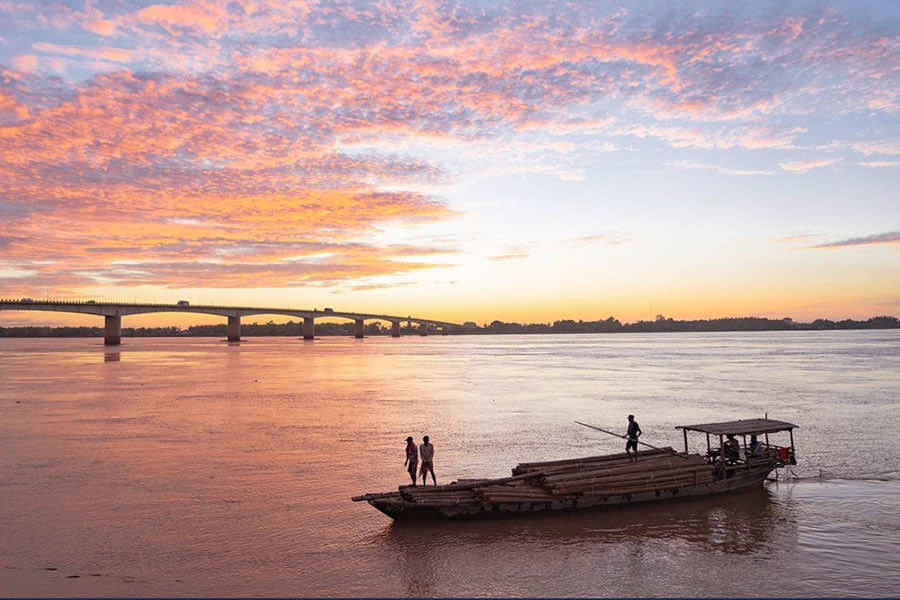
    sailing boat

    What to Eat in Cambodia

    The food may not be as popular as those in neighboring Thailand or Vietnam, but it is a unique cuisine packed with vibrant flavors and is definitely a must-try when you’re in the country. Cambodia is a superb destination for food lovers who wish to enjoy a culinary adventure. Let’s take a quick look at the country’s must-try dishes that will surely get your taste buds tingling!

    Fish Amok. This is one of the most popular dishes in Cambodia. In fact it is considered as the country’s signature dish and can easily be found on menus in most tourist hubs. Diced fish fillets are smothered in coconut milk, eggs, and palm sugar. To achieve layers of flavor, a paste called Kroeung is added. It is prepared by pounding spices and other ingredients like kaffir lime, lemongrass, turmeric root, and shallots. The traditional way of cooking fish amok is by steaming it in a banana leaf that’s shaped into a bowl.
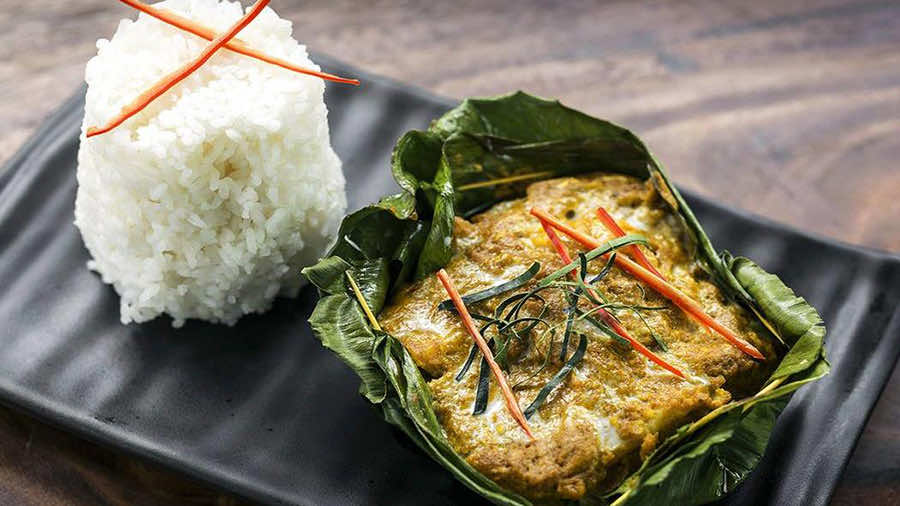
    fish amok

    Bai Sach Chrouk (rice and pork). This is a simple dish that will certainly satisfy even the most discriminating taste buds. Thinly sliced sweet pork is grilled and marinated in coconut and garlic, then served over warm rice with a side of radishes, pickled cucumbers and broth. This dish is commonly prepared for breakfast and can be found everywhere, from the streets to first-rate restaurants. The beef is tender and really flavorful because of the coconut milk.

    Nom Banh Chok. While noodle soup is a good lunch or dinner meal in other countries, it’s actually more popular for breakfast in Cambodia. The dish consists of rice noodles topped with a green fish curry sauce with lots of bean sprouts, shredded banana leaves/flowers, cucumbers, mint, basil and a wide variety of green vegetables. Although it looks strange, this dish is flavorful and is one of the must-try food while in Cambodia.
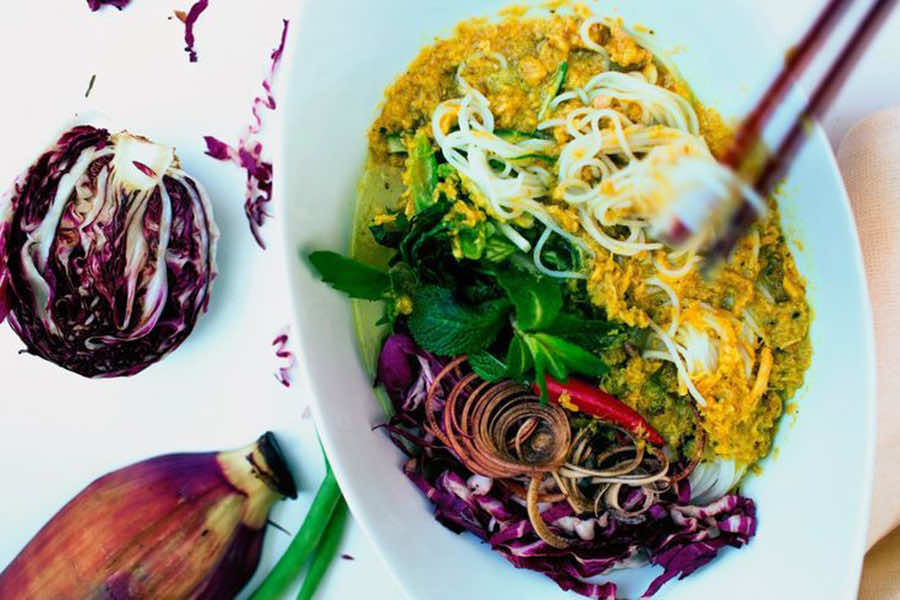
    banh nam chok
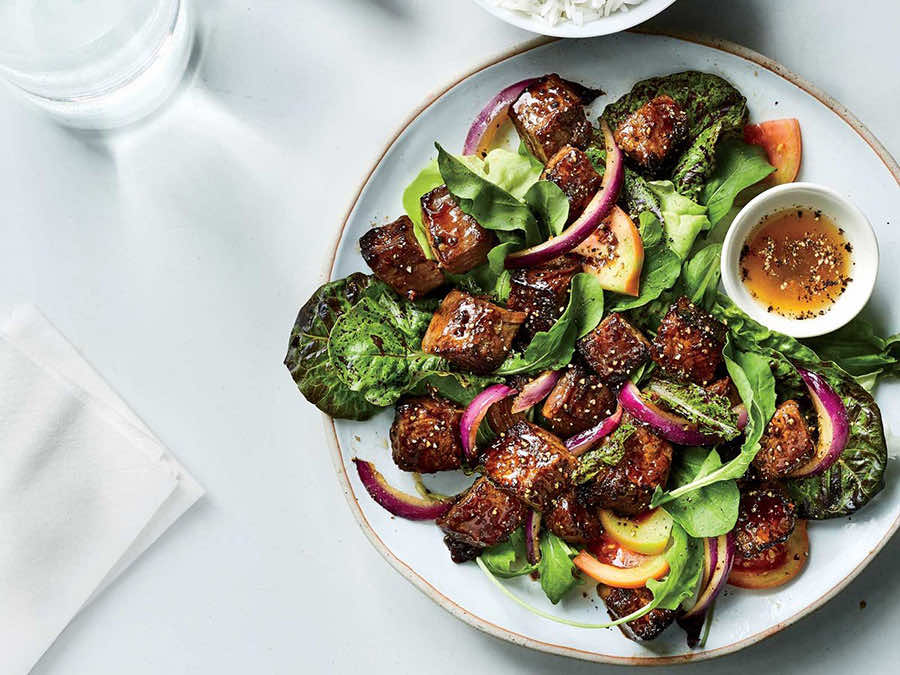
    lok lak

    Lap Khmer (Lime-marinated beef salad). Similar to ceviche, this dish features thin slices of beef marinated in lime juice and with plenty of basil, mint, garlic, bell pepper, shallots, and fish sauce. Sometimes the beef is lightly singed first then topped with lots of chilies. This is certainly not a dish for people with sensitive palates. Because of the spices, it almost always comes with a kick!

    Lok Lak. This Southeast Asian treat traces its roots in Vietnam, but when it reached Cambodia, it became so popular. This emblematic dish features juicy stir-fried beef served in colossal portions and topped with a salad of lettuce, tomato, cucumber, and onion. It is usually accompanied by rice, fried egg, and a traditional peppery lime dip on the side. Lok Lak is one of the staple dishes in Cambodia and is quite popular among Westerners.
  • Guide to Con Dao Island

    Guide to Con Dao Island

    Imagine Survivor meets Prison Break meets the undiscovered Maldives. It seems impossible and a very unlikely combination? But lo and behold, this guide to Con Dao Island, Vietnam will make it possible. There is a rich history in the islands of Con Dao, southeast of Vietnam. It might be a bit grim to the Vietnamese, as this island was their Devil’s Island (sort-of Alcatraz) under the French rule, but this is also an island that just screams paradise waiting to be discovered. 

    There are two sides to every story and this guide to Con Dao Island, Vietnam will try to cover both. The good thing is that the prisons have long been gone. They have been replaced by museums and memorials for all the war prisoners and persons of interest that went against the French (and then the Americans) during those years. And, Con Dao Island has been in the limelight since Angelina Jolie and Brad Pitt’s family went to the lavish Six Senses Resort. So it’s all uphill from here. 

    When to Visit

    Like most Southeast Asian countries, March to June is the best time to visit an island lathered with beaches everywhere. Con Dao Island is no different, this period is generally hot and dry. 

    If you’re from the snow-laden countries and want to go during winter (November until February), while it is generally hot in Con Dao Island, it is also really windy. It won’t be ideal for just relaxing on the beach as the sand will be found caught in your eyes or on your tongue. 

    Don’t waste your time going in October, as its rainy season and most boat trips would be canceled. 

    How to Get There

    If you have more than a hundred dollars to spare for a flight, Vietnam Airlines is the way to go. You’d be there in 45 minutes from Tan Son Nhat International Airport. There are at least 10 flights daily. 

    But if you prefer to travel by sea, a fast ferry (about 2-3 hours, depending on the sea conditions) can get you there for only $15. This ferry leaves Tran De Port (40 km southeast of Soc Trang) daily. 

    See & Do

    The beauty of Con Dao Island is that you can have the best of all worlds. Whether you like history, architecture, nature and trekking, fresh markets, a great motorbike ride, or the beach – it has everything for everyone. This guide to Con Dao Island, Vietnam will give you a little bit of everything.

    You go to island getaways for the lazy beach stays, and surely, the main island of Con Son has enough beaches for you to explore. But because most of Con Son is still underdeveloped (picture wild, rocky beaches with a lot of greenery), don’t expect pristine sandy beaches that go for long stretches. Expect small plots of sand and serenity. 

    Nhat beach is a sight to see, with its fine white sands and rocky background, while Dam Trau beach is lined with foliage and greenery (imagine the TV show Lost). If you want to be able to have dips in the water, head to Lo Voi beach, the water is clear and shallow. An Hai beach is the only one with a seafront hotel, so if you want to be able to hop and skip to the shore, this is the place for you. There are also diving spots and boat trips available for the water baby in you.

    Now here is a surprise for avid turtle lovers. Did you know that Bay Canh Island is host to the largest number of egg-laying sea turtles in Vietnam? And you have a chance to witness this, see Chelonia Mydas sea turtles laying eggs at night – of course, you’ll be camping out in tents by the beach, and it becomes a worldly experience you will never forget.

    If you would like to learn more about the history of the whole island, it’s time to get your Prison Break attitude on. Paying VND 60,000 ($2.6) can get you inside Phu Hai, Phu Son and the rest of the prisons open to the public, plus a museum. 

    Hiking and trekking, or simply going on a motorbike drive to see the island, is also a must while in Con Dao Island. There are a lot of safe trails and you wouldn’t even need a guide, especially in Con Dao National Park. Plus there’s a good chance of bumping into wildlife while doing so. You can get a trail map from the national park HQ and pay an entrance fee of VND 60,000 ($2.6) and off you go. You’d think that since it’s an underdeveloped island that roads are not good for motorbike rides, but in fact, you’re wrong. The infrastructure here is really good, even better than most of Vietnam. 

    There’s always a place to unleash your inner shopaholic, even though it’s a fresh food market. The Con Dao Market is best visited in the early mornings until noon when it’s bustling with new catch and freshly chopped meat. Another interesting shop is the Con Dao gift shop, especially if you’re eyeing for souvenirs like local handicrafts to bring home. 

    Stay

    Whether you’re looking for a luxurious place to stay in or a mid-range or a budget hotel, Con Dao Island has got you covered. For luxury (as of 2019) you have two options, the Six Senses Resort (where the Jolie-Pitt clan stayed, the price range is $400-$2000) and the Poulo Condor Boutique ($200-$500), which is newer and very French Colonial in design. 

    Most of the hotel selections are mid-range in price (all less than $100/night). Con Dao Resort on An Hai beach (literally on it), Villa Maison Con Dao Boutique Hotel is charming but it’s not going to offer you a seafront view, Tan Son Nhat Con Dao Resort is beside Con Dao Resort, but with a very different vibe. It has islandy decor and a few bucks cheaper. 

    For the budget traveler, expect really basic accommodation, and spend $20-$40/night. It’s still not as cheap as you’d want it to be, but that cash you save can get you something else. Lighthouse Boutique Hotel, Uyen’s House Homestay, Con Dao Camping hotel are a few of these budget accommodations. 

    Eat & Drink

    This guide to Con Dao Island, Vietnam won’t be complete without letting you know the food scene on the island! There are also a lot of street food vendors and seafood restaurants available to the foodies out there. Not to mention the cafe culture and hip bar scene is also making its way into Con Dao island. 

    Where else will you find good and fresh street food but in the Con Dao Market! They offer everything from pho to banh mi and some seafood too. The area around Pham Van Dong Park also becomes a foodie haven in the afternoon, and so does Nguyen An Ninh Street. There are a couple of rice eateries along the Nguyen Hue boulevard, all you have to do is to point which food items go with your rice. 

    If you don’t want to explore the street food scene, there are also a bunch of restaurants on Con Son. Hotels usually have their own restaurants, especially if you’re staying in a mid-range one. Thanh Huyen Restaurant is highly recommended for its grilled snakehead fish,Nguyen Duc Thuan Street has a lot of seafood restaurants to choose from. But if you feel like you need to tone down your palate exploration a bit, head on to Thu Ba Seafood Restaurant. They have an English menu and traditional Vietnamese dishes (apart from the extensive seafood list). Bar 200 and Inifiniti Cafe are your go-to for pizzas and Western cuisine.  

    Fear not, exploration comes hand in hand with vigilance. Con Dao Island is generally safe, but if you have a seafood allergy or any kind of allergies, let it be known. You can only do so much when you’re ordered to have a bed rest, and don’t let that precious time on the island slip away. 

  • Guide to Nam Cat Tien National Park

    Guide to Nam Cat Tien National Park

    While it would be hard to come up with an extremely complete guide to Nam Cat Tien National Park, with its whopping 71,350 hectares of land and a plenitude of flora and fauna, this will give you a bird’s eye view of what you need to know before hitting up the road to it. 

    Just around 160 km northeast of Ho Chi Minh lies the Nam Cat Tien National Park. This UNESCO biosphere reserve is a haven for nature and animal lovers. You won’t go wrong by putting this on your must-visit list while in Vietnam.

    Picture this – trekking off the beaten paths, witnessing a choral of singing birds, spotting the endemic gibbons, going on a night safari, biking till you can’t pedal anymore, or simply interacting with the locals – whatever it is that tickles your fancy, this guide to Nam Cat Tien National Park has it. 

    Best time visit Nam Cat Tien National Park

    When on a trail or a trek, the path needs to be dry. This happens from December to May in Vietnam, when there’s little rainfall. 

    But if there’s no other option for you than to go from April until November, then be mindful of certain paths that cannot be taken whilst the ground is wet. Not to worry, we got you covered. 

    Also, as this is a national park, wear appropriate clothes. Long-sleeved tops, hats, light trek pants, good shoes, and leech protection socks. Don’t forget to bring your mosquito and tick repellents. 

    How to Get There

    A guide to Nam Cat Tien National Park must definitely include the tricky transportation options that Vietnam offers.

    From Ho Chi Minh, there are two options to get to Nam Cat Tien National Park. The first is with your own transportation and by public bus. While it’s easy to put your destination on Google Maps, the route will have exit tolls that require payment. Some tolls do not let motorbikes through, so if driving one you might need to go through dirt roads. 

    A local bus departs from the Bến xe Miền Đông bus station and goes directly to Nam Cat Tien National Park. Don’t expect a luxury bus. This local bus has no legroom. It’s also packed, like a can of sardines, 99% of the time. There’s another bus, called the Phuong Trang or the Futa bus. It has legroom and its fleet is newer than the local buses. But it won’t drop you in Nam Cat Tien National Park.

    Another thing to consider is the ferry crossing into the park. They don’t allow ferries to cross at night, and the last trip is at 7:00 pm. 

    Entrance Fees

    This won’t be simple, so brace yourself a little. The entrance fee to the Nam Cat Tien National Park is 60,000 VND ($2.60). But this doesn’t give you entry to specific places nor activities, especially if you intend on exploring. This is a complete list of official fees. There might be “non-official” fees, so always be ready to dish out some dongs. 

    See & Do

    Yes, you’ll get a bird’s eye view from this guide to Nam Cat Tien National Park, but it doesn’t mean you’ll miss out on the small things. Especially if you join us for an unforgettable adventure. 

    If you love animals and would like to visit rescue centers, there are two in Nam Cat Tien National Park. But for now, until February 2020, the Dao Tien Endangered Primate Species Centre is closed. The centre is located upstream, you would need to ride a boat for 5 minutes to get there. Departure times are 8:30 am and 2 pm. The fee is VND 300,000 ($13) and should be booked in advance. 

    The Cat Tien Bear Rescue Center takes care of the Sun, Moon, and Sloth Bears who are endangered because their bile is being farmed for traditional medicine. The entrance fee is 150,000 VND ($6.50). 

    If you like to explore on your own, there are a couple of “safe” trails to choose from. The Crocodile Lake, Heaven Rapids, Botanic Gardens and Lagerstroemia trail, could be accomplished without a guide, especially in the dry season. Even though you don’t need a guide, there are fees for some of these trails (check the official list). 

    One of the best ways to explore the Nam Cat Tien National Park is by bike. You will be able to cover more kilometers and enjoy the scenery, so every second is worth it. But, it’s not allowed to bring your own bike into the Park. You can rent for VND 30,000 ($1.30)/hr. 

    Highlighted activities of the Nam Cat Tien National Park include visiting the Ta Lai Ethnic Village, Night Safari, and the Gibbon Walk. For the night safari, the tour includes a ride in a jeep and leaves at 6:30 pm and another one at 7:30 pm. This tour lasts for 50 minutes with the chance to see sambar deers, civets, porcupines, and muntjacs. The fee is VND 160,000 ($7). 

    If you want to visit the Ta Lai Ethnic Village, a bike ride is required. It would be nice to have a grasp of how the villagers are living, see traditional weaving, and just marvel at the beauty of this place.

    The Gibbon Walk is a unique experience on its own (even if you don’t see the actual gibbons). You would be leaving the park HQ at 4:30 am, so waking up earlier is a must. The tour is only for 4 people/group, so book ahead and the fee is VND 1000k ($44). You would be staying in hammocks after a trek with torches and wait for the gibbon choral cry. This signals the beginning of their day. 

    Where to Stay

    You have the option to stay inside the Nam Cat Tien National Park, or just outside it. Inside, you can stay at the Green Cat Tien Hotel. It is run and managed by the park, so don’t expect anything but basic and rustic. Though you do get 30% off on tours, guides, etc. The Forest Floor Lodge though is a whole new world. It offers more comfort and newer lodging. There are also two restaurants inside the park, Yellow Bamboo and Dipterocarpus. 

    Just outside, you have the Cat Tien Jungle Lodge, the Cat Tien FarmStay, and the Green Bamboo Lodge Resort. These hotels are newer and offer more comfort and amenities. Some also serve Western food. But remember, they are outside of the park so you’d have to take the ferry every time you go in. 

    Do not be overwhelmed. There are so many activities to do, and so many sights to see and the best way to do it is to have a bike tour from Ho Chi Minh until the Nam Cat Tien National Park with us. You won’t have to worry about getting there through the back roads, avoiding tolls, while enjoying the wondrous scenery. 

    Plus, there’s no need to take note of entrance fees and various activities inside the park itself. We will cover at least six activities (including the night safari, biking, and trekking of course) and you won’t have to bother booking accommodations, or buying food and water, you’ll be able to explore minus all the extras that come with it. After all, this is Vietnam. Having someone who knows everything by heart is a total plus.  

    You’re all set and good to go! Remember, this guide to Nam Cat Tien National Park is just giving you a scratch of the surface. The real deal behind this article is going to leave you with a stiff jaw. You’ll just keep saying wow all the time. Let us guide and entertain you. And we’ll go beyond the park and back, so many surprises along the way! We want you to savor the moment and bring back memories that will last a lifetime. 

  • Quick guide to Ben Thanh Market, Ho Chi Minh City

    Quick guide to Ben Thanh Market, Ho Chi Minh City

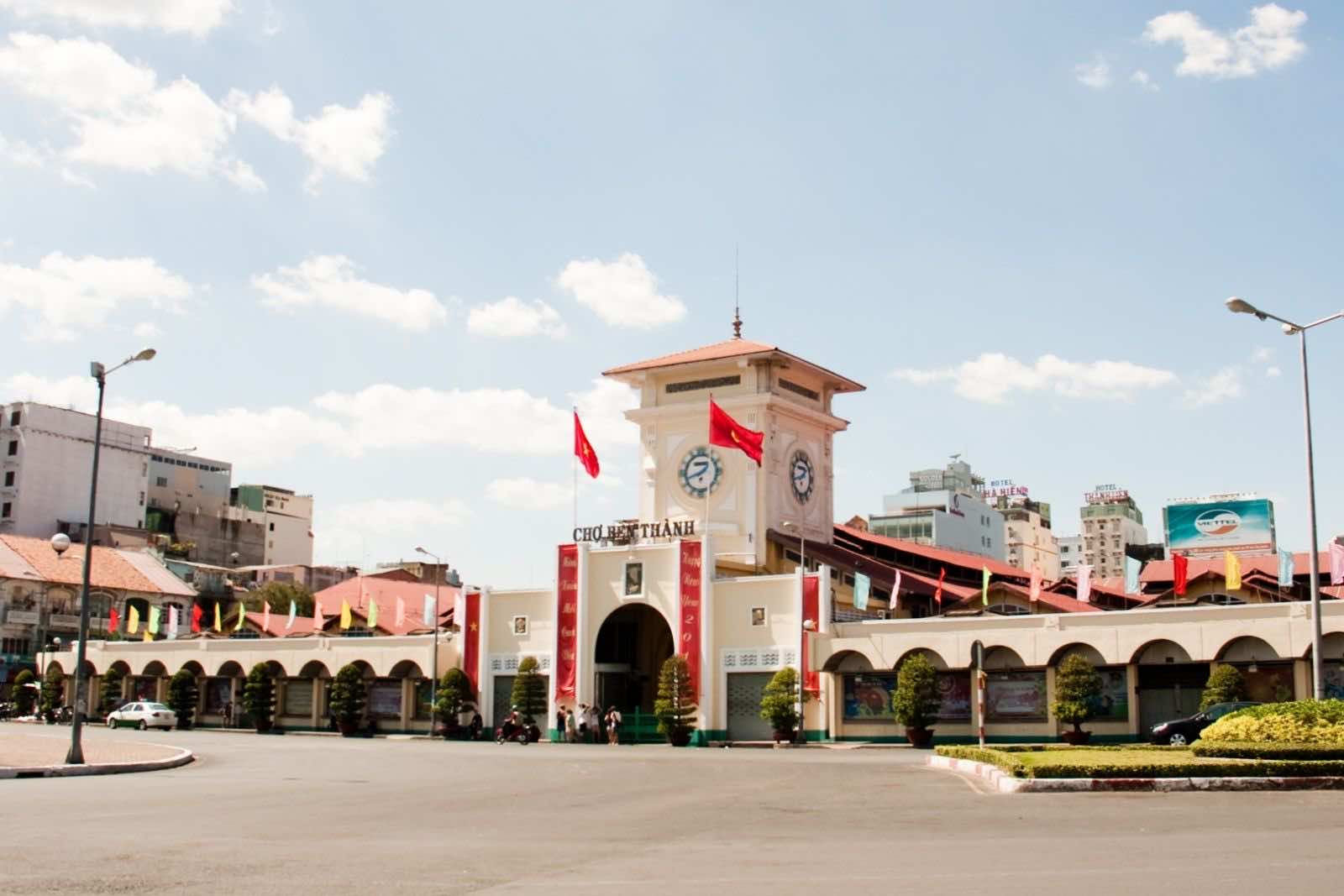
    While everybody in the world has probably heard of the Grand Bazaar in Turkey, the Christmas Markets in Viena, or the Chatuchak Market in Thailand, Vietnam has something that’s the same, but different, to offer. This is a guide to Ben Thanh Market, Ho Chi Minh City – the place that has it all, from knock-off goods to pig intestines, US-Vietnam War memorabilia to original Trung Nguyen premium blend coffee, name it they have it. 

    Everything in  Ben Thanh Market is reflective of the products, the food, and the day to day living of the locals. And after reading this guide to Ben Thanh Market, Ho Chi Minh City, you will have a better grasp of what to expect before you step foot in the hallowed grounds. It’s going to be a long day in there and it could be overwhelming too, trust us. 

    You’d probably wonder, why then, should you visit this scorching hot, thief den, haggler’s nightmare of a place. The answer is simple – culture. Everything that you need to learn, know, see, hear, and feel could probably be summed up in this place. The Ben Thanh Market is where you can find what locals eat, wear, use, and do. And finding some souvenirs won’t hurt!

    Getting There

    All roads lead to Ben Thanh Market. And we mean it. This is probably the most accessible place in Ho Chi Minh city. There are a couple of bus stations around the area, and there is even a direct bus from the Tan Son Nhat International Airport. Take bus 152 and pay around VND 15,000 and you’re in Ben Thanh Market. 

    It’s really that easy. You can take taxis or motorbikes, and they will definitely know where this is. It’s in District 1 and is surrounded by the streets of Tran Hung Dao, Le Loi, Ham Nghi, and Le Lai.

    Address: Le Loi, Ben Thanh, Quan 1, Ho Chi Minh, Vietnam

    Opening Hours

    The early bird gets the worm, and like most markets, Ben Thanh opens as early as 6 am. But if you want to be a witness to the hustle and bustle of early morning preparations, come at 4 am. You’d even most likely to witness prayers and offerings before the vendors start their day. You won’t be able to come inside the market until official opening hours, but it’s still a sight to see from the outside.  

    The market closes at 6 pm, but only the inside. This is the time when it gets interesting. The market springs to life outside, on the streets surrounding the actual building, and it becomes a totally different place. This is a hawker kind of place, food stalls and prop up restaurants everywhere. This can go on until midnight. You’d get to have a glimpse of Ho Chi Minh City street food/hawker stalls/night market/local scene all in one go. 

    What’s Inside aka What To Buy

    If we tell you that you can find anything that you can possibly think of, would you believe it? This guide to Ben Thanh market, Ho Cho Minh City can enumerate all the items that can be found inside, and then you’d probably need a year to read everything. 

    What you really need to know is that there is a fresh food section – vegetables, fruits, and meat – by the north entrance (opposite of the clock tower). If you aren’t up for a tour of chopped and bloody animal parts, then we suggest that you don’t enter the building through here. But if you do want to pick up some fresh produce then brace yourself for the smell – it ain’t pleasant. Good thing though, most of these stalls close by noon. 

    Another important tip, the stalls near the main doors are the fixed price ones. These are government-run, so haggling doesn’t do any good here. An easy way to distinguish this is by the salesperson in the stall, they’re wearing a light blue collared top, which is their uniform.

    Move deeper inside and this is where you’ll probably find tourists trying to haggle their way into the cheapest pack of peanuts they could bring home. Or that famous Vietnamese pointed hat – non la. Whatever it is that you want to buy, wooden chopsticks, Nike running shoes, an ao dai (traditional costume), or a Guess watch – they will have it. What you probably need is time, patience and a lot of vigilance. It’s also not the safest place to bring a thousand dollars or expensive phones and gadgets.  

    Another tip is to go to Ben Thanh Market as early as you can. It’s not yet hot in the earlier part of the day. Then just come back at night for the street food. 

    Where To Eat

    If you do get hungry during day time, fear not, there are food shops and kind of food cart stalls inside the Ben Thanh Market. Dive into the very famous Pho (this post is not going to be complete without it), Xoi, Banh xeo (Vietnamese pancakes), Bun cha – okay you might think I’m just literally putting a bunch of letters together but hey, sampling these dishes will make you come back for more. Needless to say, you will never go hungry in Ho Chi Minh City. 

    Where To Stay

    If you’re a certified shopaholic and foodie haven, then it would be awesome if you stay in accommodations near Ben Thanh Market. Imagine having to scour the whole market for great bargains the whole day and then without even noticing, it would already be dark and you need to eat! All you have to do is head back to your hotel (which is right across Ben Thanh Market), drop your shopping bags and head back just in time for the night market food stands. 

    Yes, this is very possible. There are 3-star hotels that are still mid-range like A&EM Hotel ($40/night, 1-minute walk to Ben Thanh Market), Avanti Hotel ($58/night, 2-minute walk), Anpha Boutique Hotel ($63/night, 2-minute walk). Hotels like these (and more near Ben Thanh), will provide you ample comfort after your shopaholic and foodie experience (and a bit of luxury at the side won’t hurt). 

    This quick guide to Ben Thanh Market, Ho Chi Minh City is not for the faint-hearted. It takes a lot of guts, will power and a lot of water (keep hydrated!) to wander inside the Ben Thanh Market, let alone bargain for a few items. Make the experience more enjoyable by lowering your expectations – maybe you won’t be able to complete the rounds of the whole market in one go, or maybe you just need to focus on what you really need to buy. Whatever it is that you set yourself to accomplish in Ben Thanh Market it’s also important to keep yourself healthy and safe. You wouldn’t want to be ending up in bed while Ho Chi Minh City is just out there waiting for you. 

  • Top Ten Things to Do in Vietnam for Family Holiday with Children

    Top Ten Things to Do in Vietnam for Family Holiday with Children

    Vietnam wouldn’t pop out in typical searches as a holiday destination with kids. Against places like Dubai, Singapore, London, Florida, Bali, Spain, Greece, and the likes – who would think of going to Vietnam? But what you don’t know could potentially be the best adventure for you and your children! Here are the best things to do in Vietnam with kids. 

    Top Ten Things to Do in Vietnam for Family Holiday with Children

    1. Water Puppet Theatre (Hanoi, Hoi An and Ho Chi Minh City)

     The lights, the sounds (a live orchestra playing traditional Vietnamese instruments), and the sights are going to be magical, you wouldn’t even realize it has been an hour or so. And they are on the water, yes. This water puppet theatre tradition is more popular in Northern Vietnam, especially in Hanoi and Hoi An. An entrance fee of around VND100,000 ($4.4) is to be paid, and an additional for filming. 


    2. Ha Long Bay Cruise

    To get some downtime from probably one adventure to the next, bring your children in Ha Long Bay. The cruise will be a refreshing reminder of the wonders of nature and it can calm and relax them, even in the scorching heat. Not to mention seeing the Hang Thien Cung cave, the children will feel like they are in a movie. And if they do get bored, kayaking is offered and some even have karaoke onboard. 

    3. Lantern Making (Hoi An)

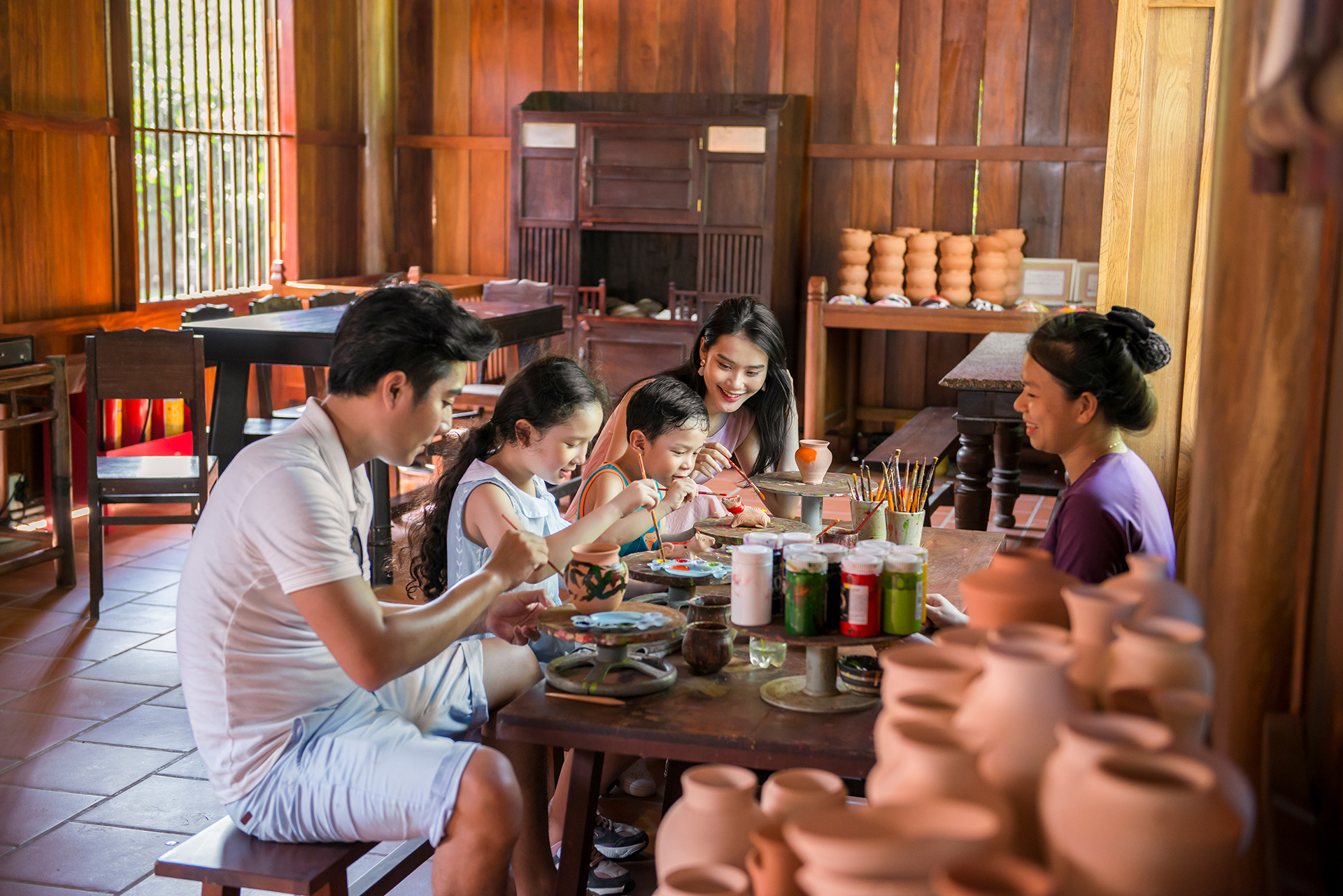
     Instead of buying a lantern from Hoi An, the city of lanterns, why not attend a workshop and make one? The children will get a kick out of it, and it’s also a souvenir at the same time. You pay almost the same price for buying a ready-made lantern and if the kids make their own. If your kids are too young to do it on their own, it can become a child and parent activity, more ways to bond then!

    4. Farming and Fishing Adventure (Hoi An)

    One of the great things about having holidays with your kids in Vietnam is that you get to do summer activities in countries with four seasons all year round! And that includes a farming and fishing eco-tour on the Cua Dai River. Just think of how cute the kids will be on a Vietnamese bamboo basket boat. Not only will they do actual farming and fishing, but they’d also learn that different people in different parts of the world do different things for a living and that not everyone sits behind a desk. 

    5. Bask in the glory of Sun World (Ba Na Hills)

    Mountains and a theme park – what other combination can you ask for? It’s one of the best things to do in Vietnam with kids, and you can never go wrong with a theme park on a hill. You’d need more than a day to completely explore this place. And don’t forget to take pictures on the golden bridge (after all, it’s made for your Instagram). Just come on a clear, sunny day to be able to enjoy it, as it gets foggy when it’s cold. 

    6. Crazy House (Da Lat)

    Ah, don’t you just love seeing things from the perspective of a child? The Crazy House in Da Lat is already in that form, with it’s funky and eye-boggling design, and bringing in your kids to see this is going to be one of the highlights of this trip. If you only have a few vacation days, this should be in your top ten things to do in Vietnam for family holiday with children. You wouldn’t regret it. 


    7. Cu Chi Tunnel Crawl

    One of the top ten things to do in Vietnam for family holiday with children is a visit to the Cu Chi Tunnels. While it’s true that the history surrounding the area could be a bit horrifying (you could skip this part if your children are too young), but the experience of going underground is something the kids wouldn’t forget. After all, it’s all about forts, tents, tunnels, and caves when it comes to a child’s imagination.


    8 Mekong Delta & the Floating Market

    You are opening a world of a thousand possibilities by bringing your children along the Mekong Delta. Imagine, it’s quite an adventure riding a wooden boat that is being paddled, wearing the non la, and seeing their surroundings from this perspective. And it’s not just the floating market that will capture the kid’s senses, there are a couple of other things that they can observe, like the vegetable gardens alongside the river. It is indeed one of the best things to do in Vietnam with kids. 

    9. Phu Quoc Cable Car Ride

    The Phu Quoc Cable Car ride to Pineapple Island is one of the longest in the world, with no stops at 8 km. Imagine having a bird’s eye view of the turquoise waters, the coral reefs, and the splattered islands. The ticket price is around VND150,000 (US$6.40). Not to mention having some chill time at the beach when in Phu Quoc. 


    10. Inspire The Foodie in Them

    Vietnam’s cuisine is a must-try for any age. Imagine the explosion of flavors that your child will experience with cuisine that’s influenced by the French and still very Southeast Asian with noodles and all. You can go on a food tour with them, you don’t have to give them street food unless they have strong stomachs or have eaten street food in Asia before. They can also try a cooking class! For sure, they’d be so curious how to make pho. 

    These are just a few of the best things to do in Vietnam with kids. There are a lot more adventures that await you and your children in Vietnam. Run in the fields, bike on rough roads leading to ethnic villages, meet the locals and explore their palates, shop at Ben Thant, to name a few. But these top ten things to do in Vietnam for family holiday with children are what we feel that could enlighten your family about Vietnam’s culture by experiencing it. 

  • Explore the Great Outdoors: The Best of Vietnam Adventure Holidays

    Explore the Great Outdoors: The Best of Vietnam Adventure Holidays

    zipline in Quang Binh min

    Vietnam is a sensational destination on all fronts thanks to its colorful history, rich culture and breathtaking landscapes. The country has a lot to offer, from kids to the kids at heart. The world quickly took notice and now you’ll see ‘Vietnam adventure holidays’ and ‘Vietnam adventure tours’ being advertised all over the web…and for good reasons…

    In Hanoi, you can lose yourself in the Old Quarter, the city’s ancient shopping district. Take a hike around Hoan Kiem Lake or explore the iconic Ho Chi Minh Mausoleum. Head north and take a leisurely cruise in Ha Long Bay, a World Heritage Site and one of the Seven Wonders of the Natural World.

    Enjoy the pristine beaches of Nha Trang or take a boat ride down the slithering waterways of the Mekong River. Take a break in Hoi An then head south to Saigon and explore the subterranean network of the Cu Chi tunnels. From north to south, Vietnam offers an outstanding diversity of adventures, so whichever you choose, you’re in for something that you’ll cherish forever!

    Canyoning

    dalat canyoning abseiling vietnam 4

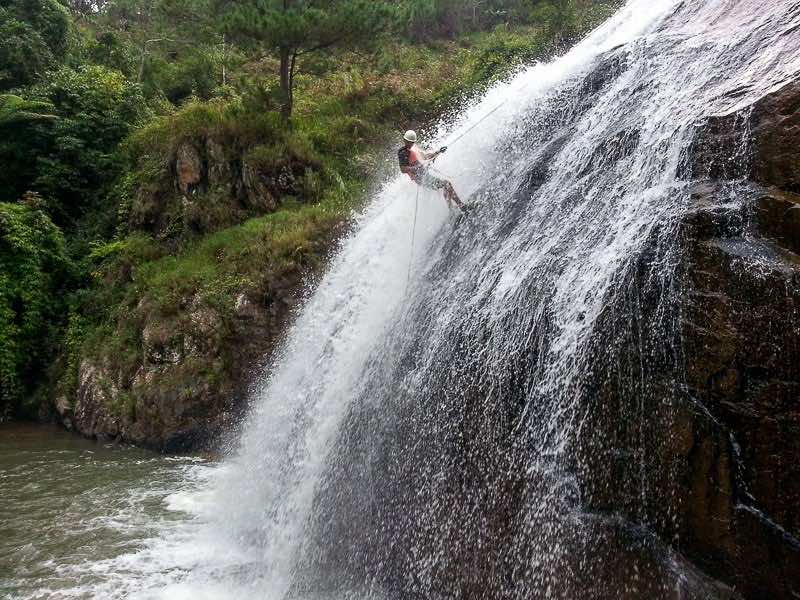
    This is one of the fastest growing adventure sports in the world. If you’ve ever been canyoning, you know for sure that it’s nothing short of a thrill ride! Where’s the best place to experience it in Vietnam? If we do a poll right now, it’s most likely that the unanimous choice would be Dalat. This picturesque town is the ideal place to learn and master the art of canyoning. You’ll discover colossal canyons and muster the courage to face the challenges of rugged gorges.

    Caving

    shutterstock 463416263

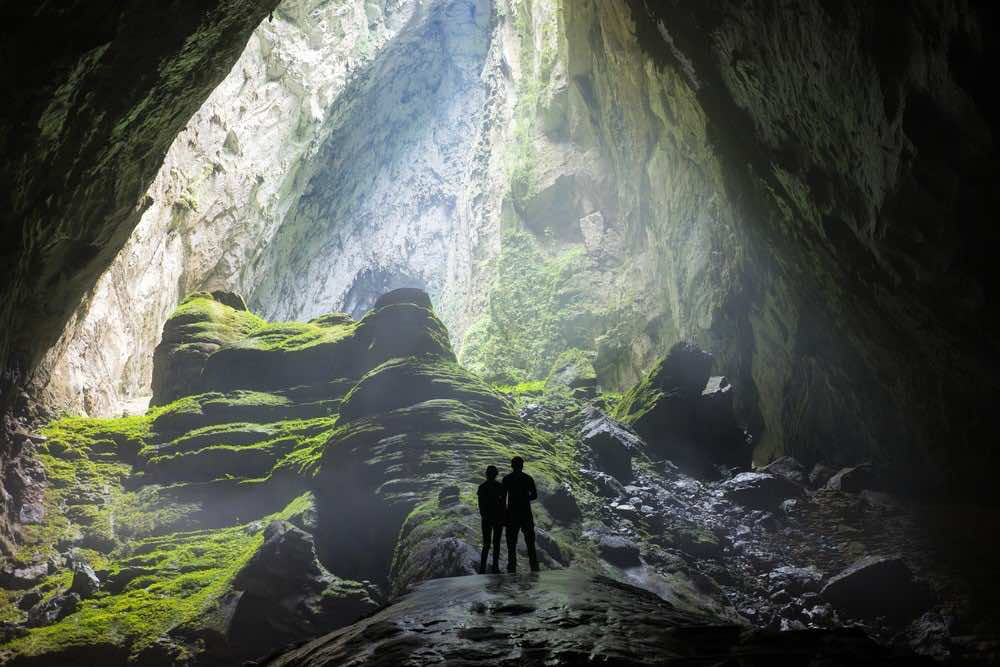
    There’s a plethora of caves in Vietnam, but if you ask us the best one for caving, it would be the legendary Hang Son Doong in Phong Nha-Kẻ Bàng National Park in Quảng Bình Province. Why? Because it is the largest cave in the world…so huge that a Boeing B747 can fly through the biggest chamber and can accommodate an entire block in New York City! Exploring this unique cave is truly a once in a lifetime experience, one that is reserved for avid adventurers. So if you wish to get a sample of Vietnam adventure holidays, caving should certainly be among the activities on top of your list!

    Cliff Jumping

    monster children jamie thomas vietnam 13 836x556 1455101388888

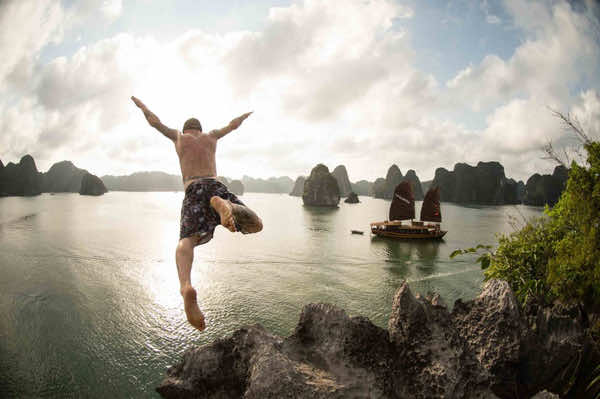
    If you want to experience one of the most stunning landscapes in the world while getting your blood pumping and heart racing, cliff jumping in Vietnam is the way to go. Head to the seaside town of Nha Trang, also referred to as the Riviera of the South China Sea.

    The best place in Nha Trang to check out for this daring adventure is Ba Ho Falls. Cliff-jumping is the highlight of every visit to this hike-through forest hideaway with a variety of warm, crystal-clear turquoise water pools. One of them even boasts a 37-foot jump for the daredevils!

    Kayaking

    dich vu cheo thuyen kayak tren vinh ha long dung hoat dong ke tu ngay 14 31 .1068

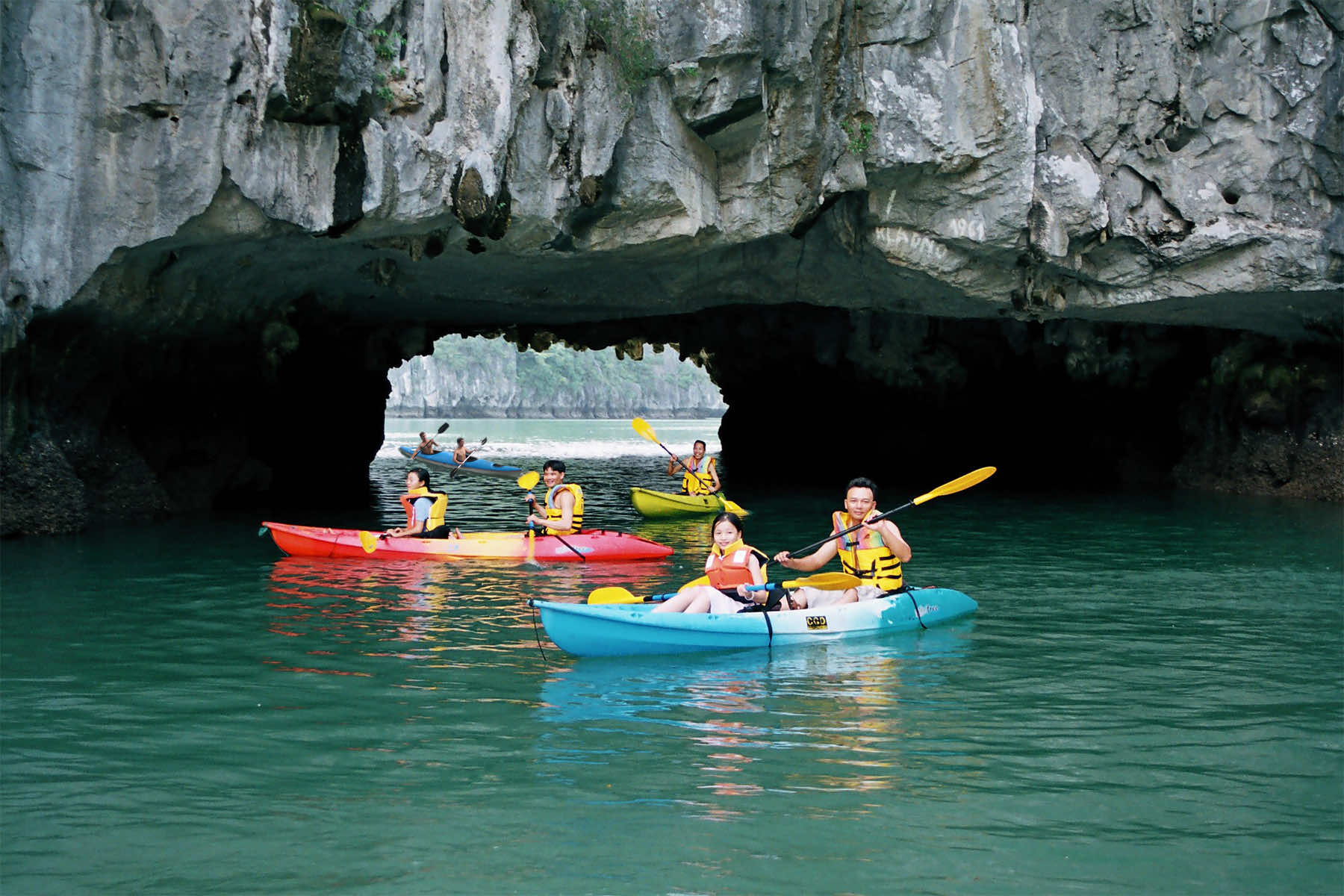
    If you love kayaking, there’s no better place to do it in Vietnam than in Ha Long Bay which is listed in the world’s 25 best places for kayaking. You can paddle your way to the fishing villages or through narrow waterways into caves littered with sparkling stalactites that take on various shapes and forms.

    You can also explore the sea arches and hidden lagoons in the vast archipelago, swim in the azure blue waters and relax on the white-sand beaches. While certain areas have become jam packed with tour boats, there are still many secluded spots on the outer fringes of the bay. Other places that are excellent for kayaking include Dalat, Hoi An, Nha Trang, and Phu Quoc Island.

    Kitesurfing

    122425965 1813541375346500 1666802206 o

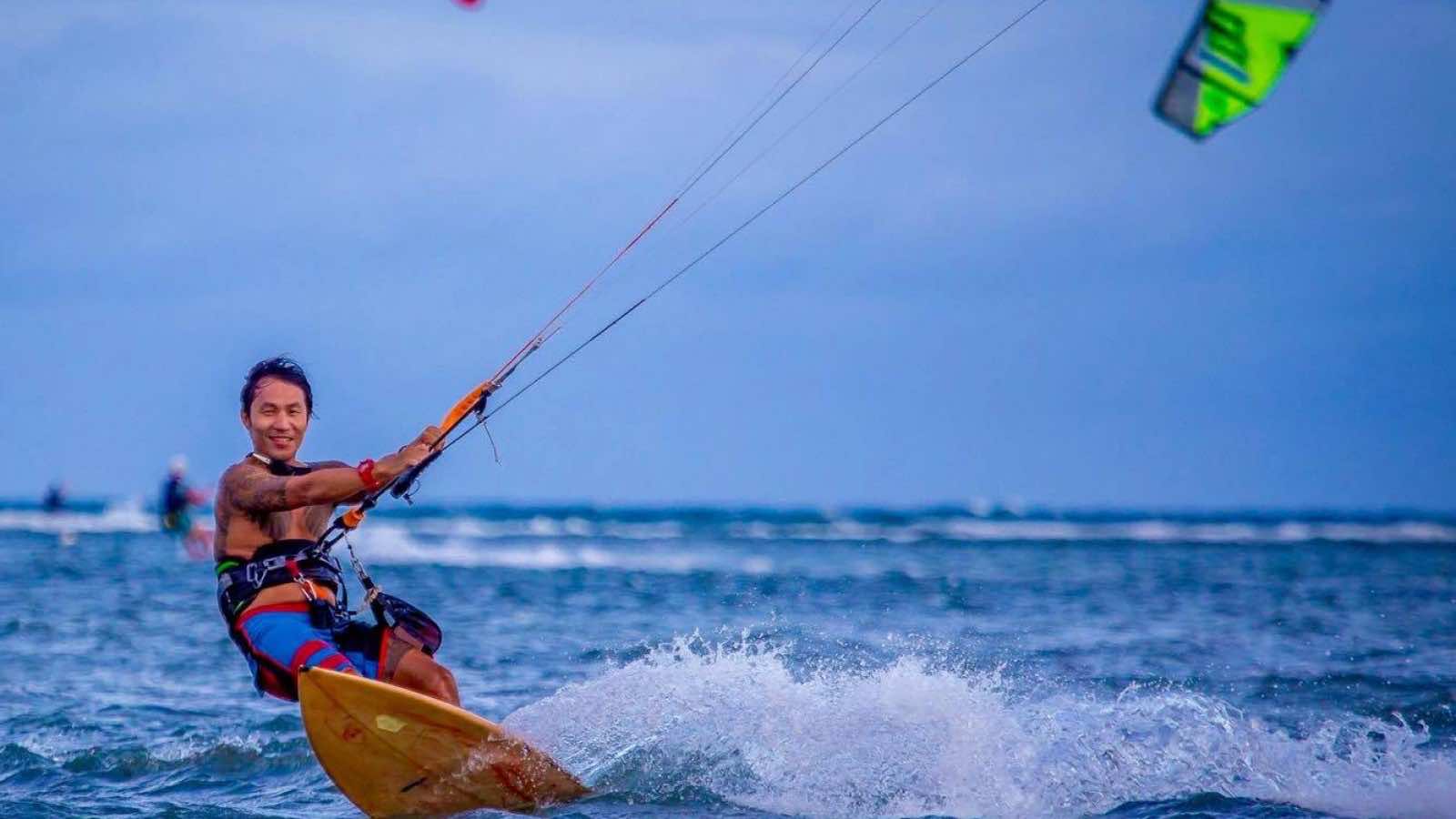
    Vietnam is now considered as the kitesurfing capital of Asia. Do we need to say more? Well, this ought to be part of your Vietnam adventure holidays in case you do come and visit this amazing country. Kitsesurfing is an action sport combining features of wakeboarding, windsurfing, paragliding, and sailing into one exhilarating sport.

    If you have ever seen a kitesurfer performing some adrenaline-fuelled flights and high-octane acrobatics through the air, then you know quite well how extreme it is. Take on the challenge and try it out! The kitesurfing season in Vietnam generally peaks from December to February.

    Motorbiking

    vietnam motorcycle 8tips8

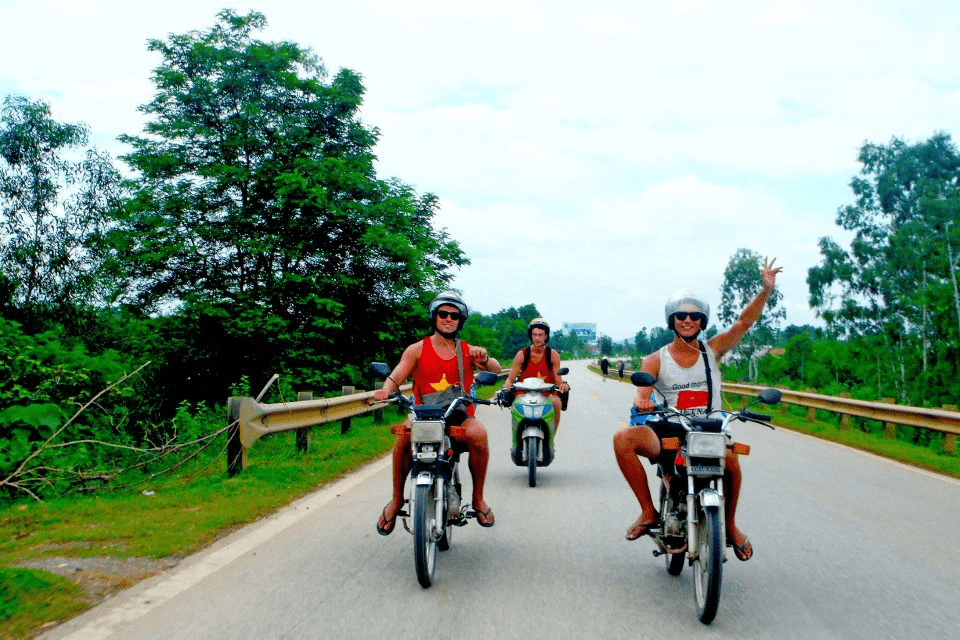
    Anyone who has visited Vietnam knows that the simple act of crossing the road is an adventure in itself. Don’t subject yourself to that dilemma and just rent a motorbike and freely explore the country as the locals do! With more than 10,000 kilometers of blazing trails that stretch from the sea to the sky, it’s certainly a top-nocth adventure that you’ll never forget!

    Motorbiking ought to be part of any Vietnam adventure holidays because aside from giving you the ultimate freedom in exploring the country, you’ll get to experience the sights and sounds at your own leisurely pace. There’s nothing like zooming down country roads with captivating scenery around you!

    Mountain Biking

    Cycling Sapa Bac Ha

    If you enjoy mountain biking you’ll certainly fall in love with Vietnam. You’ll get to immerse yourself in the rural sections of the country where ancestral customs and traditions have been well preserved. You’ll be able to explore Vietnam as you’ve imagined it – majestic mountains, bright green rice fields that wind along cascading rivers.

    Sapa, for instance, is an area that is littered with green rice paddies that are perfect for exploring by bike. Other notable places include Hoi An, Dien Bien Phu, Fansipan, and Lai Chao. Whether you are an amateur cyclist or a pro, there are lots of Vietnam adventure tours or DIY routes available, be it a fancy a day out or a grueling 14-day ride from Hanoi to Ho Chi Minh City.

    Rappelling

    PrimaryImageAbseilingdownthecave 5dc7f25c28 730x511 crop

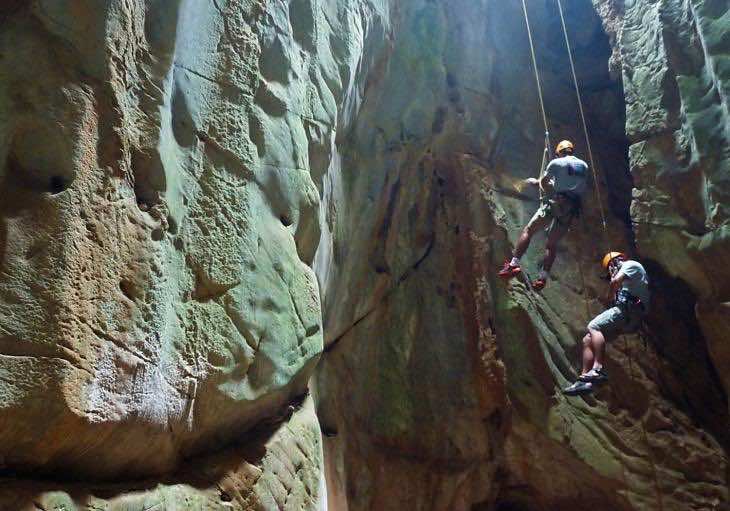
    Also known as abseiling, rappelling refers to a controlled descent off a vertical drop using a rope. It’s the ideal adventure for adrenaline junkies and it’s a staple in any cave or temple exploration. Just imagine yourself hanging over the edge of a cliff face and descending into a pitch black cave. Definitely not for the faint of heart, but if you have the guts to try it out, head to Da Nang or Hoi An.

    Sand Boarding

    maxresdefault 1

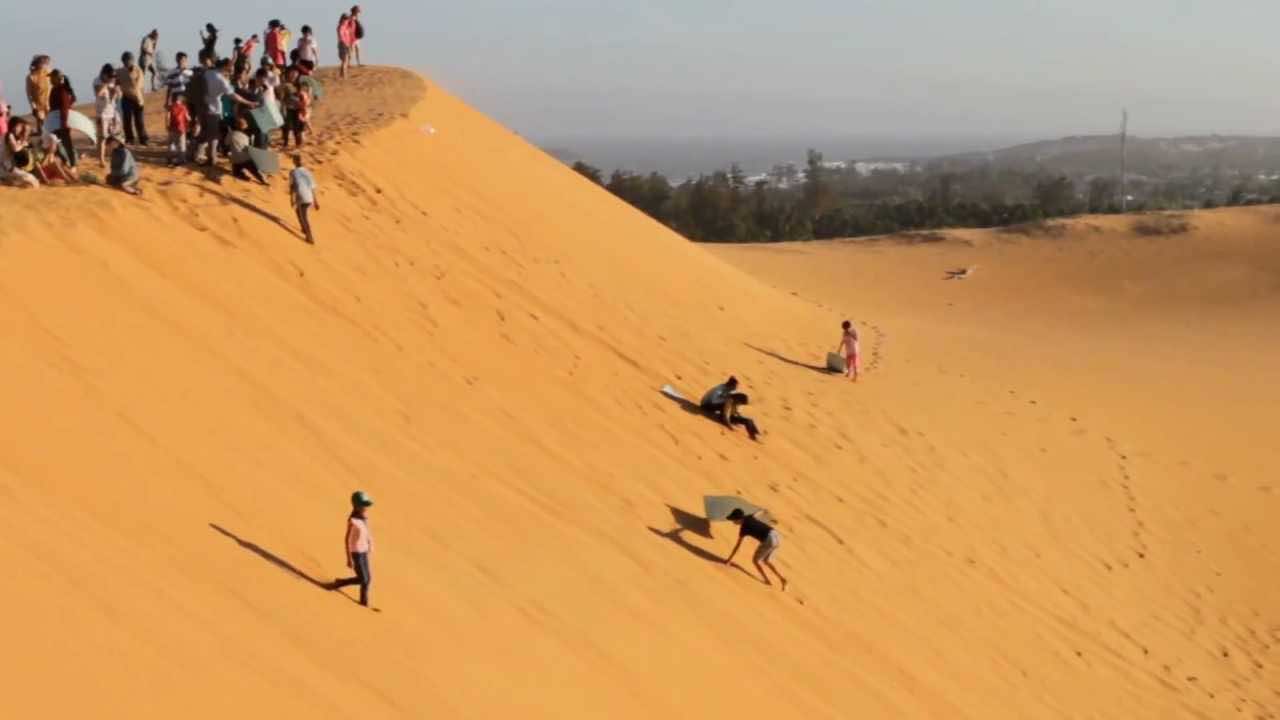
    The coastal resort town of Mui Ne is widely regarded as Vietnam’s adventure sports capital. It guarantees excellent adventure activities for everyone. Our top pick? Only one thing comes to mind…sandboarding! This combines the concepts of surfing, snowboarding and skateboarding into one exhilarating sport. It’s relatively new in Southeast Asia but is fast finding its way into Vietnam adventure tours.

    You’ll feel the rush of getting up early in the morning and heading straight to the sand dunes. Pick one with a gentle slope and when you get the hang of maintaining your balance while rolling down the incline, take on the bigger, steeper dunes. Check it out, it’s heaps of fun and you’ll surely have a great time.

    Scuba Diving

    scuba diving vietnam

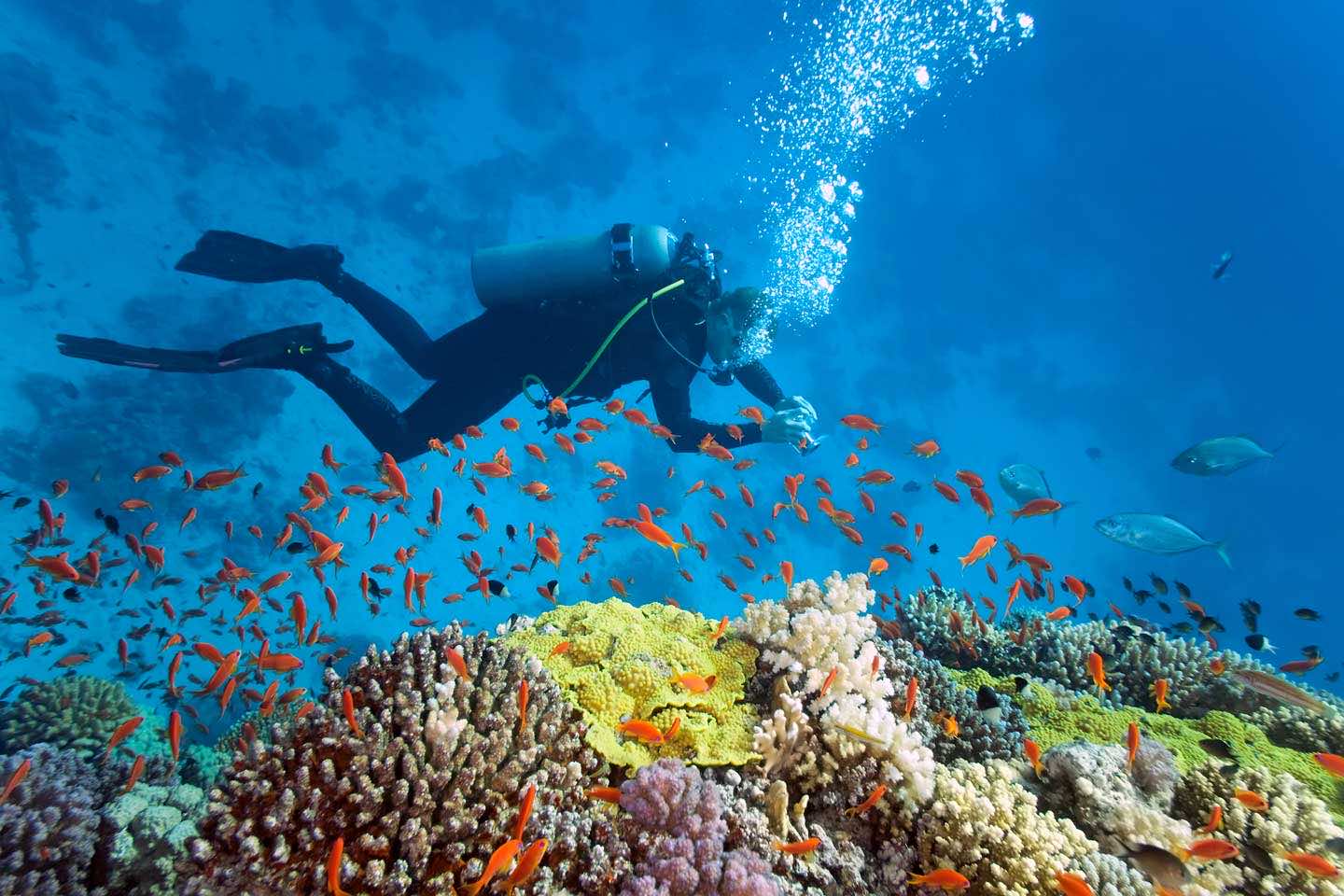
    Vietnam is not just a paradise for non-divers; it’s also a haven for diving enthusiasts. With its crystal clear waters and spectacular coral formations, Vietnam is becoming more and more popular for diving*.* It offers a wide range of opportunities that even non-divers won’t be able to resist!

    Nha Trang is the undisputed scuba diving hub of Vietnam, boasting over 20 dive operators. The prime spots are Moray Beach and Madonna Beach, both of which are popular for beginners who wish to get certified in its calm waters.

    Phu Quoc Island is also a superb scuba diving destination, particularly Dry Island and the Nudibranch Gardens. Visibility is not always perfect due to the run-off from the Mekong River, but the nutrient-rich waters encourage plenty of coral growth while drawing marine life of all shapes and sizes.

    Trekking

    20161021155303 tanang 2 pdung

    Vietnam is a Mecca for trekkers and hikers because of its remarkable landscape – imagine high rolling mountains, tiers of rice paddies, and plunging highland valleys creating a patchwork of contours. There are endless trekking opportunities, from half-day hikes and gingerly walks along well-trodden paths to conquering the lofty Fansipan.

    Northern Vietnam is your best trekking bet. Its mountain trails and interesting minority culture are always a huge draw. Sapa is one of the top spots for trekking in the region because it is home to Mt. Fansipan and it has a plethora of mountain trails that overlap and interconnect with each other. You can therefore create your own path depending on your experience level.

    Elsewhere, nature reserves and national parks have established trails such as those in Cuc Phuong National Park, Cat Tien National Park, and Ba Be National Park to name a few.

    All of the aforementioned activities make Vietnam such an enticing country to visit. You can book your trip anytime of the year, but in general, the best time to visit is from December to February when temperatures are pleasant and rain is minimal. A lot of people have already checked Vietnam adventure holidays off their bucket list. Perhaps it’s time for you to come and visit too! You won’t regret it because Vietnam is truly awesome!

  • Explore 5 luxury off the beaten track resorts of Vietnam

    Explore 5 luxury off the beaten track resorts of Vietnam

    Vietnam has many things to offer as a tourist attraction and it attracts many people every year. Every tourist will have their own unique reason to travel to this beautiful country.

    Seeking the most beautiful parts of the earth is what triggers some of us to find new destinations. Vietnam is right on top of our list of beautiful destinations and if our list of 5 luxury off the beaten track destinations doesn’t show you why, then we don’t know what will.

    These secluded gems are celebrated by credible travel magazines and websites notably for their beautiful architecture, pristine beaches, and award-winning spa facilities.

    While focused on wellbeing and privacy in the comfort of five-star luxury, visitors will be able to experience the wilderness  with the consciousness of nature protection, explore marine life at your doorstep, and the humbleness of local communities as they go about their day. A unique experience unlike any other.

    Escape your busy everyday routines and worries, these places offer you to appreciate what nature has to offer. When you return home you will be different.

    1. SIX SENSES CON DAO

    Address: Dat Doc Beach, Ba Ria – Vung Tau Province , Con Dao District, Vietnam
    Phone: +84 254 3831 222
    Email: reservations-condao@sixsenses.com
    Website: https://www.sixsenses.com/en

    Con Dao is one of the archipelagos located in southern Vietnam. This beautiful island is a getaway destination to escape your busy routines, a gate to explore the wilderness and colonial history. 80 per cent of Con Dao’s land area is under National Park preservation. Six Senses Con Dao allows you to explore the island through activities and guided tours coupled with the ultra comfort of the resort accommodation. 

    absolute-asia-travel

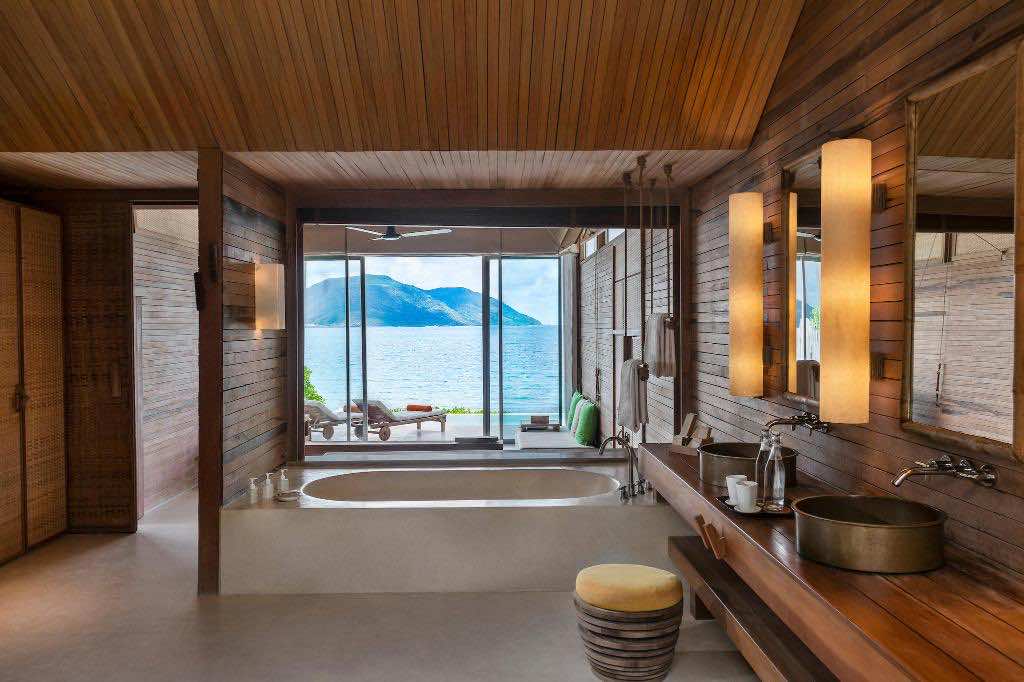
    It’s a 45 minute flight from Ho Chi Minh City to the Con Dao airport, and after a 10 min drive from the airport you will step into Six Senses Con Dao’s world of seclusion and exclusivity. Escaping the norms of formal hotel structures, including marble or granite finishes, the hotel is sans a main hotel building or lobby giving room to it’s peculiar wooden architecture, eco friendly and elegant. The rustic chic villas blend seamlessly with their natural surroundings, and if you managed to nab a beach front villa, your doors will open directly onto the sandy white beaches.

    Your days will include lazing on white sandy beaches or  floating in warm crystal like waters. Chasing sunsets made of cotton candy skies is not uncommon. They will only inspire photo opportunities allowing you to create memories to last a lifetime.

    There certainly isn’t a shortage of activities to keep you busy from sunrise to sunset. Usher in the new day with Hatha yoga techniques in the heart of nature, followed by detoxifying spa treatments. Unwind with your favourite novel at the poolside. You’ll have your pick of indoor or outdoor pools.

    Nothing beats a day of cruising the ocean with the wind in your hair. Head to Bay Canh or Cau islands by speed boat and explore the diverse marine life beneath the surface while trying your hand at snorkelling or scuba diving. Discover hundreds of different species and the most beautiful coral formations.

    Vacations are for indulging, and the cuisine at Six Senses Con Dao encourages just that. From easy grazing at the poolside, to contemporary international cuisine or better yet authentic traditional Vietnamese cuisine prepared by Chef No, the inhouse chef. For something a bit more exclusive have your pick from a selection of private dining options including Destination Dining, a self-curated romantic dining experience at a nearby destination of your choice. If you can dream it, Six Senses can make it happen.

    2. AMANOI RESORT, VINH HY BAY

    Address: Vinh Hy Village, Vinh Hai Commune, Ninh Hai District, Ninh Thuan Province, Vietnam
    Phone: +84 259 377 0777
    Email: amanoi@aman.com
    Website: https://www.aman.com/resorts/amanoi

    This tranquil beach resort is situated within Nui Chua National Park, overlooking the Vinh Hy Bay, one of the most beautiful bays of Vietnam. This little corner of the world has a unique microclimate where the sun shines all year long. Nui Chua National Park is a natural conservation site with a diverse ecosystem and home to 160 birds, 60 mammals, 1500 plants  and 307 coral species. You’ll feel as if you’re in the wilderness.

    Explore the national park’s local plants and species by guided hiking and trekking tours throughout wilderness. The finish point of the Wild Cat trek overlooking the exotic landscape will take your breath away. Rock Park trek is another alternative track where you can see different rock formations by the deserted beach and turquoise water.

    absolute-asia-travel
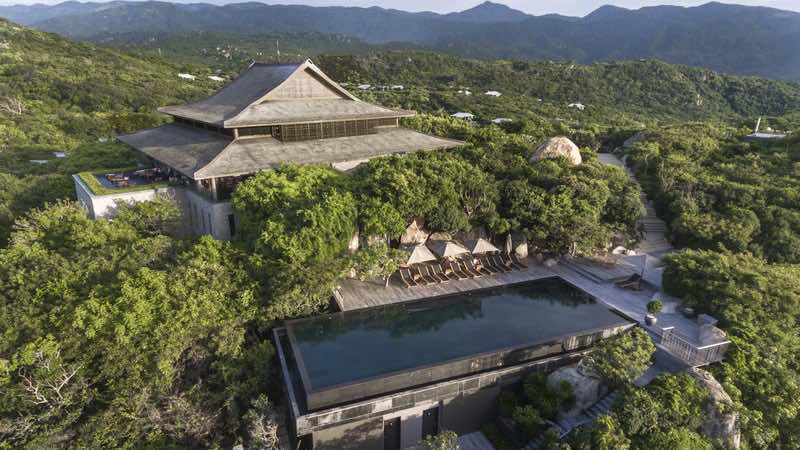
    Aerial view of Central Pavilion and Cliff Pool on the hilltop

    The big lotus lake amid the property is a real tranquility spot for meditation. There are two exclusive spa houses set on the shores of lotus lake offering visitors private and holistic treatment. Amanoi villas and pavilions are spotted on rolling green hills of tropical forest embraced by the national park on a pristine 32 km coastline. Architecture blends into nature with natural materials and style of contemporary and traditional Vietnamese composition. Amanoi resort provides privacy, natural beauty and comfort.

    Join cooking classes and  try to cook some authentic tastes. Learn how to make a Vietnamese pancake  “banh xeo” or “banh can” which is a rice delight cooked on a clay pot of the Cham ethnicity. Don’t miss the Gong Fu tea ceremony which is a way of mindfulness meditation. In the five start resort’s restaurant try the specialty dish “Cha kho to” Vietnamese braised fish cooked in a clay pot with local herbs.

    3. THE ANAM, LONG BEACH, CAM RANH

    Address: Long Beach, Northern Peninsula Cam Ranh, Khanh Hoa, Vietnam
    Phone: +(84) 258 398 9499  
    Email: info@theanam.com
    Website: https://www.theanam.com/contact

    A mere 20 min drive from the Cam Rahn International Airport on Cam Ranh’s Long Beach is a beautiful little haven otherwise known as The Anam. Take off your shoes and stroll in the green grass under the swaying palm trees. Enjoy the sunsets in the infinity pool while one of The Anam’s talented chefs are preparing to present you a meal of Vietnam’s finest fare.

    A daily visit to the Anam spa will keep you sufficiently rejuvenated throughout your vacation. Between a series of delicate skin, nails and hair treatments, your pick from a multitude of Asian massages, coupled with your choice of jacuzzi, sauna or steam room, you’ll feel like a different person by the time you leave.

    absolute-asia-travel

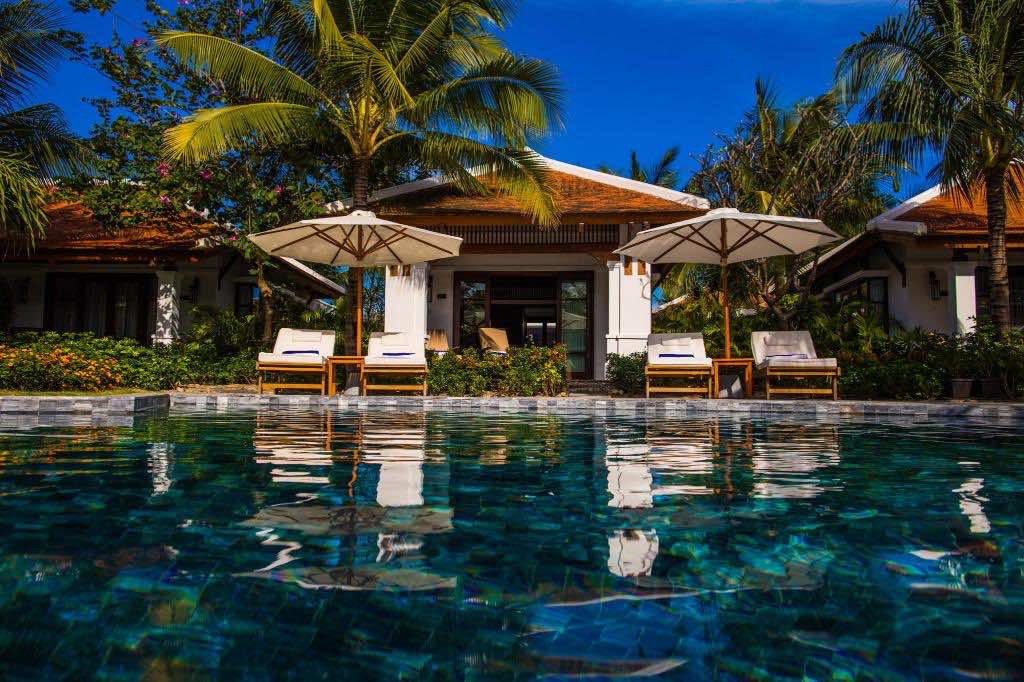
    The Anam villas have Indochine architecture and charm with private pools. We see here yet another architectural elegance which combines the contemporary and Indochine charm of discrete nature.

    The four restaurants offering international and Vietnamese cuisine offer a wide range of savoury choices which will have you heading back for seconds every time.

    4. PRINCESS DA NAM RESORT AND SPA KE GA BAY

    Address: Hon Lan, Tan Thanh Commune, Ham Thuan Nam District, Binh Thuan Province, Vietnam
    Phone: (84 252) 3682 222
    Email: reservation@princessannam.com
    Website: https://www.princessdannam.com

    Princess D’n Nam is situated in the Binh Thuan province, 150 km northeast of Ho Chi Minh City welcomes you with its all-villa boutique concept. This luxury resort experiences its rightful pride by being the first all-villa concept with its 57 villas designed under three exclusive suit options, an award winning spa, and two restaurants and a bar offering exquisite delicacies. You will feel the serenity and relaxation in the heart of beautiful Kê Gà Bay. The heliconia and ginger gardens of the resort add a final  idyllic touch to this dreamlike atmosphere. Don’t miss an early morning walk on the coast overlooking a 100 year old Ke Ga Bay lighthouse, one of the most beautiful lighthouses of Vietnam.

    The three suite options have their own unique exterior and interior architectural designs. You will be greeted by the combination of elegance and home comfort which will make you feel like a royal. The exquisite architecture and design overlooks the beautiful Ke Ga Bay.

    absolute-asia-travel

    Mandarin Suites: These semi detached villas have private balconies. You can enjoy your evenings in a privacy while having your drinks. Balconies are surrounded by tropical trees overlooking resort’s two swimming pools which you can easily access.

    Princess Villas: These villas include private garden and pool. Its romantic interior design and terrace overlooking to exotic garden elevates you to a royal life of a princess. These exotic flowers and tropical trees of garden make you feel the serenity and privilege.

    Empress Villa: Offers private terrace overlooking to the mesmerising Ke Ga Bay and ginger garden of the resort. These stunning views with dizzy of the ginger smells and breeze will make you feel the paradise.

    The Dining room and Terrace offers you tantalising delicacies. From ca kho to (cá kho tộ) to bo kho (bò kho), you’ll taste all recipes of the Vietnamese cuisine.

    5. AN LAM RETREAT, NINH VAN BAY

    Address: Ninh Van Bay, Nha Trang
    Phone: (+84) 258 390 1000
    Email: rsvn.nvb@anlam.com
    Website: https://anlam.com/ninh-van-bay/nvb-our-retreat/

    There is nothing quite as peaceful as a Vietnamese sunset overlooking An Lam, Ninh Van Bay while indulging in a beautiful dinner on the  pier. An Lam Retreat is located on a jungle peninsula surrounded by tropical trees overviewing Ninh Van Bay. One of the most beautiful bays of Vietnam blessed with natural beauty and fresh seafood. An Lam’s Sen restaurant has a supply of fresh and delicious seafood of the bay along with its organic garden which supplies fresh ingredients used in dining. Feel the tropical vibes, relax and unwind while you enjoy a most beautiful holiday.

    Monkey island tour is one of the most famous one guided by An Lam. You see the monkeys in their natural habitat. You can choose other activities among hiking, traditional fishing, safari, Cai river tour, Hon Ba park, Yang bay waterfall, Lam spring, snorkelling and so on.

    absolute-asia-travel

    The jungle provides an array of activities and tours to keep you busy from sunrise till sunset. The springs, streams and waterfalls only add magic to this beautiful paradise. Famed for its guided monkey tours, visitors will be able to see the wild monkeys in their natural habitat. If that a bit of monkey business doesn’t tickle your fancy, try your hat at hiking through a tropical jungle, traditional fishing with a local guide, or meander down the Cai River, just to mention a few of the many activities.

    These 5 exquisite off the beaten track luxury resorts are just a few of the hidden gems in Vietnam. With natural beauty stretching from the tip of the north right down to the south, you are certainly in for an adventure of a lifetime.

  • Textiles of Vietnam Series: The Black H’mong – Embroidery

    Textiles of Vietnam Series: The Black H’mong – Embroidery

    It can be stated that ornaments are the key factor to decide the artistry of the H’Mong costume. Apart from batik, H’Mong women has one more significant technique to create colorful patterns on their clothes which is embroidery.

    If batik has to be done before the dyeing, embroidery need to be done afterwards. A pattern will be made separately and sewn into the clothes.  Embroidery doesn’t require a stove but a tiny sewing kit and almost every H’Mong woman doesn’t get out of the house without it in her pocket. Due to the flexibility, the H’Mong women manage to do this in between other works. Walking around the ethnic markets, it’s not hard to see a lot of women busy sewing on the small pieces of fabrics meanwhile keeping an eyes on their vendors.

    Ornaments in the spiritual life

    absolute-asia-travel

    In ancient times, when Hmong people haven’t used the written language as now, their language was made up of picture symbols. For that reason, motifs are not only decorations but also the meaningful messages. They believe that ornaments on clothes as well as carvings on furniture are a way for human-beings to communicate with holy spirits. If the holy spirits see those, they will come to the house and give good fortune and dispel evils at the same time.

    The motifs

    absolute-asia-travel

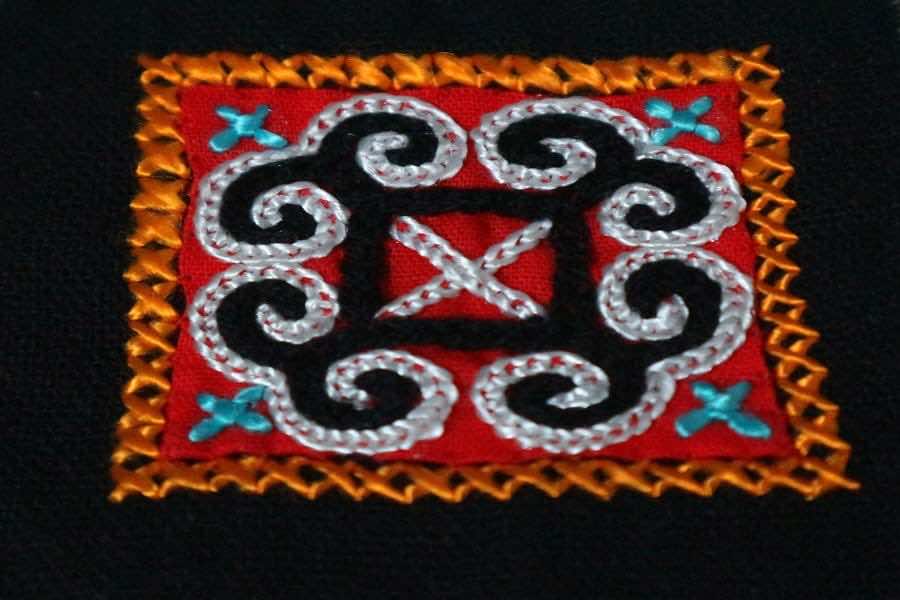
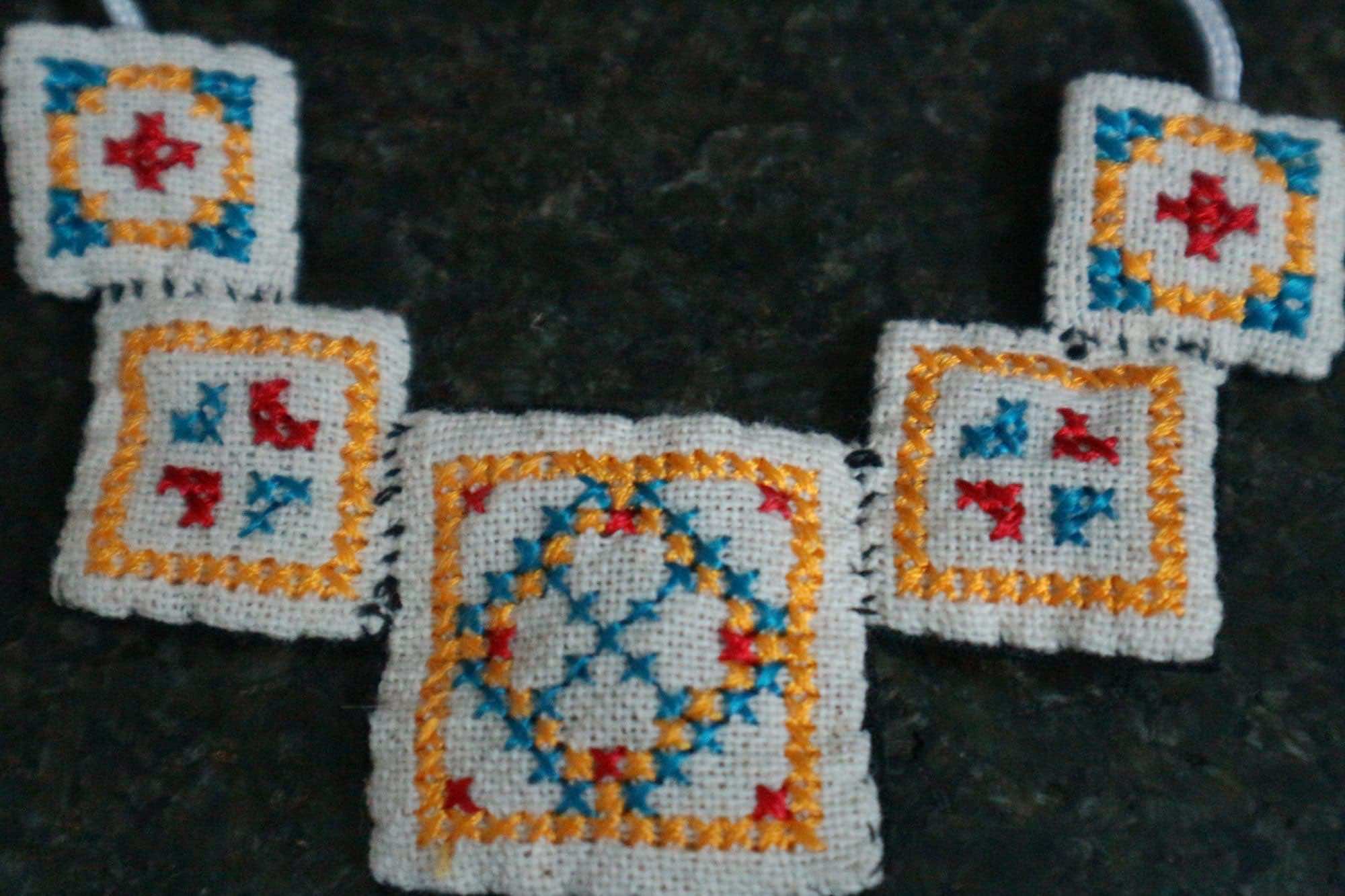
    All the patterns represent the imagination of ethnic people, hence they are quite rustic and simple yet perfectly depicts their connection with the nature. Some are deeply rooted in fairytales and folklores, some are inspired by the natural landscape where the H’Mong inhabited such as trees, animals and agricultural goods. The common ones being used are squares, crosses, circle, triangle.. And from those, the Hmong people bring the vibrancy of the daily life into their costumes.

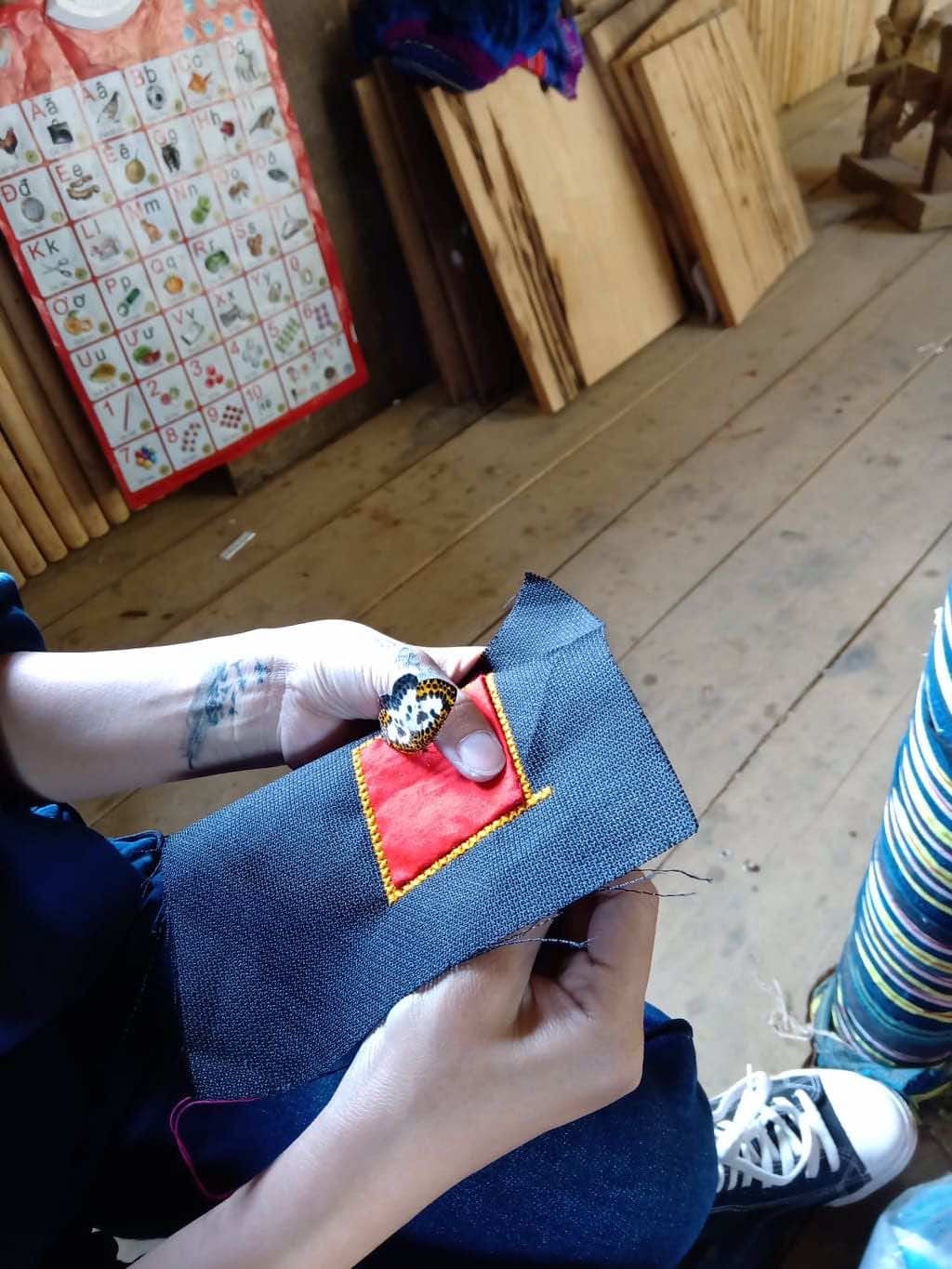
    Buffaloes have been intimately associated with daily activities of Vietnamese farmers in general and H’Mong people in particular. Therefore buffalo horns motifs are often embroidered on costumes as a way to remind people of the importance of this animal. In the picture you can see 4 pairs of buffalo horns at the 4 edges of the inner squares. Other than that, butterflies, snails, lilacs are often chosen to blow some of the life breath into the costumes. It’s safe to say that the H’Mong people literally “wear their heart on their sleeve”.

    Stich lines

    absolute-asia-travel

    A butterfly also wants to take part in

    If batik is all about controlling the temperature of wax, the lining of stitches is all it takes in embroidery. First, a piece of fabric will be chosen as the base color. These colors are normally blue or red, with stitches in black, white, yellow and cyan blue. The square piece has to be sewn into the main fabric with the stiches being exquisitely hidden. Using their fingers, the Hmong women will fold the piece along with the line they plan to design. When it comes to batik, people start with the inner first, then broaden further. But with embroidery, they prefer to start with the bigger parts first, then the little details at the end.

    It’s not an overstatement to say that the Hmong costumes are adding a lot of shades to the colorful mountain areas. If you’ve ever been in one of the ethnic markets or festivals, you’ll know what we meant. Not only clothes, Hmong women truly insert those traditional motifs on everything in their life such as hats, belts, baby carriers, aprons.

    At the end of the day, if the Hmong people like you, they’ll give you some separate patterns as a gift to sew into our clothes. And it’s surprisingly interesting that it goes so well with our casual outfits.

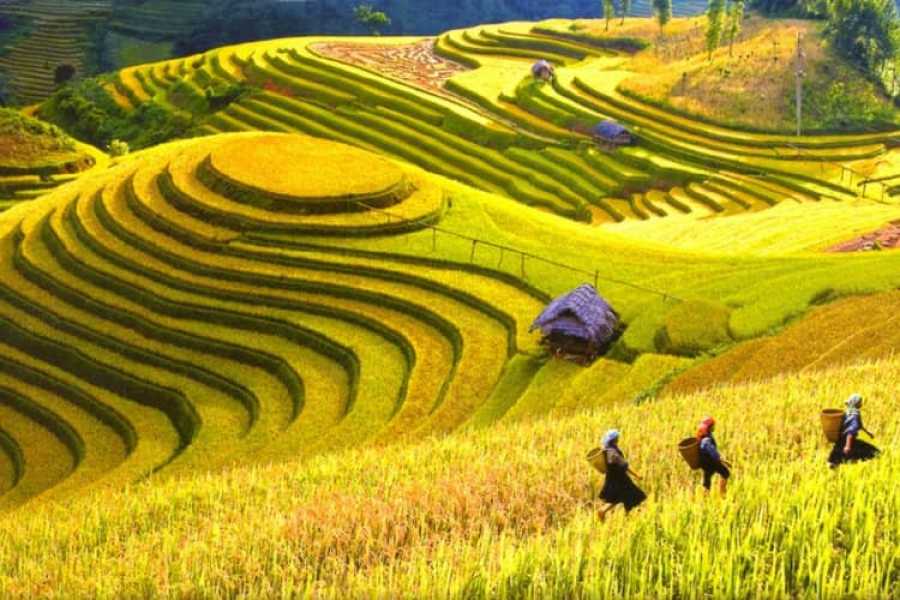
  • The Most Spectacular Golden Rice Terrace Fields in Northern Vietnam

    The Most Spectacular Golden Rice Terrace Fields in Northern Vietnam

    Many guests have been asking us before their departure date that “What is a must item to pack for a great trip to the northern Vietnam?”. If the question is for this time of the year, it’d be a no-brainer, a memory card is what it takes. Starting this month, the ethnic groups in the northwestern mountains will step into their harvest season. Terraced rice fields are at their primes in term of beauty, covering the whole area in golden shades. In case you’re still looking for another reason to head north this autumn, let us give you some sneak peaks of what’s happening there right now. You might want to write them all down to prevent any regret for missing out the good parts.

    1. Mu Cang Chai– The barren land
    vietnam mu cang chai
    The singular palette of Mu Cang Chai

    Mu Cang Chai might be a strange name for foreigners. However, it’s quite a big name for Vietnamese backpackers, and especially photographers. In other words, the people who are in search for spectacular moments of life regularly come here from September to early October. The Mu Cang Chai we see today is truly a masterpiece of Hmong people for many generations. In Hmong language, Mu Cang Chai means the barren land or having no hope of cultivation. But after years of taking efforts to carve into the mountains to create traces of life, layers of rice fields have appeared as what they are today. The yellow paddies, the green jungle and the cozy brown of the ethnic minorities’ houses absolutely made up a singular palette of Mu Cang Chai these days.

    2. Sa Pa- A trekking hub

    vietnam rice terrace sapa
    Fancy making your “rice terraces trip” a once-in-a-lifetime trekking journey ?

    Sapa is undoubtedly well-known in the world tourist map. But if you happen to be in Sapa this falls, call your self a lucky person as you just catch Sapa at its glorious peak. Apart from being listed as one of the most spectacular rice terraces in the world by Travel and Leisure, Sapa has unofficially claimed the title for best place to admire the beauty of rice terraces. Surfing around social media such as Instagram or Facebook, you’ll see what we meant. It’s not hard to find a place to indulge yourself in pleasant weather and stunning terraced fields in Sapa. It’s pretty much everywhere. However, if you can go further to Ta Van and Lao Chai village, you will be in awe of the glorious terraced fields. There the paddies is believed to be the most yellow and also the largest one in Sapa. A good friend of ours who is also a great photographer living in Sapa said that the key to a great photo of this season is to manage the ratio of the sky, the land and the rice terraces within one frame. And if you do not mind climbing rough passes and roaming through matrix streams, let’s make your “rice terraces trip” a once-in-a-lifetime trekking journey in Sapa.

    3. Y Ty- The cloud hunting spot

    vietnam y ty
    The majestic mountains drowned with golden shades

    For those who might find Y Ty an unfamiliar name, this is a fascinating spot for many photography enthusiast to hunt the clouds. Just about 100 km from Lao Cai city, Y Ty is a humble and quite untouched commune in Bat Xat district. With the approximate height of 2000 meters, the clouds sometimes are barely visible at your feet. The rice terraces in Y Ty and surrounding communes like A Mu Sung, A Lu, Ngai Thau…crawl around the precarious mountain ranges, cascading into the valley make a picture of endless golden sea. An iconic photo of Y Ty is the majestic mountains drowned with golden shades of paddies blend with the sea of white clouds. It will promisingly be the best feeling ever in life. Happy hunting!!!

    4. Hoang Su Phi- The sleeping beauty

    vietnam rice terrace hoang su phi
    The sleeping beauty of northern jungle moutains

    At the west of Ha Giang province, by the base of the Tay Con Linh mountain lied Hoang Su Phi district. This is a good backup plan for anyone who can’t catch up on time with the normal harvesting season or just have some days to spare in your schedule for the northwestern parts of Vietnam. The reason is that the rice here ripens later than other places. In fact, it is at its best around the middle of October. For professional “rice terraces hunter”, this is normally their happy ending for “a rice voyage” in the northern areas. Despite being less famous comparing to Mu Cang Chai and Y Ty, Phung and Luoc village here are known for boasting the highest terraces in Vietnam. Apart from that, Thong Nguyen, Ta Su Choong are great spots for wanderlust souls to discover as well. Ready for waking the sleeping beauty up?  

    Good moments don’t last forever. Fortunately you have a chance to capture those. Have a quick chat with our experts for more information on how to catch up with the golden season of the northern Vietnam.

  • Textiles of Vietnam Series: Hemp In H’mong’s Life

    Textiles of Vietnam Series: Hemp In H’mong’s Life

    It’s no secret that Vietnam is a thriving hub for inspiration hunters, especially in the mountainous areas where the tribal culture is very much alive. There’s no better place to showcase the rich and colorful culture of this fascinating country than ethnic minorities groups. It’s also where the soul of Vietnam’s crafting traditions being kept for ages despite of modern technology and development going on in the outside world. It’s where the ancient techniques are still being used as an honor and traditional costumes are being worn as a part of daily life. If Vietnam is your next destination, it’s highly recommended that you spend some time to touch base with the local hill tribes. Apart from exploring villages in the rugged mountains, let’s go to at least one of the ethnic markets which is as much interesting as any fashion show. Additionally, there are plenty of silk villages and indigo farms to learn about the traditional techniques and cultural highlights of a minority group.

    In this post, we’d like to take the first glimpse at the textile pictures of Vietnamese ethnic minorities with the Black Hmong. Our experts spent days with a local family to learn about their textile traditions. We’ve been through an extraordinary journey of the hemp from plants in the field to colorful costumes which symbolize the spiritual life of a community.

    A glance at the Black Hmong community

    Hidden amongst the emerald hills of Northwest Vietnam, near the Chinese border is the residence of the Black Hmong minority. You can easily find them in such areas like Sapa, Bac Ha, Cao Son, Mu Cang Chai, Lai Chau. This tribe is believed to emigrate from China about 300 years ago and since then, they’ve been building a community to preserve their traditions and heritage.

    The Black Hmong minority boasts a unique style of their own. It’s quite recognizable by indigo dyed and refined patterns which symbolize the intimate connection between their people and the nature. Even though it’s a lengthy process to create the traditional clothing, the women of this hill tribe still practice everyday.

    Hemp in the Hmong’s life

    image 2
    Hemp is covering the mountains of northern areas with green

    It’s said that wherever you see hemp, the Hmong people must be around. Indeed, hemp plays a key role in both physical and spiritual life of the Hmong minority. Originated from this sacred plant, the Hmong created a vibrant culture which is unique and unblended with any other. Just like the ethnic groups, this plant is considered very strong and adaptable in harsh weather. A life cycle of hemp is quite short, around 70 days. From the cultivation to harvest and utilization on their clothes, hemp became their life style. The clothes from hemp is not only durable but also highly aesthetic. It’s suitable for the weather condition of the mountainous areas and the agriculture types of work. Above all, it thoroughly represents the cultural identity as long as the pride of the Hmong community.

    Another interesting fact is that hemp can be proceeded to be the homemade Hmong’s tobacco. It’s quite often that you see the men sitting in the front of their house and enjoy a homemade smoke from a special kind of hookah.

    Making hemp fibers

    image 1
    All Hmong girls know their ways well with hemp fibers

    First hemp is harvested and then being left to dry out for 10 days under the sun, but only 4 nights under the dewfall to strengthen its elasticity and resilience. The women then use their hands to separate the fibers and soften them a little first. Later everything will be put into a millstone to further flatten and make it more flexible and silky. Then being dipped in the bamboo ash water, washed, dried, the same process needs to go on for multiple times until it reaches the ivory color and silky texture. The way they make the joints to lengthen the fibers is quite impressive as well. You totally can’t see any sign of junction. The next step is where hand looms being used to weave those glossy strands into pieces of cloth, ready for decorations.

    image
    The elderly Hmong women work with the handloom everyday, for years